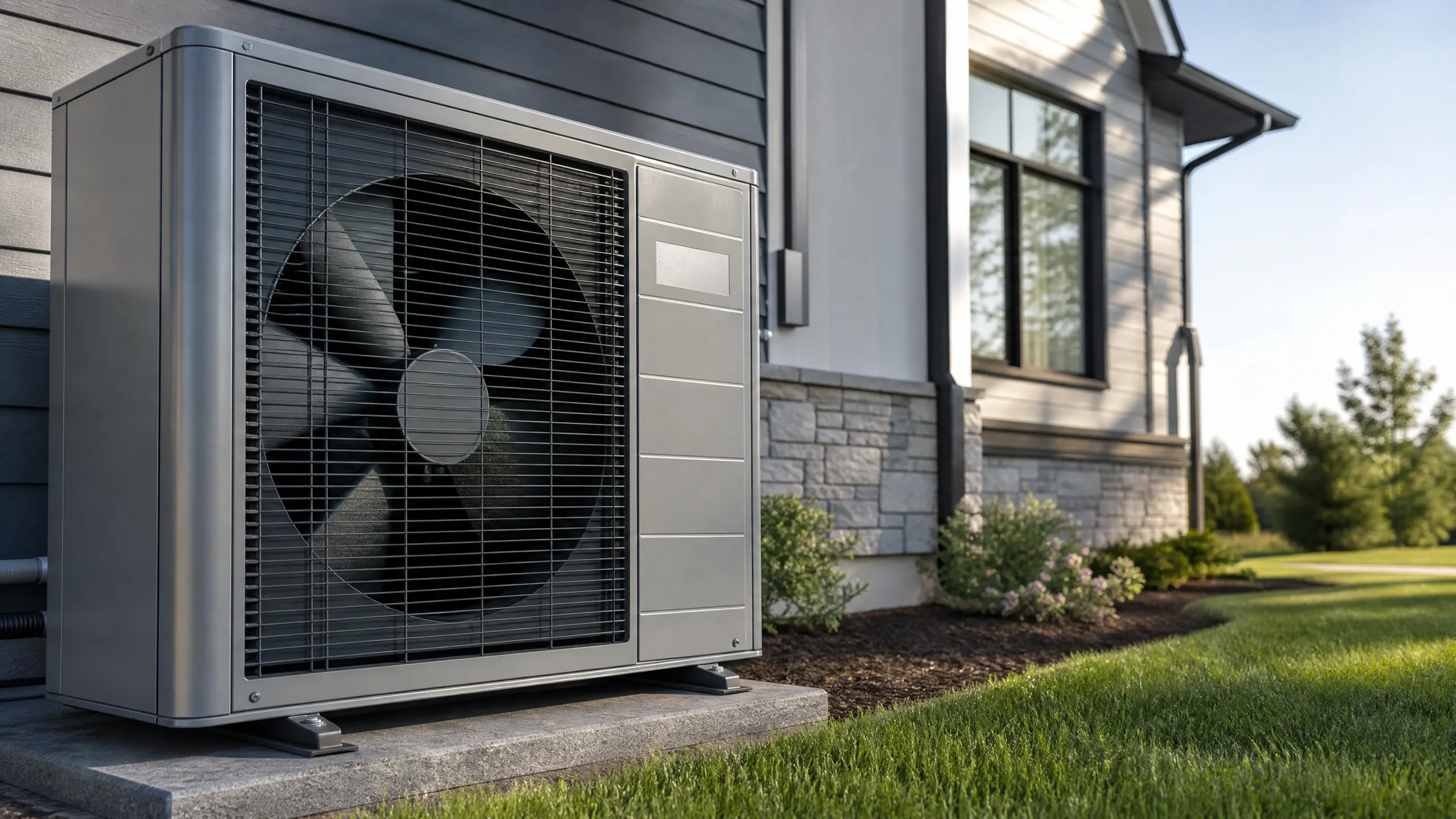





A grey heat pump outdoor unit mounted on a concrete pad against the exterior wall of a house with grey siding and stone veneer.

Heat Pump Installation in Longview, WA

Tell us about the job

Takes about a minute. No obligation.

New system or replacementHeat PumpCowlitz County, WA
Step 1 of 2

What ZIP code is the job in?

Electricity heats 86.1% of homes in Cowlitz County, far more than any other fuel. Gas reaches only 5.7%. That split matters for a heat pump install, since most homes already have the electrical setup a heat pump needs rather than a gas line to work around. If your home is part of that 86.1%, you're looking at a straightforward swap or upgrade, not a conversion from a different fuel source.

10 months
September through June, your system heats
33°F
the average winter night it heats against
74°F
the average summer afternoon it cools against
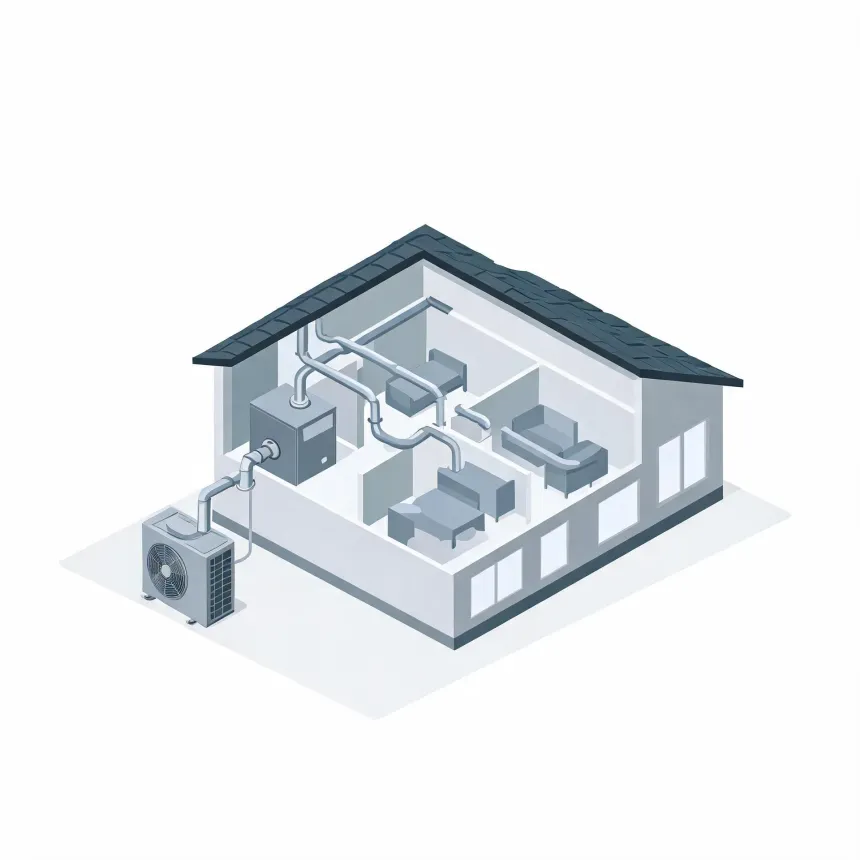
Isometric cutaway illustration of a single-story house showing an indoor air handler, branching ductwork through rooms with furniture, and an outdoor condenser unit connected by a line outside the wall.

Winter lows in Cowlitz County average 33°F, and real cold snaps are the exception, not the rule.

A heat pump here spends most of its time in mild demand, so a well-matched mid-range system holds up fine.

Electricity is cheap here, so pick a heat pump for how well it runs, not for the efficiency number

Power costs 11.9 cents a kWh statewide
5 damaging wind events from 2015 to 2024
1 hail event from 2015 to 2024

A heat pump has to be sized to the house, not picked off a shelf. Too small and it runs flat out on the coldest days, never quite catching up, leaning hard on the backup heat strip to fill the gap. Too big and it short cycles, kicking on, satisfying the thermostat fast, then shutting off before it has pulled the moisture out of the air. Neither one keeps a room comfortable. The right size comes from a load calculation, a room by room look at window area, insulation, ceiling height and air leakage, not a guess based on the square footage of the last house. A contractor walks the home and works out how much heat it loses on a cold day and how much it gains on a hot one, then matches the equipment to that number. Done right, the system runs long, steady cycles that hold an even temperature instead of swinging hot and cold.

Have it in before September

Heat in Cowlitz County homes runs from September through June. Putting a heat pump in before the weather turns means it goes in on your timeline, with time to size it right and work out any install details, instead of getting a system installed while you're already cold.

Find a contractor
A man in a dark T-shirt, brown work pants, boots and a cap, seen from behind, climbs concrete steps toward a dark blue front door while carrying a worn canvas tool bag, with a potted shrub beside the entry.
A dark gray heat pump unit mounted on a concrete pad next to a house with gray siding and a stone veneer wall.

It runs most of the year, so what feeds it has to be right

A heat pump runs far more months of the year than the furnace or AC it replaces, since it handles both jobs instead of one. That shapes what drives the installation cost more than the equipment itself. The line set between the outdoor and indoor units, the electrical circuit feeding it, the pad the outdoor unit sits on, and the condition of the existing ductwork all factor in. Ducts that leak or were never sized right for even airflow can mean a contractor seals or reworks runs before the new system goes in, and that work adds to the job. The electrical panel matters too. A heat pump draws power for both heating and cooling, so a circuit that was sized for an old air conditioner alone may need upgrading. None of this is extra for its own sake. A system that runs this much of the year holds its temperature better and lasts longer when the ducts are sealed and the circuit is sized for it from the start.

The old furnace or AC still has to come out

Pulling a heat pump in doesn't always mean the old equipment stays. If there was a furnace, it usually comes out unless the plan is to keep it as backup heat alongside the new system. The outdoor AC unit and its line set get disconnected and hauled off. Any of it left behind is just taking up space, since the heat pump's outdoor unit handles both heating and cooling on its own.
What's worth keeping gets checked first, not assumed

The old ductwork, the electrical whip, the condensate drain. Some of it can carry over if it's in good shape and sized right, and some of it can't. A contractor checks each piece against what the new system needs rather than assuming what worked for the old furnace or AC will work for a heat pump. That's part of the walkthrough, not an extra step tacked on after.

Comparing heat pumps means comparing more than the efficiency rating on the sticker. Ask what sound level the outdoor unit runs at, since it sits right outside a window or a patio and some run louder than others at full output. Ask how the system performs at low temperatures, not just what it's rated at in mild weather, because that's what decides how often the backup heat kicks in. Ask what the warranty covers on the compressor versus the rest of the unit, since those terms vary more than people expect. Ask what refrigerant it uses, since older types are being phased out and that affects whether parts stay easy to find down the road. And ask how the ductwork and existing electrical were factored into the quote, not just the equipment price, since bids for the same brand can leave out different pieces of the job.

Installation day starts before anyone touches the old equipment, with a check that the unit staged for delivery matches what was quoted, same size, same model. The outdoor unit goes on a pad or bracket set level and clear of the eaves, far enough from the wall to pull air freely. Line set runs between outdoor and indoor units, gets brazed, then pressure tested for leaks before anything is charged with refrigerant, since a joint that leaks slowly can take months to show up as weak heat. The electrical circuit gets tied in and tested under load, not just checked for a connection. Once the indoor coil and air handler are set and the ducts are hooked up, the system runs through a full cycle in both heating and cooling while someone checks airflow at the vents and the temperature split between the air going in and the air coming out. That last check is what tells a contractor the system is actually performing to spec, not just powered on.