





An outdoor air conditioning condenser unit mounted on a concrete pad next to a residential house at sunset.

Heat Pump Installation in Oak Harbor, WA

Tell us about the job

Takes about a minute. No obligation.

New system or replacementHeat PumpIsland County, WA
Step 1 of 2

What ZIP code is the job in?

Almost a quarter of homes in Washington lost power for a full day or longer in 2024. A heat pump needs power to run, for both heat and air conditioning, so an outage leaves you without either. Ask about backup options when you're planning the install, whether that's a generator hookup or something else that keeps the system usable. Where the outdoor unit sits matters too. It should be clear of falling branches and protected from the kind of wind and debris that comes with a bad storm here.

10 months
September through June, your system heats
35°F
the average winter night it heats against
71°F
the average summer afternoon it cools against
Isometric cutaway illustration of a single-story house showing interior ductwork, an indoor air handler and furnace unit, and an outdoor condenser connected by a line, on a white background.

Winter lows here average 35 degrees overnight.

A heat pump sized for that doesn't need to be the top efficiency model on the lot.

Most homes in Oak Harbor already heat with electricity

57.9% of homes heat with electricity
Winter nights average 35°F
Power costs 11.9 cents a kWh statewide
Electricity here runs cheapWashington households paid 11.90 cents per kilowatthour in 2024, well under what most of the country pays.

Heat runs here ten months a year, September through June, so August is the one quiet stretch before it starts. Get the install done then and the contractor can size it right and schedule it without rushing. Wait too long and you're asking for a replacement while you already need the heat on, which narrows your options fast. An August install also gives you time to sort out backup power before a storm takes the grid down, not after.

Your new heat pump has to clear a federal efficiency floor

Island County sits in climate zone 5C, a cool, marine zone where heating carries more of the year's load than cooling does. Any split-system heat pump installed here now has to hit 14.3 SEER2 and 7.5 HSPF2, the federal minimum as of January 2023. That floor rules out the oldest, least efficient equipment before you even start comparing options.

Find a contractor
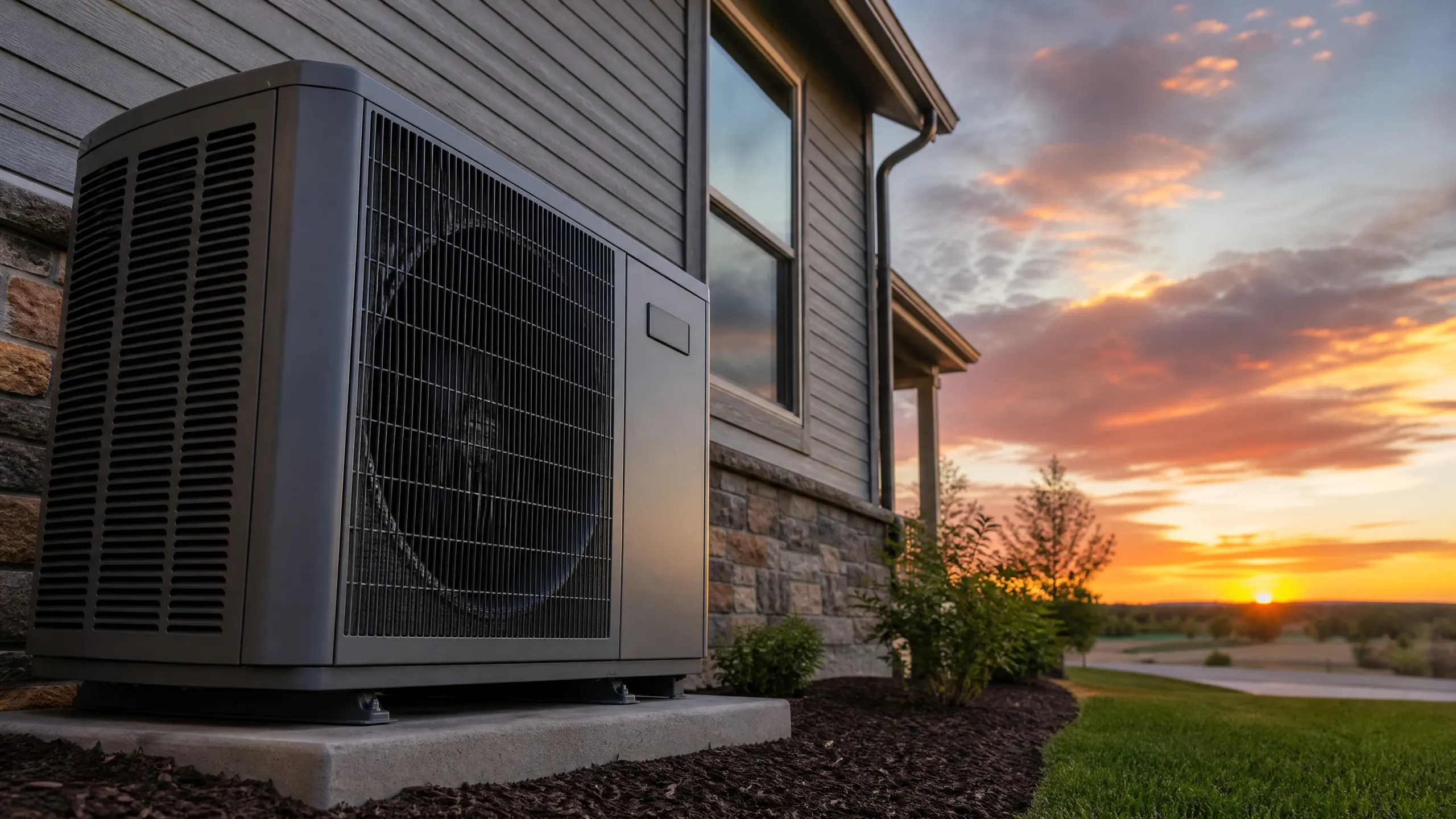
A gray heat pump outdoor unit mounted on a concrete pad next to the stone-accented exterior wall of a house.

It runs every day of the year, not just a season

A heat pump runs in both directions, all year, so there's no season where the compressor gets to sit idle. That's normal, it's built for that duty cycle, but it means the questions worth asking are about long-run reliability, not just output. Ask what the warranty covers on the compressor specifically, since that's the part under the most continuous strain and the most expensive to replace. Ask how the system stages, whether it runs at one speed or can throttle down, because a unit that modulates runs longer and gentler instead of cycling on and off hard. Ask what happens at the coldest end of its range, whether backup heat strips or a furnace carry the load once the outdoor temperature drops past what the heat pump alone can handle. A system sized and staged for year-round duty holds up better than one picked on efficiency numbers alone.

Ductwork decides more than the unit does

If the home has existing ducts, what they're in for shapes the quote before the heat pump is even picked. Leaky runs, crushed flex duct, or returns that are too small for the new system all need fixing first, and that work can cost more than the equipment. A ductless system skips this entirely by running refrigerant lines instead of ducts, which changes the job completely.
The install work outweighs the unit on the invoice

Running new electrical to the outdoor unit, setting the line set, pouring or leveling a pad, and commissioning the system with the right refrigerant charge is labor that takes real time no matter which heat pump gets installed. Contractors quoting the same equipment can still land far apart on price depending on how hard the access is, how much electrical work the job needs, and how long a line set run has to go.

The old furnace or AC doesn't need to come out before the heat pump goes in, but it usually comes out anyway. If the heat pump is replacing a furnace, the contractor disconnects the gas line and caps it, and that line gets inspected before it's left sealed. An old AC's outdoor unit gets disconnected and hauled off, along with the line set if it isn't being reused. Any refrigerant left in the old system has to be recovered, not vented, so factor that into the teardown. If the furnace is staying as backup heat for the coldest days, only the AC side comes out and the ductwork gets tied into the heat pump instead. Ask the contractor directly what stays and what goes, since that changes both the work and what's left in the mechanical closet afterward.

On install day itself, the outdoor unit goes on its pad first, then the line set connects it to the indoor coil or air handler. The contractor pulls a vacuum on those lines before any refrigerant moves, because trapped air and moisture will wreck the compressor if they're left in there. Electrical gets run or tied into the existing circuit, and the thermostat gets wired and set up last, once everything else is in place. Before anyone leaves, the system gets run in both heating and cooling mode and the refrigerant charge gets checked against the manufacturer's spec, not just eyeballed. That charge is the part that gets skipped when a job is rushed, and it's the part that determines whether the heat pump runs the way it's supposed to for years or struggles from day one.