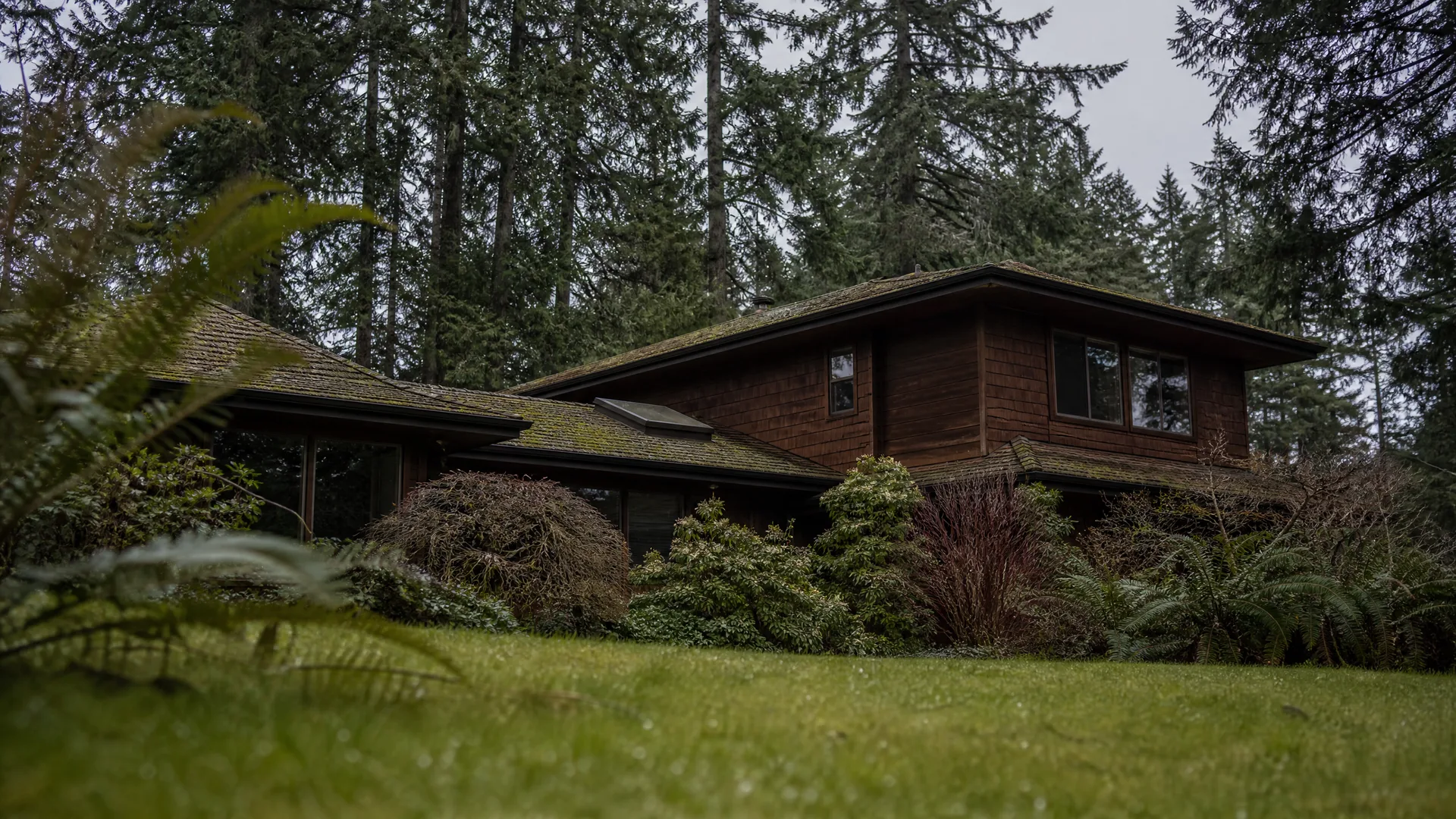
A two-story wood-sided house with wide eaves and a moss-covered shingle roof, surrounded by shrubs, ferns and tall evergreen trees, with a mown lawn in the foreground.

Heat Pump Installation in Port Angeles, WA

Tell us about the job

Takes about a minute. No obligation.

New system or replacementHeat PumpClallam County, WA
Step 1 of 2

What ZIP code is the job in?

Storms knock out power here

Washington sees more severe weather than most states, and almost a quarter of households here went at least 24 hours without power in 2024. A heat pump runs on electricity, same as the furnace blower and the water heater's controls.

The outdoor unit sits exposed

Wind and falling debris reach whatever sits outside, and hail can dent the cabinet or bend the fins. Where the installer sets the unit, and what sits near it, decides how much weather it takes on.

33°F
the average winter night it heats against
67°F
the average summer afternoon it cools against
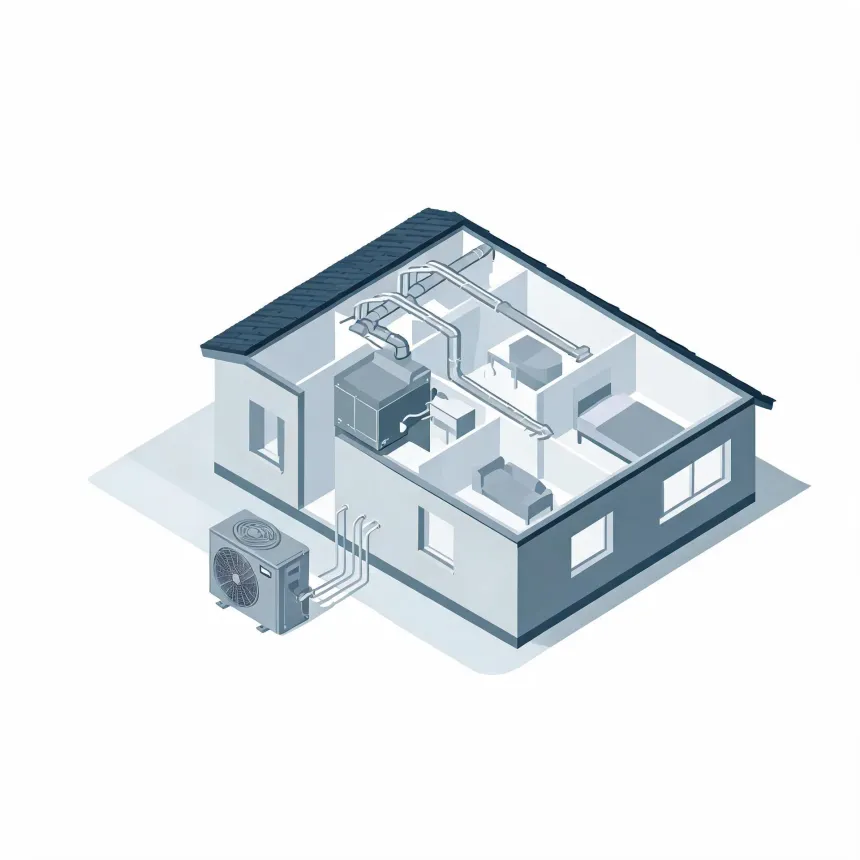
Isometric cutaway illustration of a single-story house showing interior rooms with ductwork, an indoor air handler unit, and an outdoor condenser unit connected by lines along the exterior wall.

Electricity in Washington ran 11.90 cents a kilowatt-hour in 2024, well under what most states pay.

A high-efficiency heat pump costs more up front and takes longer to earn that back here, so pick yours for reliability first.

Almost every home here already runs on electricity

85.6% of homes heat with electricity
Winter nights average 33°F
Power costs 11.9 cents a kWh statewide
Winters here don't push a heat pump hardDecember through February, the overnight low here averages 33°F.

Clallam County falls under zone 5C, a cool, marine climate where heating runs harder than cooling. Any split-system heat pump installed here, manufactured from 2023 onward, has to meet a federal minimum of 14.3 SEER2 and 7.5 HSPF2. That floor rules out the lower-end units some other regions can still get away with. Since heating is the bigger job in this climate, the HSPF2 number matters as much as the cooling rating, if not more. A federal tax credit is available for qualifying installations, on top of whatever the unit already has to meet.

Plan for the outage before you need it

Talk to your installer about where the outdoor unit goes and what backs up heat and hot water if the power drops. Almost a quarter of Washington households lost power for a day or more in 2024, and that's worth settling at install, not after a storm.

Find a contractor
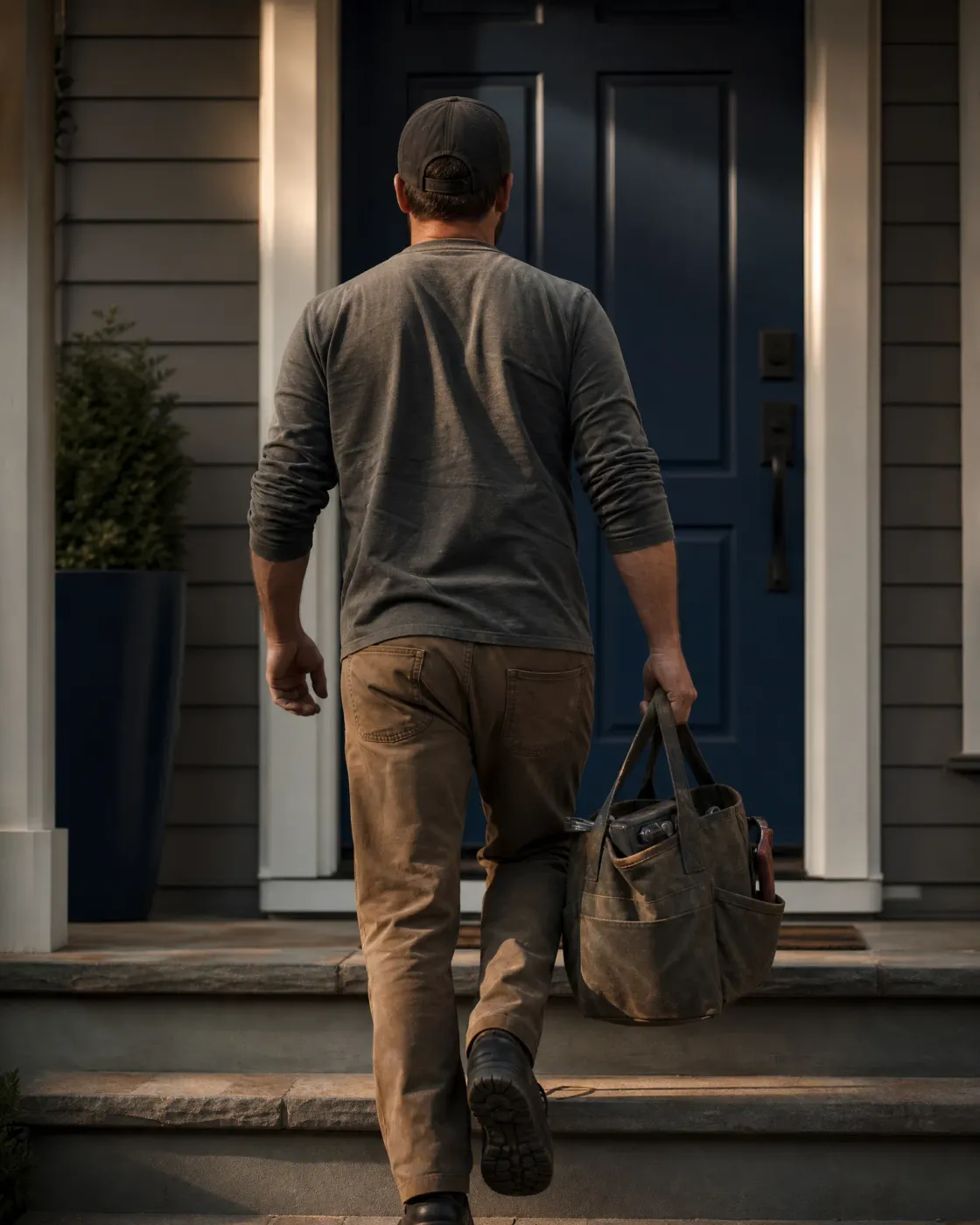
A man in a cap, gray long-sleeve shirt and tan pants walks up stone steps toward a dark blue front door, carrying a waxed canvas tool bag in his right hand.
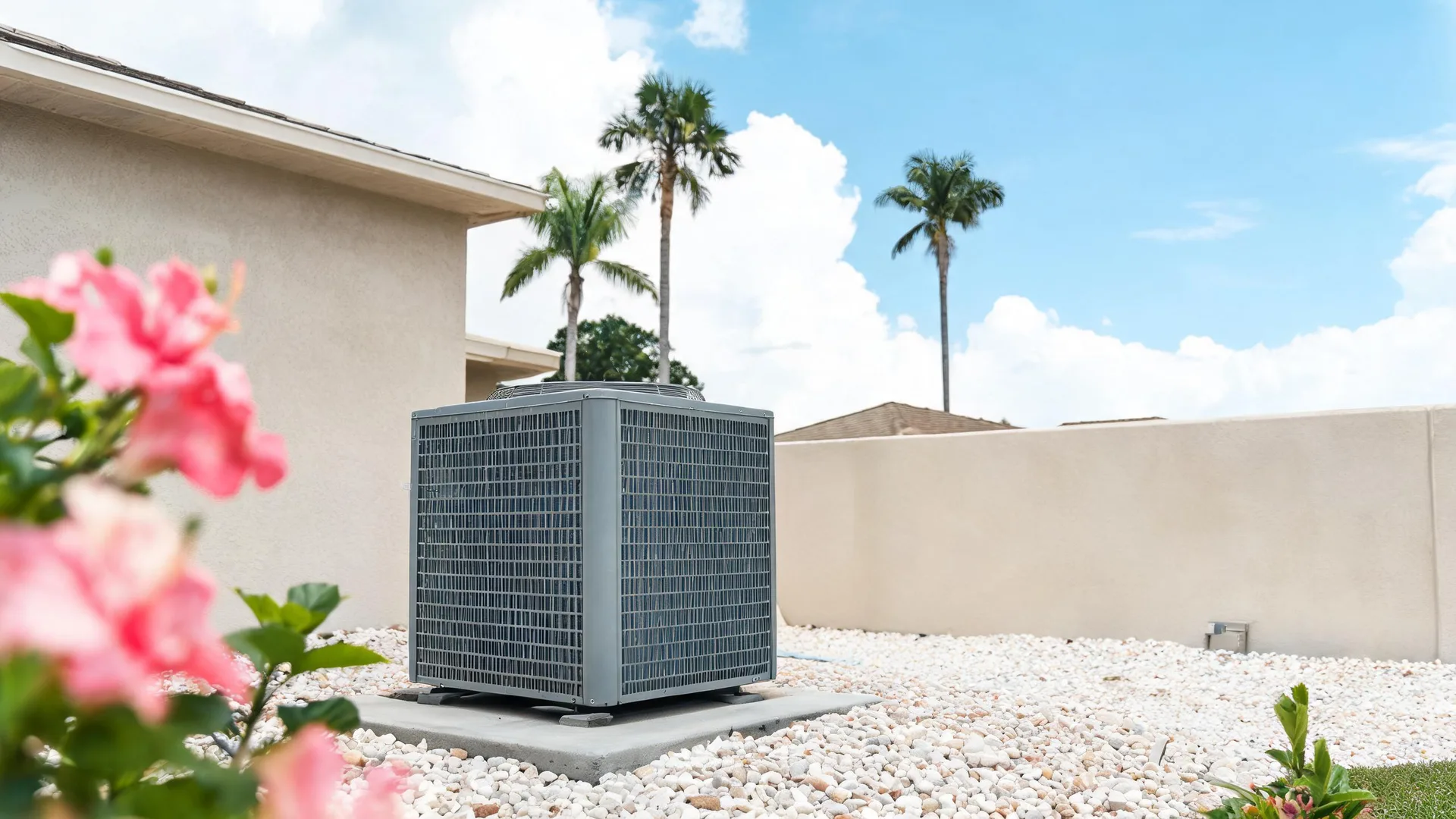
A gray outdoor HVAC unit mounted on a concrete pad beside a house with gray lap siding and a stone foundation.

The label tells you the lab result, not your bill

The SEER2 and HSPF2 numbers on the label come from lab tests run at set conditions, not from any particular house. SEER2 covers cooling, HSPF2 covers heating, and both describe how much heat the system moves for the electricity it uses over a season. A higher number means less running cost for the same comfort, but only if the unit is sized and installed right. An oversized heat pump with a high rating still short cycles. An undersized one still runs flat out on the coldest nights no matter what the label says. The rating also assumes clean coils, correct airflow and a correct refrigerant charge. Skip any of that and the system won't perform anywhere near its rated number, no matter how good the equipment is.

Ask for the load calculation, not a guess

A heat pump sized off square footage alone can run wrong for the life of the system. Ask the installer to walk through a room-by-room load calculation, the kind that accounts for windows, insulation and layout. An oversized unit short cycles and struggles to dehumidify. An undersized one runs constantly and still falls short on the coldest nights.

Ask what happens below the balance point

Every heat pump has a temperature where it can no longer pull enough heat from outside air to keep up on its own. Ask the installer where that point is for the system they're proposing, and what kicks in below it, whether that's resistance heat strips or a separate furnace. That answer tells you more about winter comfort than any efficiency number on the label.

The equipment itself is only part of the bill. Correct sizing takes real labor, someone measuring rooms and running the numbers rather than reading a chart. Line sets, electrical work and how far the indoor and outdoor units sit from each other all add work hours. A straightforward swap, same spot, same connections, goes faster than a setup that needs new wiring or a different pad for the outdoor unit. Ductwork matters too. A heat pump that ties into existing ducts costs less to put in than one that needs ducts added or reworked. None of this shows up on the unit's price tag, but it decides how much time the installer spends on your job.

Install day starts with the old system coming out, not the new one going in. The crew disconnects the refrigerant lines, drains what's left, and hauls out the old condenser and air handler or furnace coil. If the line set is being reused, it gets flushed and pressure tested before anything new connects to it. The outdoor unit goes on its pad, the indoor coil ties into the ductwork or air handler, and the electrical connections get run to a dedicated circuit. Once everything's connected, the system gets charged with refrigerant to the exact weight the manufacturer specifies, not just until it feels cold. Before the crew leaves, they should run the system through a full cycle and check static pressure, airflow, and the temperature split between the air going in and the air coming out. That last check is what tells you the system is actually working, not just powered on.