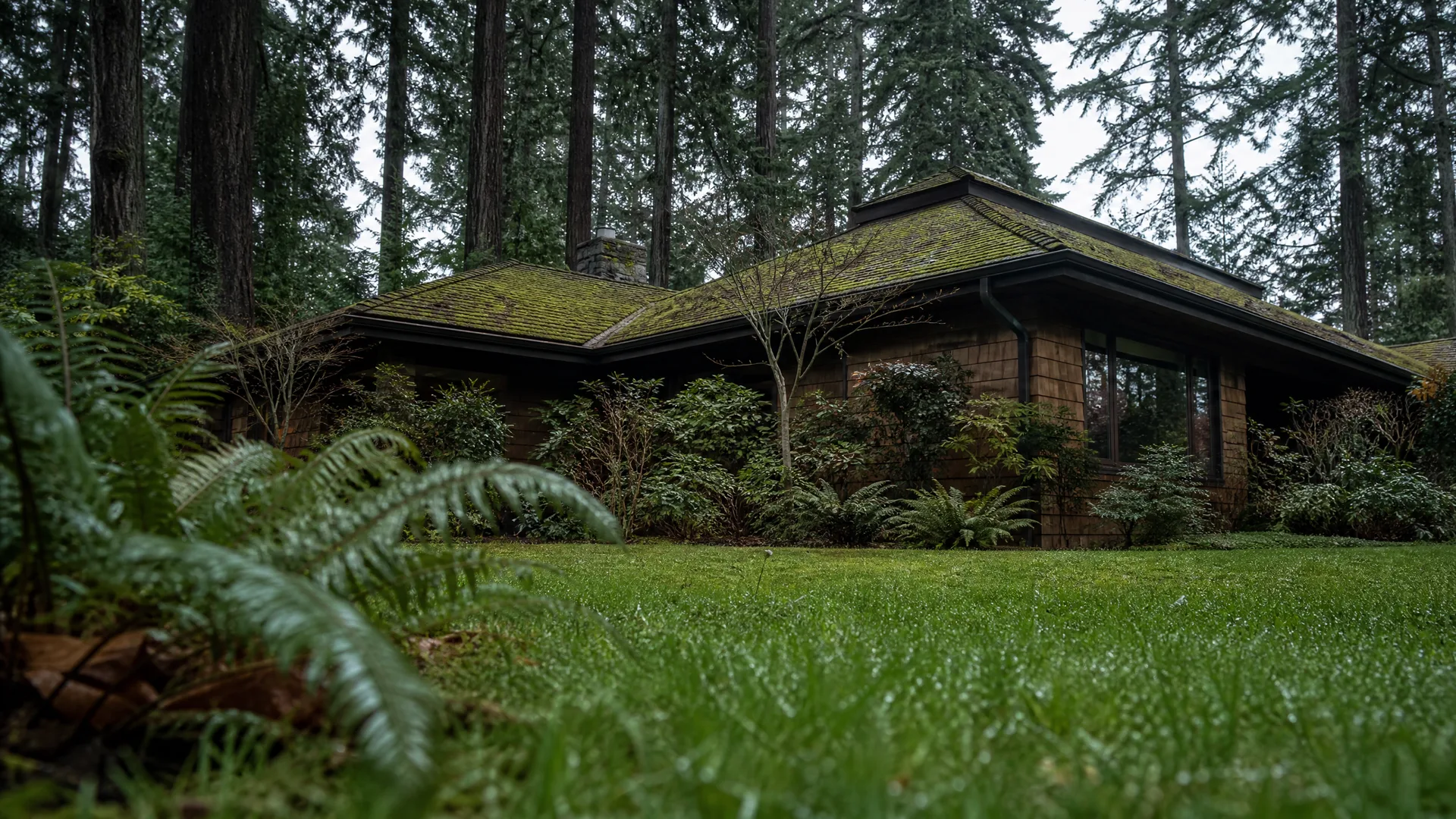






A single-story house with wide overhanging moss-covered roof and large windows, surrounded by shrubs, ferns and tall conifers, seen across a green lawn.

Heat Pump Installation in Port Townsend, WA

Tell us about the job

Takes about a minute. No obligation.

New system or replacementHeat PumpJefferson County, WA
Step 1 of 2

What ZIP code is the job in?

Power cuts aren't rare out here. Statewide, close to a quarter of households went at least a full day without power in 2024. A heat pump needs power to run, both for heat and for cooling, so a long outage means neither until the lines come back. Where a contractor sets the outdoor unit also matters more in a place like this. Falling branches and storm debris are a real risk, and the unit needs clear space to pull in air no matter what's coming down around it.

31°F
the average winter night it heats against
66°F
the average summer afternoon it cools against
Isometric cutaway illustration of a single-story house showing interior ductwork, an indoor air handler and furnace unit, and an outdoor condenser connected by a line, on a white background.

Electricity heats 69.6% of homes in Jefferson County, more than any other fuel.

A heat pump replacing an electric furnace or baseboard heat is swapping one electric system for another, so the wiring this job needs is often already there.

A standard heat pump sized right handles Port Townsend's winters fine

Power costs 11.9 cents a kWh statewide
Winter nights average 31°F
Climate zone 4C
Winters here don't push a heat pump hardOvernight lows average 31°F through December, January and February

Jefferson County falls in climate zone 4C, a mixed marine zone where a heat pump has to pull its weight both in winter and summer. Any split-system heat pump sold here new, since January 2023, has to clear 14.3 SEER2 for cooling and 7.5 HSPF2 for heating. That's not a target a contractor aims for. It's the floor every unit on the market already meets, so the question for your install isn't whether it clears the bar but how it's sized for your house. A federal tax credit is available on top of that for qualifying heat pumps, worth looking into once you've picked a system.

Plan the install around the power going out, not just the winter

Ask the contractor where the outdoor unit will sit and what's around it. With storm debris a real risk here, it needs clear space on all sides to pull in air, away from where branches come down. Ask too what the install means for an outage, since the heat pump won't run without power either way.

Find a contractor
A gray heat pump outdoor unit mounted on a concrete pad next to the stone-accented exterior wall of a house.

Running day and night, but never working hard

Day or night, this machine runs on electricity it pulls from the grid, not on how cold it is outside. A mild winter here just means less demand on the compressor to do that. Since the load is already light, there's little reason to pay more for a system built to handle extremes it won't see. A standard heat pump sized for this house is the one to pick.

Ask what size they're proposing, and why

A contractor should walk through your house, room by room, and run a load calculation before naming a size. If a quote shows up without that step, the number came from the old system's size or a rule of thumb, not your house. Too big and the heat pump short-cycles, turning on and off without running long enough to dehumidify or heat evenly. Too small and it runs constantly without keeping up on the coldest nights.
Ask what backup heat the system leans on

Most heat pumps pair with some form of backup, whether that's resistance strip heat built into the air handler or the existing furnace left in place as a second stage. Ask when that backup kicks in and how it's controlled. A system that leans on backup heat too early will cost more to run than one set up to let the heat pump carry the load down to a lower temperature first.

A load calculation looks at more than square footage. It weighs how much glass your house has, which way the windows face, how the ceilings are insulated, and how airtight the place is, room by room. Houses the same size can need different sized equipment because one loses heat faster than the other. That's why a contractor measuring your house, not just reading a nameplate off the unit you're replacing, is the only way to land on the right size. The same calculation sets the duct sizing and airflow the unit needs to actually deliver what it's rated for. Skip it, and even a well-built heat pump ends up fighting a house it was never matched to.

Install day starts with the outdoor unit and indoor air handler or coil, and most of the time goes into doing that well rather than fast. The crew sets the outdoor unit on a pad or bracket, runs new line sets if the old ones aren't being reused, and that means brazing copper joints and pulling a vacuum on the line before any refrigerant goes in. Skipping that vacuum step is one of the most common corners cut, and it shows up later as a system that won't hold its charge. Indoors, the air handler or coil gets tied into the existing ductwork, or a furnace stays in place as backup if that's how the system is set up. Toward the end, the crew checks refrigerant charge, confirms airflow at the vents, and walks the thermostat settings with you before they leave. A clean install leaves no sign anyone was there except a quiet system doing its job.