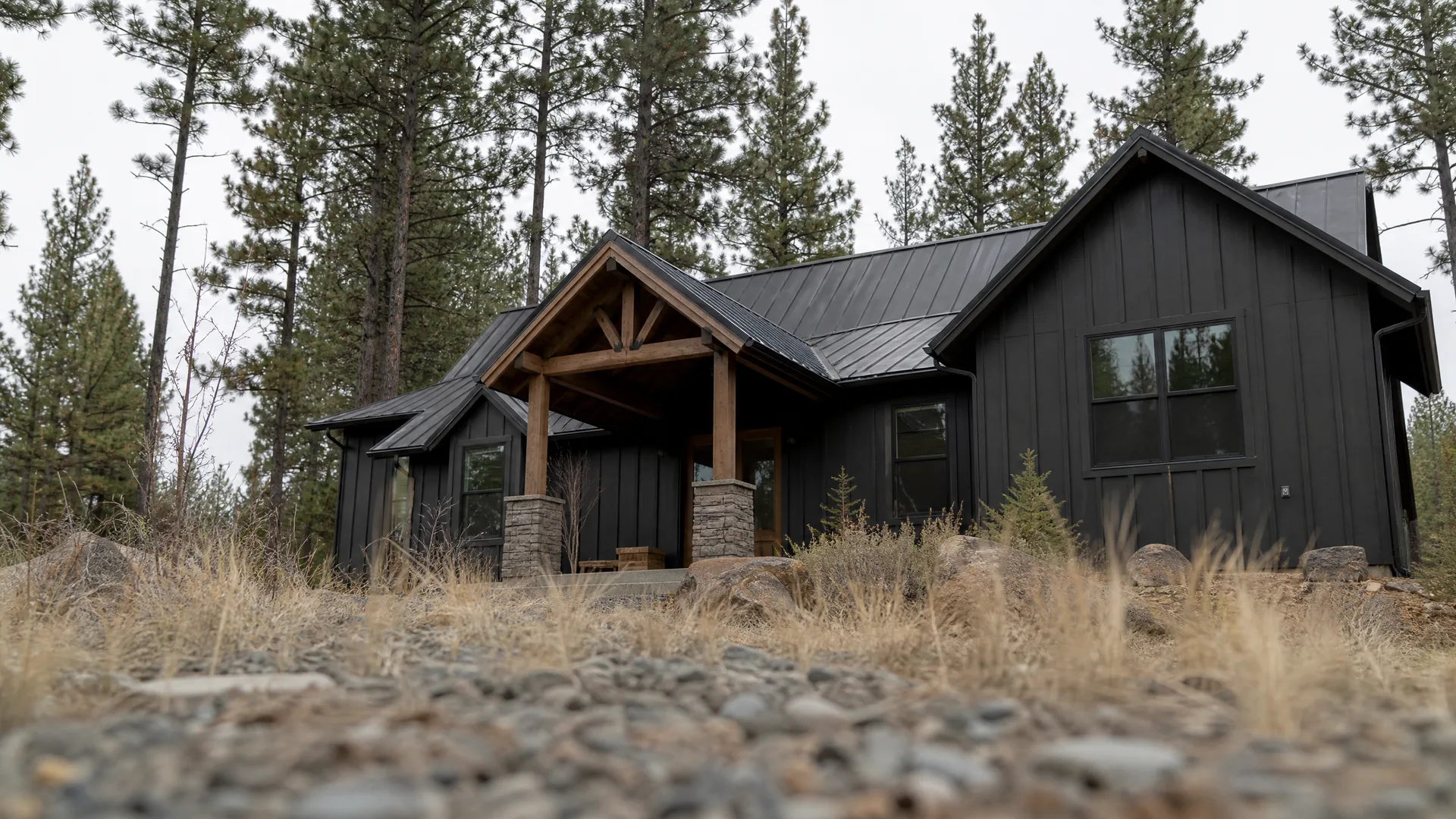




A single-story black board-and-batten house with a dark metal roof, timber-framed entry porch and stone pier bases, set among tall pine trees with dry grass and a rocky gravel foreground.

Heat Pump Installation in Republic, WA

Tell us about the job

Takes about a minute. No obligation.

New system or replacementHeat PumpFerry County, WA
Step 1 of 2

What ZIP code is the job in?

A heat pump sized right for Republic will keep up fine through a normal winter here. Overnight lows average 19°F across December, January and February, well within what a standard cold-climate heat pump is built to handle. Going bigger than the house needs doesn't make it more ready for a storm, it just runs less efficiently the rest of the year. What matters more here is backup power, since Ferry County sees frequent winter storms and blizzards. A correctly sized system paired with a plan for outages holds up better than an oversized one with no backup at all.

10 months
September through June, your system heats
19°F
the average winter night it heats against
76°F
the average summer afternoon it cools against
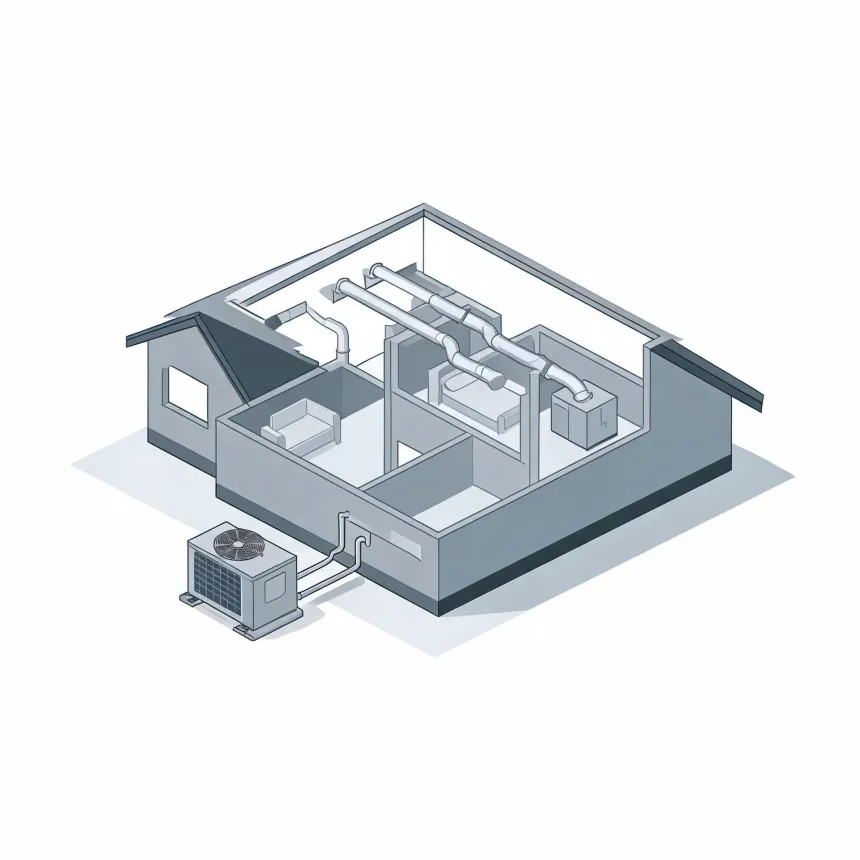
Isometric grayscale illustration of a cutaway house showing interior rooms, ceiling ductwork and an air handler, connected by lines to an outdoor condenser unit on a pad outside.

Half the homes in Ferry County were built in 1985 or earlier, half in 1985 or later.

A heat pump sized for the house works the same either way, so standard sizing is the right call.

A system sized for the house, not the storm, is the right call here

Power costs 11.9 cents a kWh statewide
113 winter storms from 2015 to 2024
Winter nights average 19°F

Wood heats more homes in Ferry County than anything else, 48.4 percent. Electricity comes next at 39.8 percent, and a heat pump runs on electricity. For a home already wired for electric heat, a heat pump installs as a straight swap, no new fuel line or tank to add. For a home that's been heating with wood, adding a heat pump means the electrical side has to support it, which is worth checking before you settle on a system. Either way, the question is whether the panel and wiring can carry the load, not whether a heat pump is the right kind of machine for here.

A new system here has a baseline to meet, and a credit to go with it

Republic sits in zone 6B, and any split-system heat pump installed here has to meet the federal minimum of 14.3 SEER2 and 7.5 HSPF2. That floor is already built into new equipment, so it's less something to shop for and more something a system has to clear. A federal tax credit is available for qualifying installations, worth checking against the system you're considering.

Find a contractor
A man in a gray t-shirt and tan work pants, seen from behind, carries a canvas tool bag up wooden porch steps toward a dark blue front door beside a potted shrub.
A white mini-split heat pump outdoor unit mounted on a concrete pad beside a gray-sided house, surrounded by gravel and green shrubs.

Install in August, before the season asks anything of it

Heat runs here from September through June, about ten months of the year. That leaves a short stretch to get a new system in before it's needed, and August is when homes here start lining up heat for the season ahead. Installed then, a heat pump has time to be tested and adjusted before the first cold night asks anything of it. Installed after heat season starts, there's no room for that, and no room to fix anything that comes up once it's running.

The old furnace or AC usually comes out

When a heat pump replaces a furnace or central air system, the installer disconnects and hauls away the old equipment as part of the job. A furnace gets disconnected from the gas line or electrical circuit and removed along with the old ductwork connections if they're being changed. An old AC unit outside gets disconnected and taken off the pad. None of it needs to stay for the new system to work.
A wood stove is a separate decision

If wood has been the main heat source, the stove or furnace doesn't have to go anywhere when a heat pump goes in. Plenty of homes run both, using the heat pump as the main system and keeping wood as backup or for the coldest stretches. That choice comes down to what the household wants, not anything the heat pump requires.

A few things push an installation toward more work, not just more equipment. Ductwork is one. If the existing ducts are undersized or leaky, a heat pump exposes that fast, since it moves air differently than a furnace does, and bringing the ducts up to spec adds labor the equipment cost doesn't cover. Electrical capacity is another. A heat pump draws power the old system may not have been wired for, so the panel and circuits sometimes need upgrading before the unit ever gets mounted. Where the outdoor unit goes matters too, since longer refrigerant line runs between indoor and outdoor units take more time and material than a short run. And a cold-climate heat pump, built to keep producing heat at low outdoor temperatures, costs more than a standard model, which is a separate question from how big the system is.

Installation day starts with the outdoor unit going onto its pad or wall bracket, then the indoor coil gets set in place, and refrigerant lines get run between them. Before any refrigerant goes in, the installer pulls a vacuum on those lines to clear out air and moisture, since either one left behind causes problems later. Electrical hookup comes next, tying the unit into its own circuit rather than sharing one meant for something else. Once it's charged and powered on, the installer checks airflow at the vents, checks the temperature difference between the air going in and the air coming out, and listens for anything that sounds off. A thermostat gets set up or swapped if the old one won't talk to the new system. None of this is quick, and skipping past the vacuum or the charge is usually how a system ends up back on someone's schedule.