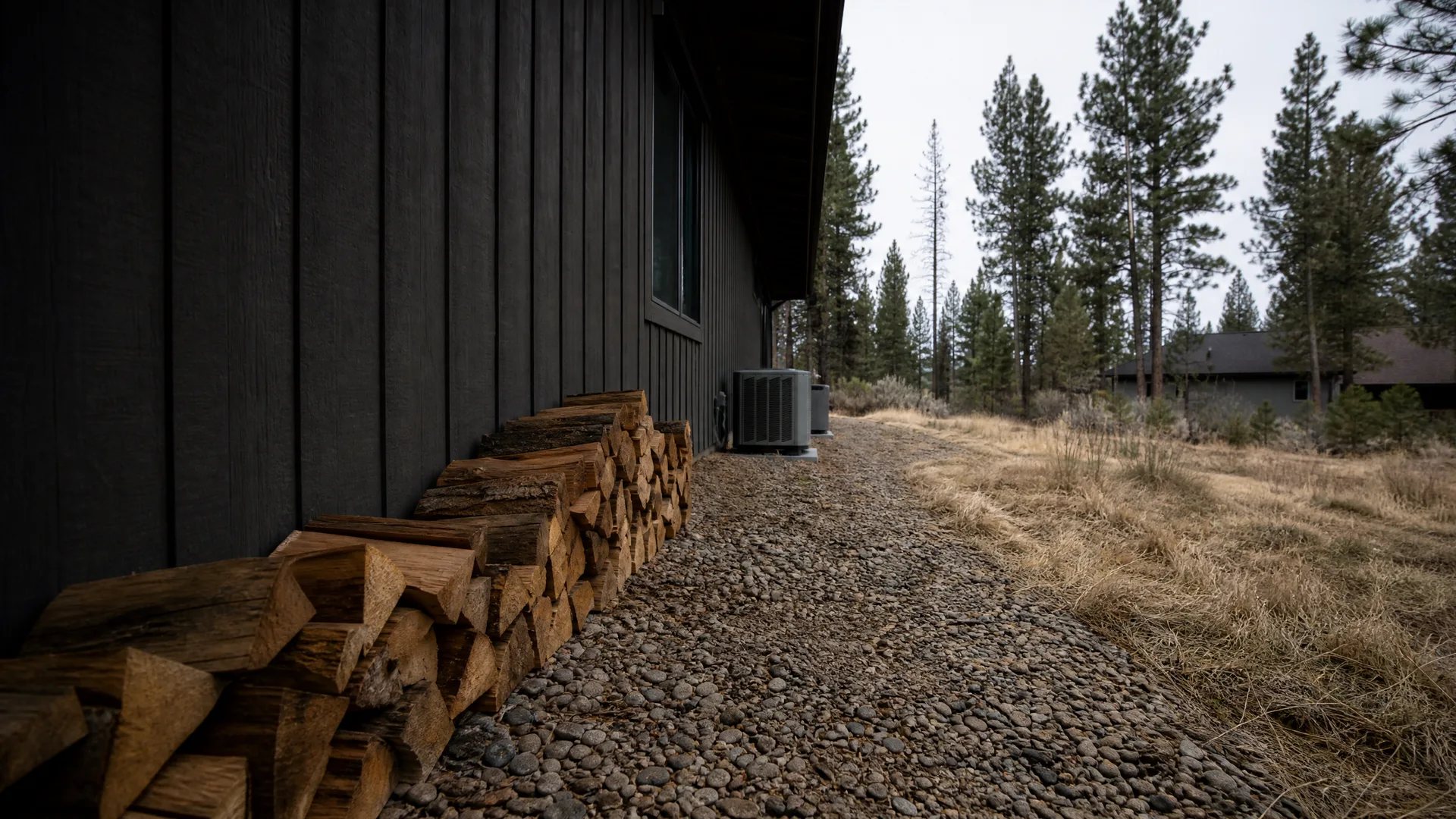






Stacked firewood along the base of a dark vertical-board house wall beside a gravel path, with an air conditioning unit, dry grass, and pine trees in the background.

Heat Pump Repair in Davenport, WA

Tell us about the job

Takes about a minute. No obligation.

RepairHeat PumpLincoln County, WA
Step 1 of 2

What ZIP code is the job in?

A technician starts by asking what the system is doing. Blowing cold air in heating mode, cycling on and off too fast, not responding to the thermostat at all. Then they go to the outdoor unit and the indoor air handler and look before touching anything. Frost pattern on the coil, oil stains near fittings, sound coming from the compressor. They'll check refrigerant pressures, test the capacitor and contactor, and look at the reversing valve, since that's the part that lets a heat pump switch between heating and cooling and it's often the cause when one mode works and the other doesn't. Electrical connections get checked too, since a loose wire can mimic a much bigger problem. By the end they can tell you what failed, why, and whether it makes sense to repair it or not.

10 months
September through June, your system heats
2 months
July through August, it cools
23°F
the average winter night it heats against
82°F
the average summer afternoon it cools against
Isometric line illustration of a cutaway house showing interior rooms with furniture, ceiling ductwork, and an outdoor condenser unit connected by lines along the exterior wall.
Your system heats September through June and cools July through August.

NOAA nClimDiv, 1991–2020 normals

Heat runs here from September through June, about ten months a year.

A heat pump that struggled last winter will struggle again when the first cold nights hit in September.

A heat pump here breaks down the same way it does anywhere else

Power costs 11.9 cents a kWh statewide
64 damaging wind events from 2015 to 2024
209 winter storms from 2015 to 2024
Winters here don't ask more of a heat pumpOvernight lows here average 23°F in December, January and February, well within what a heat pump is built to handle.

Half the homes in Lincoln County were built in 1972 or earlier. If your heat pump came with the house, it may be close to as old as the house itself, and a heat pump doesn't last as long as the house does. A repair on an older unit is worth doing if it's a simple fix, a capacitor or a contactor. It's worth less if the compressor is failing or the coil is leaking, because that's the kind of repair that buys you a year or two on a system that's already most of the way through its life. A technician can tell you which one you're looking at.

Get it looked at early

Problems tend to show up in the first weeks of the season, when the load hits a part that was already weak.

Find a contractor
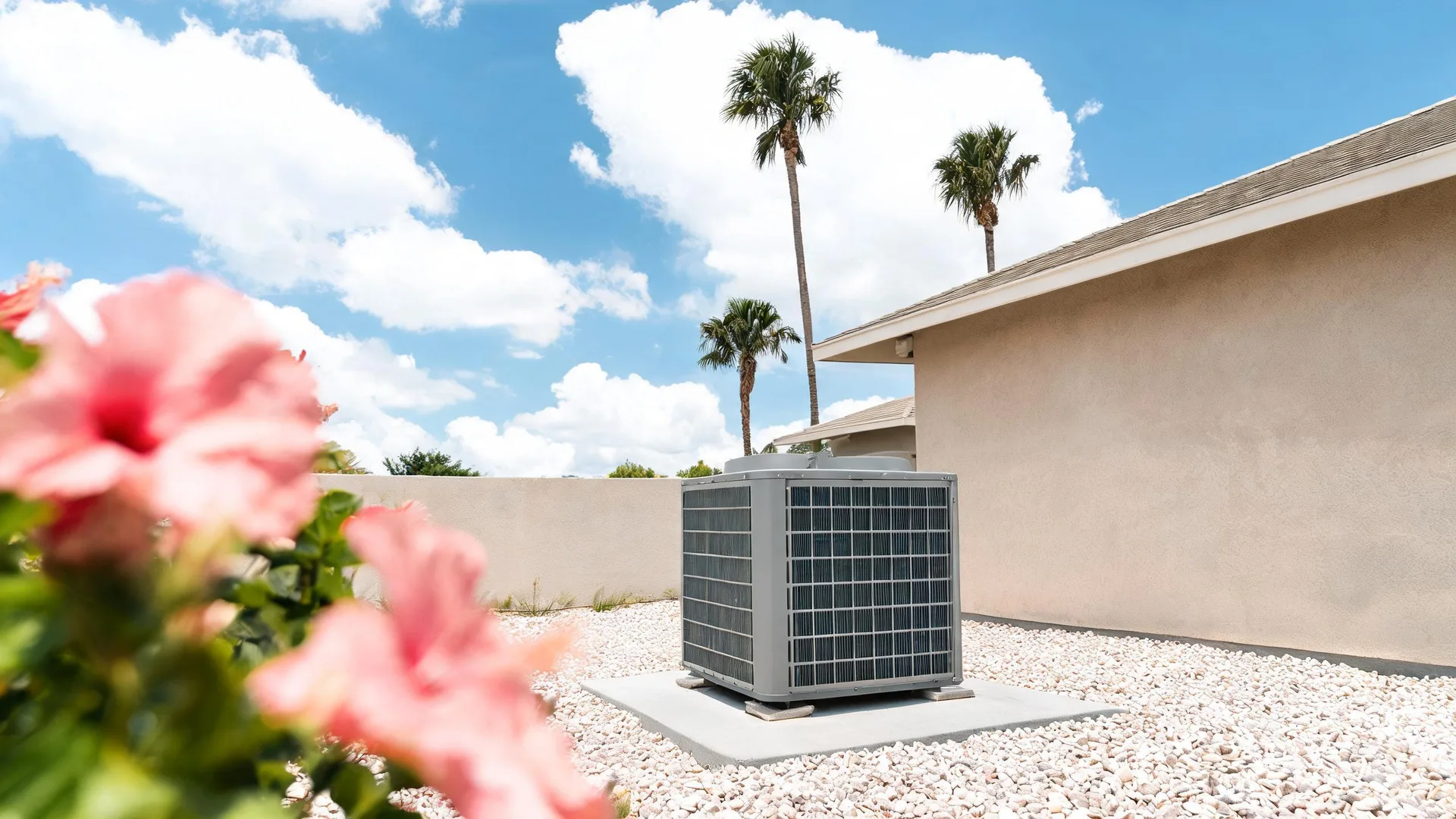
A residential heat pump outdoor unit mounted on a concrete pad next to a house with gray vinyl siding.

Ask how old it is before you fix it

If the unit is original to the house, ask the technician for its age before they quote the repair. That number, more than anything else, tells you whether to fix what's broken or start pricing a replacement.

Ice building up on the outdoor unit

A little frost during a defrost cycle is normal. A coil that stays caked in ice, or ice forming on the lines running into the house, means something isn't working. It could be the defrost board, the reversing valve, or a refrigerant charge that's run low. Left alone, that ice stops the coil from pulling any heat out of the air.
The system running constantly without catching up

A heat pump that never shuts off and still can't reach the temperature on the thermostat is losing ground somewhere. A failing compressor, a dirty coil, a refrigerant leak can all cause it. The longer that goes on, the more the system leans on the backup heat strip to make up the difference.

Before anyone comes out, there are a few things worth checking. Look at the thermostat first. Make sure it's set to heat, not cool or fan only, and that the setting is actually above room temperature. A dead thermostat battery can look exactly like a dead system. Check the breaker panel too, since the outdoor unit and the indoor air handler run on separate circuits and one can trip without the other. Go outside and look at the unit itself. Clear away anything piled against it, leaves, snow, a cover left on too long, since airflow in matters as much as airflow out. Check the air filter as well. A filter choked with dust starves the air handler and can bring on a lot of the same symptoms as a real mechanical failure. None of this fixes a bad compressor or a stuck reversing valve, but it rules out the simple stuff before anyone gets paid to find it.

A repair and a replacement are both just ways of buying heat. The real question is how many years you're buying and at what cost. A capacitor or a contactor is a small part doing one job, and swapping it out doesn't change anything else about the system's condition. A compressor is different. It can't really be swapped on its own, so when it's failing, the repair and the replacement start to cost close to the same thing. What matters more than age is what actually broke. A unit with a bad run capacitor is worth fixing almost every time. A unit with a refrigerant leak in the coil is a harder call, because once refrigerant is escaping, it tends to keep escaping, and chasing the leak down can cost more than it's worth. Ask what failed before asking whether it's worth fixing.