





Illuminated timber-and-stone luxury homes photographed at twilight with snow-capped mountains visible in the background.

Heat Pump Repair in Dayton, WA

Tell us about the job

Takes about a minute. No obligation.

RepairHeat PumpColumbia County, WA
Step 1 of 2

What ZIP code is the job in?

Winter nights in Dayton average 26°F, which is cold but not extreme, and a heat pump built for this area is sized to handle it without strain. The county sees plenty of winter storms, 53 of them over the past decade, but a heat pump doesn't fight wind or snow directly. It fights the temperature, and 26°F is well within what the system was built for. Damaging wind events are rarer, 13 over that same stretch, and matter more for outdoor unit placement than for the compressor itself. So when a heat pump here starts acting up, it's rarely because the climate wore it out. Something specific has gone wrong, and that's usually worth tracking down and fixing rather than replacing.

10 months
September through June, your system heats
2 months
July through August, it cools
26°F
the average winter night it heats against
79°F
the average summer afternoon it cools against
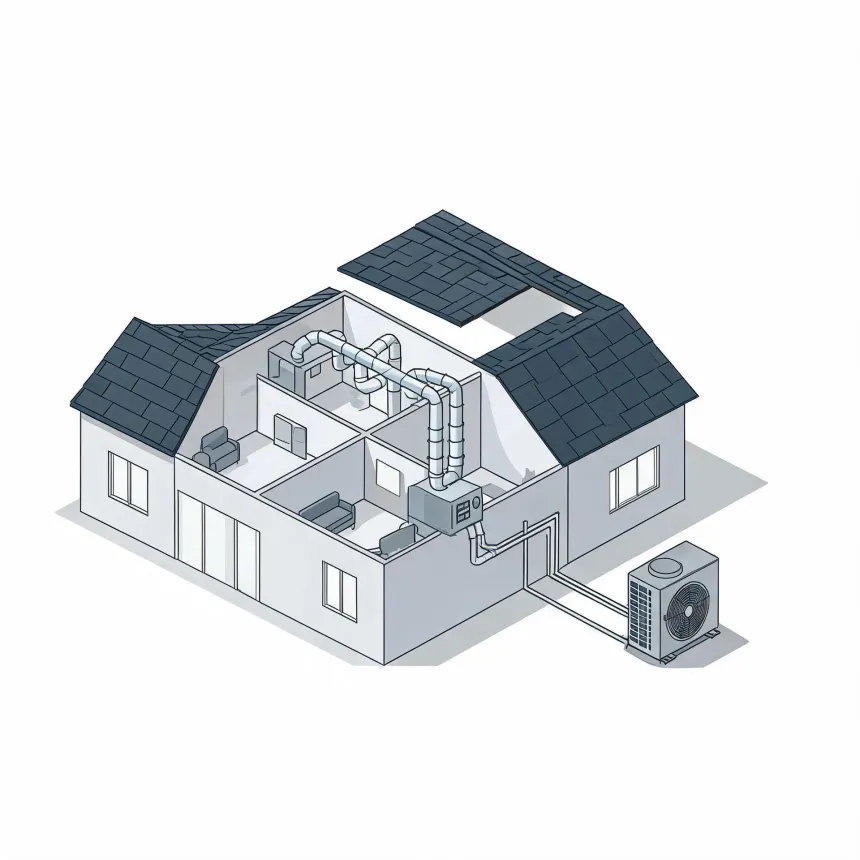
Isometric line illustration of a cutaway single-story house showing interior rooms, ceiling ductwork connected to an indoor air handler, and refrigerant lines running to an outdoor condenser unit on a pad.
Your system heats September through June and cools July through August.

NOAA nClimDiv, 1991–2020 normals

Heat here starts in September, after a long stretch where the heat pump barely ran.

The first cold nights put load on parts that sat idle since June, which is when trouble tends to show up.

Winter storms here are common. They don't explain a heat pump that's stopped working.

67 severe weather events from 2015 to 2024
23% of homes statewide lost power a day or more in 2024
13 damaging wind events from 2015 to 2024
Half these homes were built in 1953 or earlierHalf the homes in the county were built in 1953 or earlier. A heat pump that came with the house may be near the end of what it has left.

If your heat pump is struggling, get a contractor to look at the actual part instead of guessing at the cause. A compressor that won't start, a reversing valve stuck in one mode, low refrigerant from a slow leak, these are specific problems with specific fixes, and most of them are repairable. The outdoor unit takes the brunt of whatever weather comes through, so check it for ice buildup or debris before assuming the worst. Given how little strain this climate puts on the system, a repair tech is usually looking at a part that failed on its own, not one that gave out from overwork.

Find out how much life it has left before you fix it

Ask the contractor who looks at it how old the unit actually is before you pay for a major repair. If it came with the house, that age may be most of the story already.

Find a contractor
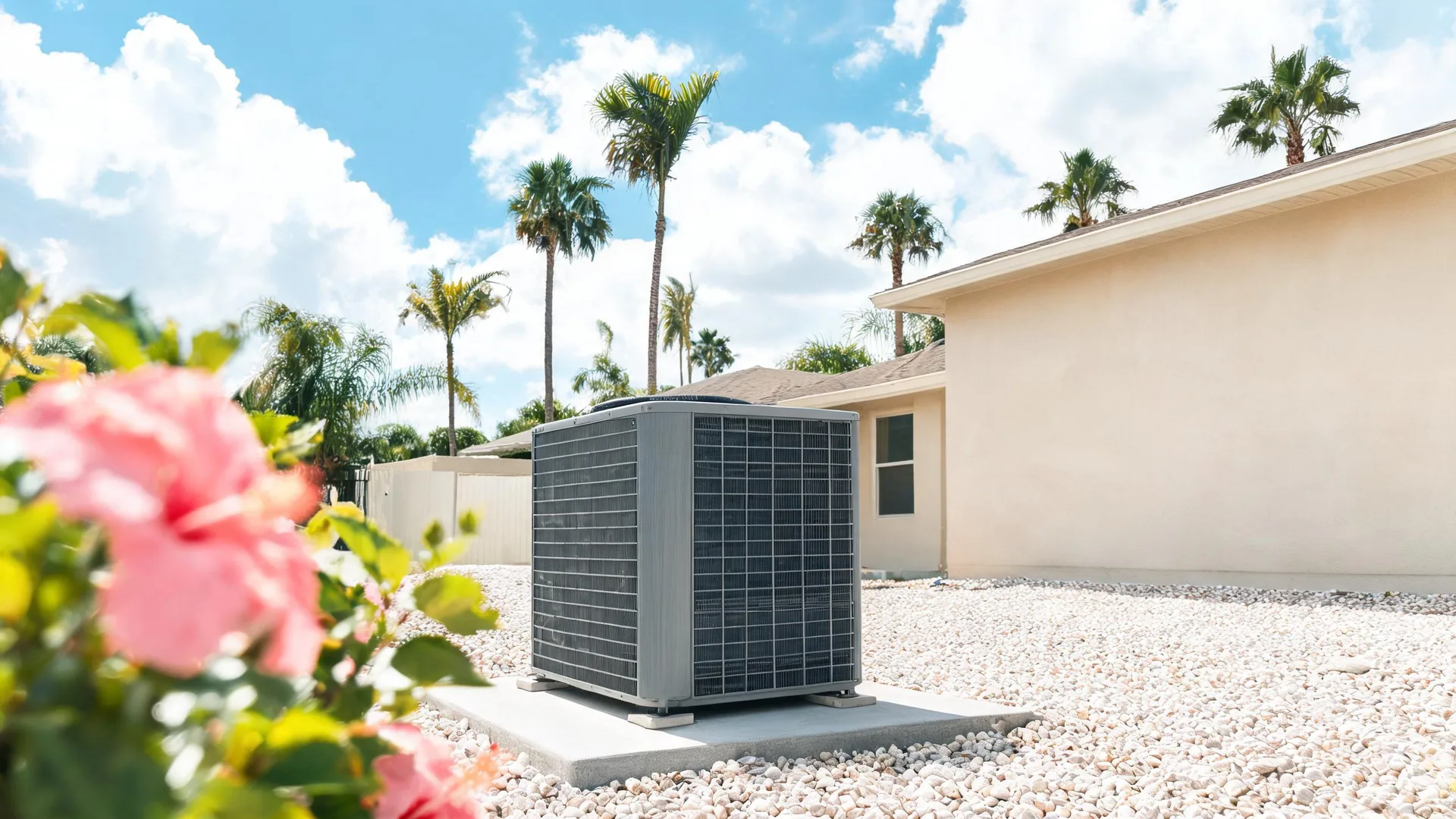
A gray heat pump condenser unit mounted on a concrete pad against the gray lap-siding exterior wall of a house.

What to check before you call

Before anyone comes out, look at the thermostat first. Check that it's set to heat, not cool, and that the set temperature is actually above room temperature. Go outside and look at the outdoor unit. If the coil is caked in ice or buried in leaves and debris, airflow is blocked and the system can't move heat the way it should. Check the indoor filter too. A filter clogged with dust chokes airflow on the inside the same way ice chokes it outside, and either one can make a heat pump run constantly without warming the house. Listen for what the system is actually doing. A unit that runs nonstop but never gets the house warm is different from one that short cycles, turning on and off every few minutes, and different again from one that doesn't start at all. Check the breaker panel too, since a tripped breaker will shut the whole system down and looks like a bigger failure than it is. None of this tells you which part failed, but it tells the contractor where to start instead of checking everything from scratch.

The reversing valve is a common point of failure

A heat pump that blows cold air in heating mode, or won't switch over at all, usually has a stuck reversing valve. The valve is what lets the system flip between heating and cooling. The solenoid that moves it can fail, or it can get stuck in one position after sitting unused for months.
Most other failures trace back to the refrigerant circuit

A compressor that hums but won't start, a system that runs constantly without heating the house, and ice building up on the outdoor coil often share the same cause. Refrigerant may be low from a slow leak. The compressor itself may be failing. Or a fan motor has stopped moving air across the coil. Any one of these throws off the whole cycle.

Most calls start with one of a few things. The house isn't reaching the set temperature no matter how long the system runs. The outdoor unit is coated in ice even though it's not that cold out. The air coming from the vents feels cool instead of warm, or the system switches on and off every few minutes instead of settling into a steady run. Some owners hear it before they feel it, a clicking at startup that doesn't resolve into the usual hum, or a hiss that wasn't there before. Any of these is worth a call. None of them tell you the part on their own, but they tell you something is actually wrong rather than just working harder than usual.

A heat pump has fewer moving parts than a furnace, and that makes the repair-or-replace call simpler. The compressor, the reversing valve, the fan motors. Each one either works or it doesn't, and a contractor can test each in turn rather than guessing. Age matters more than the symptom does. A unit still within its expected working life is almost always worth repairing, since one failed part doesn't mean the rest are close behind. A unit near the end of it is a different conversation, especially if this isn't the first repair call. Ask what failed and why, not just what it costs to fix. A reversing valve that stuck because it sat unused all summer is a different problem than a compressor failing from years of normal wear. The second one tends to come with company.