






A single-story dark wood house with a low moss-covered shingled roof and large windows, set behind a green lawn with ferns and shrubs, surrounded by tall conifer trees.

Heat Pump Repair in Ellensburg, WA

Tell us about the job

Takes about a minute. No obligation.

RepairHeat PumpKittitas County, WA
Step 1 of 2

What ZIP code is the job in?

Half the homes in Kittitas County were built in 1993 or later. That's a newer housing stock than you'll find in most counties, and it matters for a heat pump. A unit that came with a house built in the last couple decades hasn't logged the years a lot of other systems have. If yours is one of them, a breakdown now is more likely a specific part failing than the whole system wearing out. That's usually worth fixing.

10 months
September through June, your system heats
23°F
the average winter night it heats against
75°F
the average summer afternoon it cools against
Isometric grey-toned illustration of a cutaway house showing interior rooms, ceiling ductwork and an air handler, connected by lines to an outdoor condenser unit beside the building.

Overnight lows here average 23°F across December, January and February, nowhere near the extremes a heat pump can see elsewhere.

A heat pump that isn't fighting deep cold every winter holds up better, so a breakdown is more likely one failed part than a system at the end of its life.

Heat starts in September, and that's when a weak part gives out

Heat runs September through June
26 winter storms from 2015 to 2024
Winter nights average 23°F
Nothing about Ellensburg wears a heat pump out fasterElectricity here ran 11.90 cents per kilowatt-hour in 2024, and the winters aren't the problem either

A frozen coil or a sticking reversing valve won't fix itself by waiting. Ice on the coil blocks airflow, so the system pulls harder to move the same heat and the compressor runs hotter than it should. A reversing valve stuck partway can make the compressor work against itself, pushing refrigerant in a direction the system isn't set up for. Keep running a unit low on refrigerant and the compressor loses the oil that moves with it, and that's what actually wears the compressor down. A weak capacitor left in place makes the compressor or fan motor try and fail to start over and over, and that repeated strain on the motor windings is what turns a small part into a compressor replacement. The part that's struggling is rarely the part that ends up broken.

Get the part fixed, not the whole system replaced

If your heat pump came with the house, get the actual part diagnosed before anyone talks replacement. A system that age usually has a fix, not a reason to start over.

Find a contractor
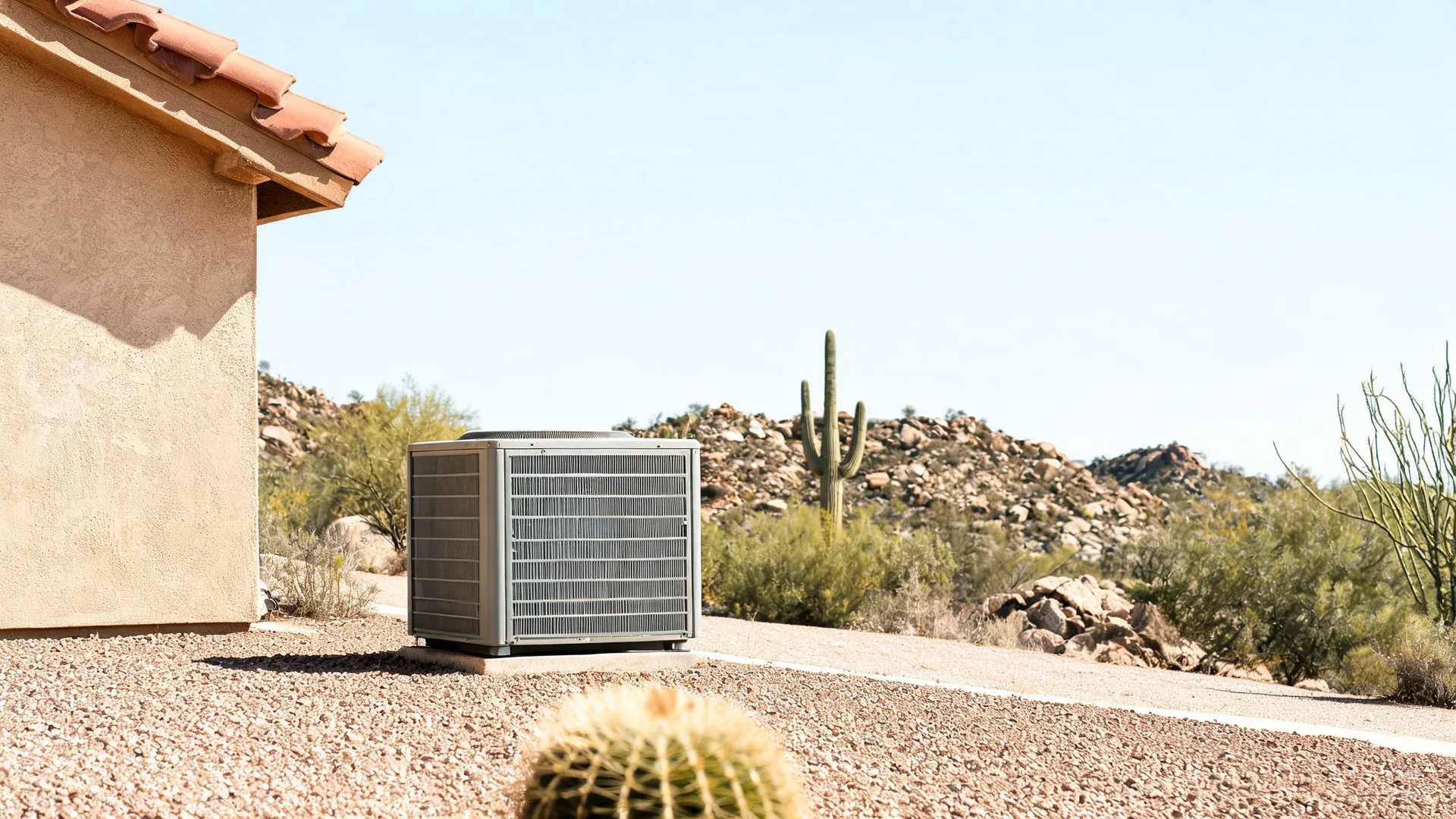
A residential heat pump outdoor unit mounted on a concrete pad next to a house with gray vinyl siding.

What to check before you call anyone

Before anyone comes out, check the thermostat first. Make sure it's set to heat and the set point is actually above room temperature, not bumped down by accident. Then look at the outdoor unit. If the coil is caked in ice or buried under snow, that's worth noting, but don't chip at it or hose it off. Check the breaker panel for a tripped breaker on the heat pump's circuit, and reset it once if it's tripped. Pull the air filter and hold it up to a light. If you can't see through it, that's restricting airflow and it's a simple swap. Walk through the house and check that supply vents aren't closed or blocked by furniture or rugs. If the system is running but the air coming out feels cool rather than warm, that can be normal during a defrost cycle, so give it a little time before deciding something's wrong. What you shouldn't touch is anything behind the access panels, the contactor, the capacitor, the board. Those need a meter and training to test safely.

A heat pump rarely fails all at once

Most breakdowns start as one bad part. A contactor pits and stops pulling in. A capacitor weakens and the compressor or fan struggles to start. A run capacitor going bad often shows up as a unit that hums but doesn't start, or a fan that spins slow. These are small parts to replace and the rest of the system keeps running fine once they're swapped.
What you notice tells a contractor where to look

Warm air that never gets quite warm enough points one direction. A unit that short cycles, turning on and off every few minutes, points another. Ice building up on the outdoor coil that doesn't clear during defrost is its own lead. Notice when the problem started and what the system was doing right before, that detail narrows the diagnosis before a contractor even opens the cabinet.

A reversing valve is where a lot of these repairs start. It's what switches the system between heat and cooling, and when it sticks, the unit keeps running but stops doing what the thermostat is asking for. A failing compressor shows up differently, usually as a unit that trips its breaker repeatedly or runs but barely moves warm air. Refrigerant doesn't get used up the way fuel does, so a system that's low almost always has a leak somewhere in the line set or coil, not just age catching up with it. Outdoor fan motors wear out from running constantly through the cold months, and a motor that's seized or slow to start is a straightforward swap, not a sign anything else is wrong. The defrost board is worth knowing about too. It tells the unit when to switch into defrost and back, and when it fails, ice builds up on the coil and never clears on its own.

A repair is worth making when the part failing is one part, not a symptom of the whole system straining. A contactor or capacitor going bad doesn't mean the compressor is next. Those parts wear on their own schedule and get replaced on their own, and a heat pump runs fine for years after. What changes the math is a compressor itself failing, or a coil leaking refrigerant in more than one spot. Those point to a system that's failing broadly, not a unit having one bad part. Age plays a role too, but it's secondary to what's actually broken. An older heat pump with a bad run capacitor is a quick fix. The same unit with a failed compressor is a harder call, since a compressor swap is a major repair on a system that's already most of the way through its working life. Ask what failed before asking how old the system is.