Three illuminated Craftsman-style houses with stone and wood-shingle facades line a wet residential street at night, surrounded by trees and landscaped gardens.

Heat Pump Repair in Lacey, WA

Tell us about the job

Takes about a minute. No obligation.

RepairHeat PumpThurston County, WA
Step 1 of 2

What ZIP code is the job in?

Winters here don't ask much of it

Overnight lows in Thurston County average 34°F through December, January and February. A heat pump isn't fighting single digits or working overtime to hold a setpoint. That's a mild load compared to most of the country.


So a breakdown usually isn't the climate's fault

When a heat pump here needs repair, it's rarely because the system got overworked. More often it's age, a part wearing out, or something that got missed at the last service. That's worth knowing, because those problems are usually fixable.

10 months
September through June, your system heats
34°F
the average winter night it heats against
75°F
the average summer afternoon it cools against
Isometric cutaway illustration of a single-story house with a dark gabled roof, showing interior rooms with ductwork leading to an indoor air handler and an outdoor condenser unit connected by lines on the ground outside.

Half the homes in Thurston County were built in 1991 or later.

A heat pump installed with a newer house like that still has working life ahead of it, which usually makes repair the right call.

Heat starts in September here, and that's when a weak part finally gets tested

Heat runs September through June
Winter nights average 34°F
Power costs 11.9 cents a kWh statewide

If your heat pump came with the house, check for a permit card or install sticker near the unit before you decide anything. A system put in within the last decade or two is usually a fine repair candidate, even if whatever failed feels like a big deal right now. Parts like a contactor, a capacitor, or a control board fail on their own schedule, not because the equipment is worn out. Replacing a unit that still has years ahead of it over one bad part rarely makes sense.

A system that hasn't had to work hard is worth fixing

A mild climate and a part that failed on its own schedule, not from strain, usually add up to a repair worth making. Get the cause checked before anyone talks about replacement.

Find a contractor
A man in a cap, dark long-sleeve shirt and brown pants carries a canvas tool bag up wooden porch steps toward a navy front door beside a potted shrub.
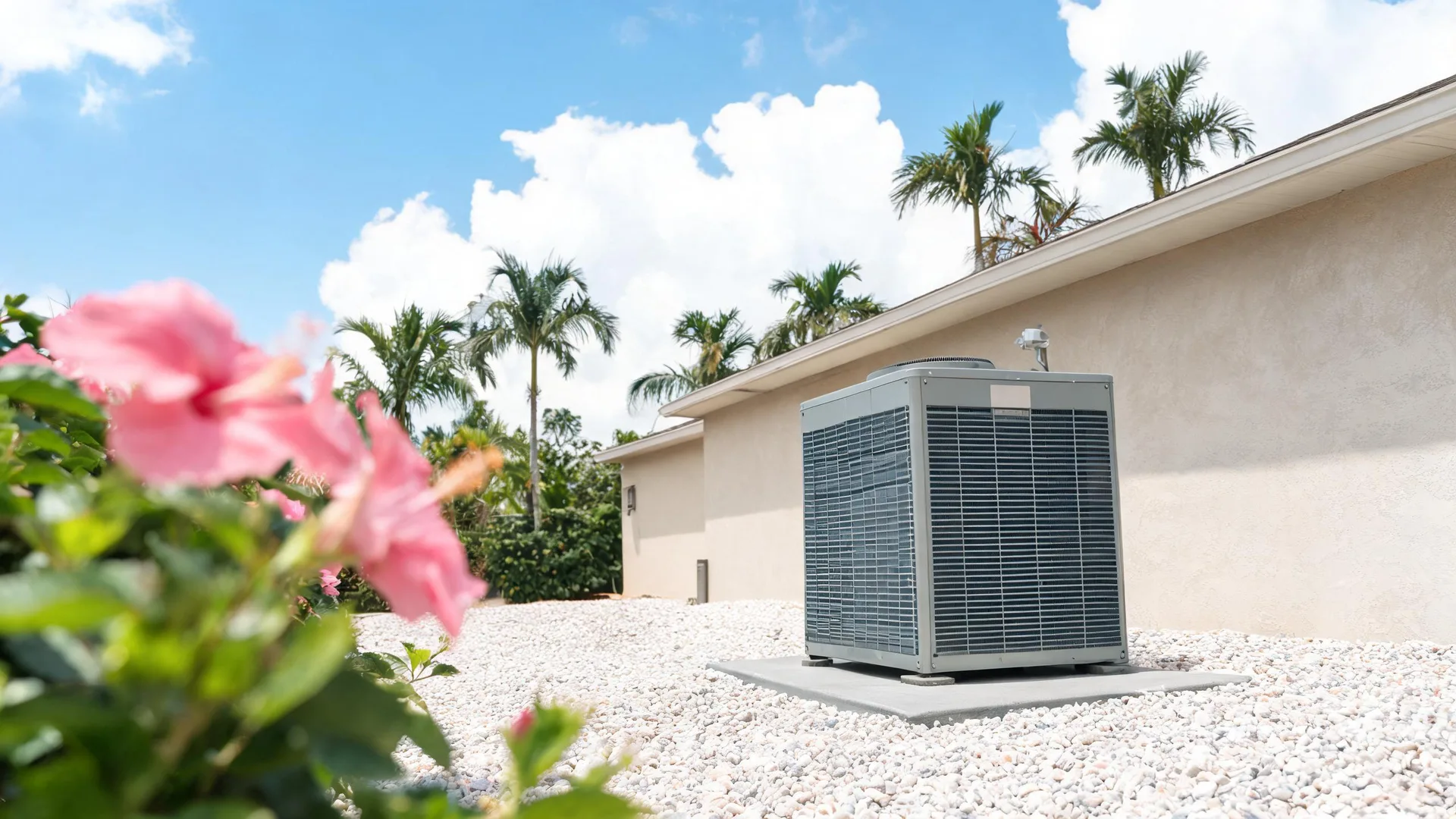
A gray heat pump condenser unit mounted on a concrete pad against the gray lap-siding exterior wall of a house.

A small problem left running becomes a bigger one

A failing part rarely stays a quiet, isolated problem if the system keeps running on it. A weak capacitor forces the compressor to draw harder on every start, and that extra draw heats the windings a little more each time. A refrigerant leak gets worse under the same logic, since the compressor keeps trying to move a full load of heat with a shrinking charge, and a compressor run low on refrigerant overheats because the refrigerant itself is what cools the motor. A stuck reversing valve left alone means the system keeps trying to shift modes against a valve that won't move, and that strain can take the valve from sticking to seized. Ice on the outdoor coil that isn't clearing does the same kind of damage. Every cycle buries the coil deeper, airflow drops further, and the compressor ends up working against a coil that can barely exchange heat at all. None of this means shut the system off and wait. It means the part that's struggling should get looked at before it takes something bigger down with it.

What you can check from inside

Check your thermostat first. Make sure it's set to heat and the setpoint is actually above room temperature, not just bumped a degree. Swap or clean the air filter if you haven't in a while. A clogged filter starves the system of airflow and can make it seem like the heat pump is failing when it's just choked. Walk through the house and check that supply vents are open and nothing is blocking them, like a couch or a curtain pushed against one.

What you can check from outside

Look at the outdoor unit. A light coating of frost in cold weather is normal, but a thick layer of ice that never melts off during the day means the defrost cycle isn't doing its job. Clear away leaves, mulch, or anything piled against the cabinet so air can move through it. Check that the breaker for the unit hasn't tripped. If the outdoor fan isn't turning at all while the system is calling for heat, that's worth noting for whoever comes out, but don't open the cabinet or touch anything inside it.

Most heat pump failures trace back to a handful of parts, not the whole system giving out. The capacitor that kicks the compressor or fan on weakens over years of starts until one day it can't deliver the jolt needed, and the unit hums but doesn't start. A contactor's contacts pit and burn from constant cycling, which can leave the outdoor unit silent or stuck running. Sensors that tell the system what temperature the coil or the air is running drift out of calibration, and when that happens the defrost cycle or the compressor gets bad information and reacts wrong. Low refrigerant almost always means a leak somewhere in the line set or coil, not normal use, since a sealed system doesn't lose charge on its own. A dirty outdoor coil blocks the airflow it needs to pull or release heat, and dirt builds up slowly enough that nobody notices until the system is struggling. None of these mean the equipment is done. They mean one part failed doing its job, and that part gets replaced on its own.

A diagnostic visit starts with questions, not tools. What were you noticing, and when did it start. Then comes a check of the thermostat call, the breaker, and the airflow before anything gets opened up, since those rule out the easy answers fast. Outside, gauges go on to check refrigerant pressure, and a meter checks the capacitor and contactor for the readings they're supposed to hold. Temperature readings get taken at the vents and compared to what the system should be putting out for the mode it's in. If the reversing valve is suspect, that gets tested directly rather than guessed at, since a stuck valve and a low charge can look similar from the symptoms alone. The visit ends with a specific part named as the cause, not a guess, because that's what tells you whether it's worth fixing.