





An outdoor HVAC condenser unit on a concrete pad in front of a two-story suburban house.

Heat Pump Repair in Mount Vernon, WA

Tell us about the job

Takes about a minute. No obligation.

RepairHeat PumpSkagit County, WA
Step 1 of 2

What ZIP code is the job in?

Half the homes in Skagit County were built in 1986 or later. If yours is one of them, your heat pump likely still has good years ahead of it. A repair now usually makes more sense than starting over with a new system. Worth asking whoever comes out whether the unit is original to the house or was swapped in later, since that changes what's worth fixing and what might be due for attention soon.

11 months
September through July, your system heats
30°F
the average winter night it heats against
69°F
the average summer afternoon it cools against
Isometric illustration of a cutaway house showing interior rooms, ceiling ductwork and an air handler, connected by lines to an outdoor condenser unit on a pad beside the building.

Winter nights here only average around 30°F.

A heat pump in Mount Vernon isn't straining against real cold, so a repair usually brings it back to a unit with life left in it.

Mount Vernon doesn't push a heat pump hard

Power costs 11.9 cents a kWh statewide
Winter nights average 30°F
Climate zone 4C

Nearly a quarter of Washington homes went at least a day without power in 2024. That matters for a heat pump two ways. The outdoor unit sits outside year round, so hail and wind-blown debris can bend fins or crack the housing even while it keeps running. And if the power drops for a day, the heat pump stops heating or cooling until it's back, no backup fuel to fall back on. If yours took a hit in a storm, or shut off during an outage and hasn't run right since, it's worth having someone look even if it seems fine now.

August is the month to get ahead of it

Heat here runs from September through July, nearly the whole year. August is the last quiet month before that starts. A part that's already weak usually shows it in the first few weeks of regular use, not before. Getting it checked in August means finding out now instead of on the first cold morning in September.

Find a contractor
A gray heat pump outdoor unit mounted on a concrete pad next to a residential house with lap siding and stone accents.

A mild climate is a reason to fix it

A heat pump that only has to fight a 30°F night isn't working as hard as one somewhere colder, and that shows up in the repair. The compressor and the parts around it have seen less strain, so a fix tends to hold. When something's acting up, that's the reason to get it looked at instead of replaced.

The reversing valve is a common failure point

A heat pump has one part a straight air conditioner doesn't have. It's the reversing valve, and it's what switches the unit between heating and cooling. When it sticks, the unit keeps running but blows the wrong temperature air, or gets stuck in one mode and won't switch. A lot of calls that sound like a dead compressor turn out to be this instead.
Short cycling wears the compressor out early

A heat pump that turns on and off every few minutes instead of running a full cycle puts extra strain on the compressor every time it starts. A dirty filter, a low refrigerant charge, or a thermostat sensor reading wrong can all cause it. Left alone long enough, the compressor is usually the part that fails first.

A heat pump that's struggling doesn't fail all at once. It fails a little, keeps running, and fails a little more. Low refrigerant is a good example. The system keeps moving what's left, so it still blows air, but the compressor works harder to do the same job and runs hotter than it should. Run it like that for weeks and the compressor is what gives out, not the leak that caused it. A failing capacitor is similar. It lets the compressor start rough instead of cutting it off, and every rough start wears the windings down a little more. The unit that seems fine except for a little noise is often the one building toward a bigger failure, not avoiding one.

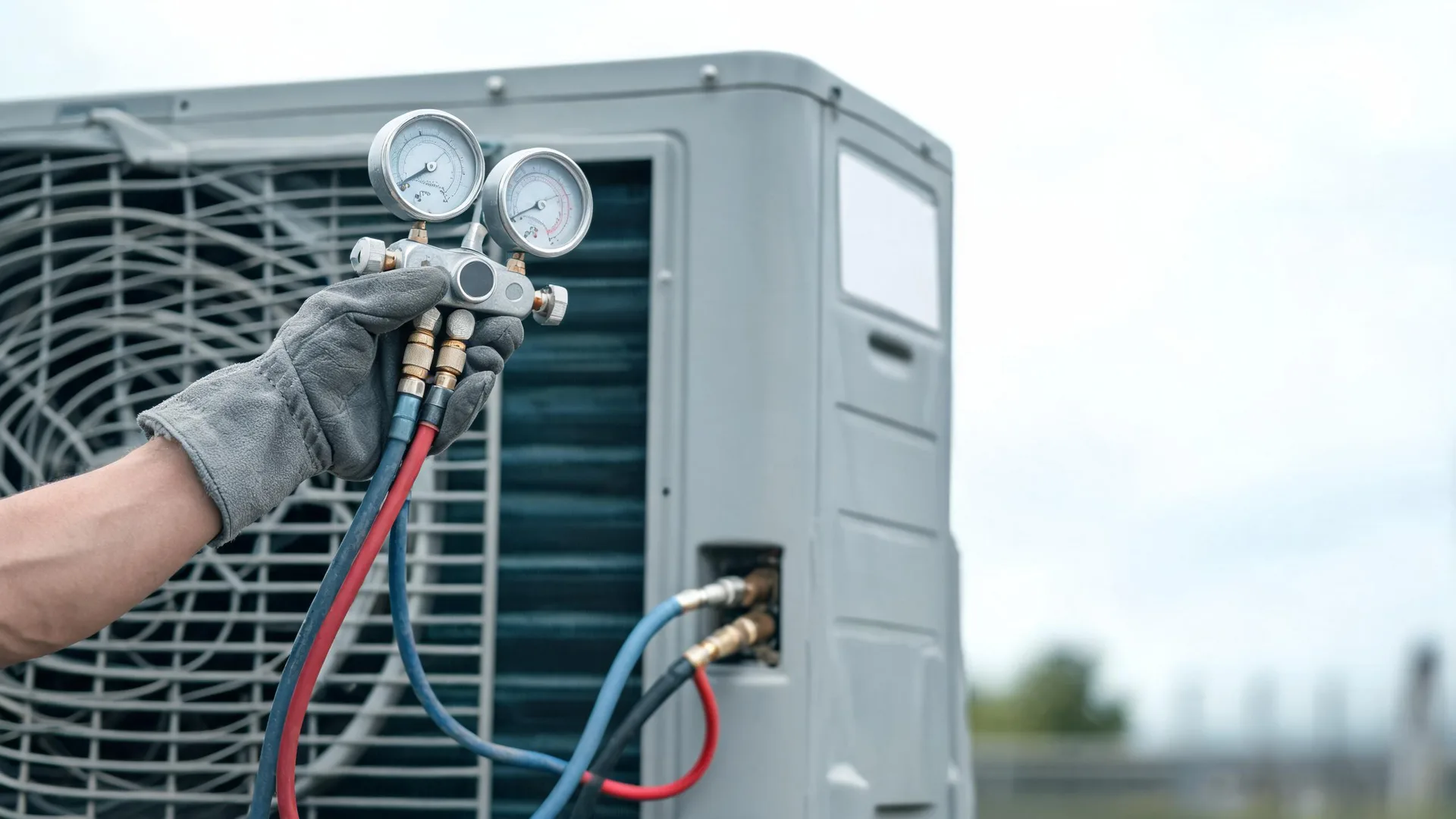
A diagnostic starts with questions before any panel comes off. What's it doing. When did it start. Does it happen in heating mode, cooling mode, or both. Then the tech checks the easy things first, the filter, the thermostat settings, whether the outdoor unit has anything blocking it. Gauges go on the lines to check refrigerant pressure, since that one reading points toward a leak, a bad valve, or a compressor working harder than it should. Electrical testing comes next, checking the capacitor and the contactor, because a part can look fine and still be failing. The reversing valve gets tested on its own. A stuck valve mimics other problems and gets misdiagnosed if nobody checks it directly. By the end, the tech should be able to say what's wrong and what it takes to fix it, not just that something is.