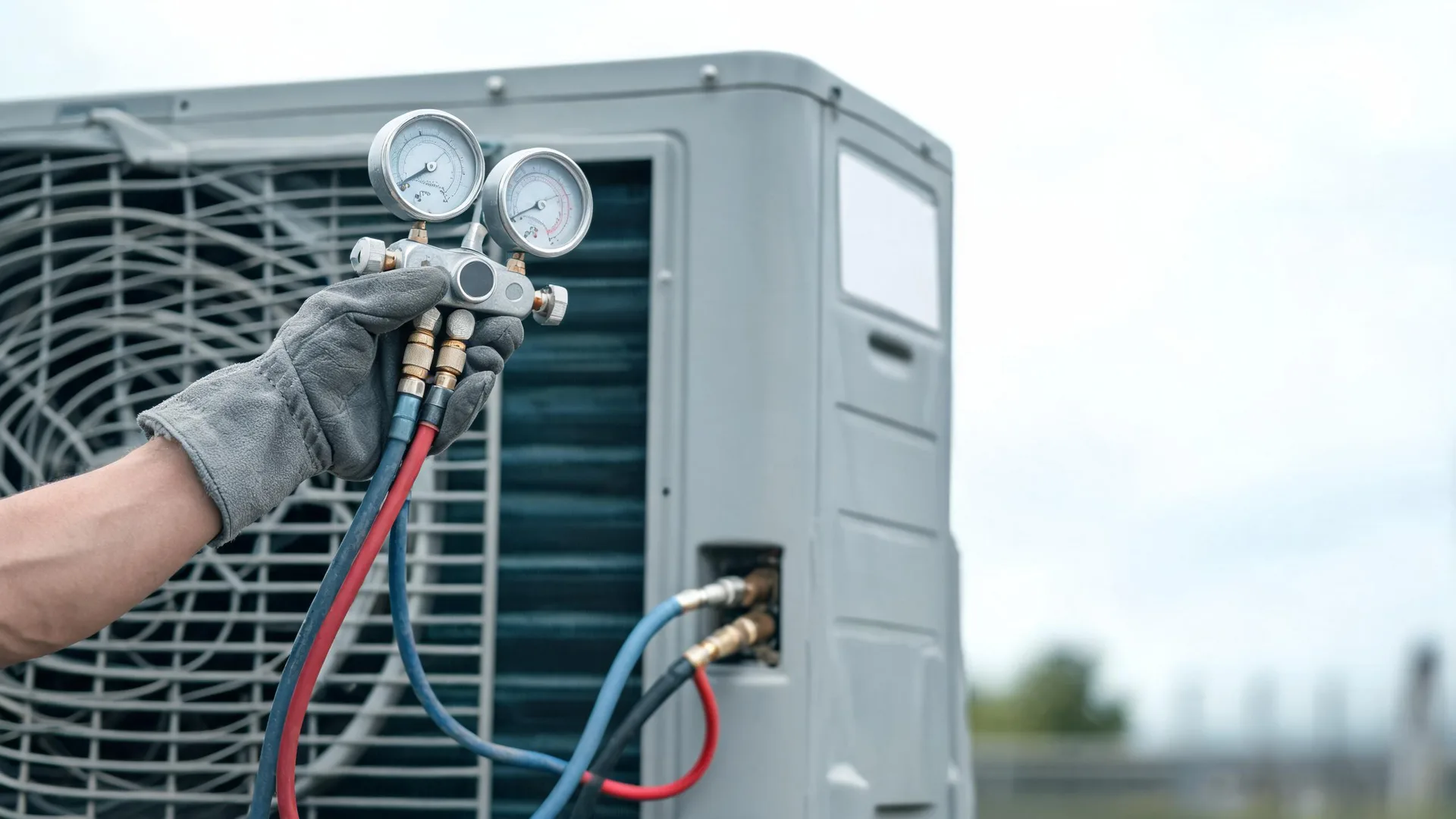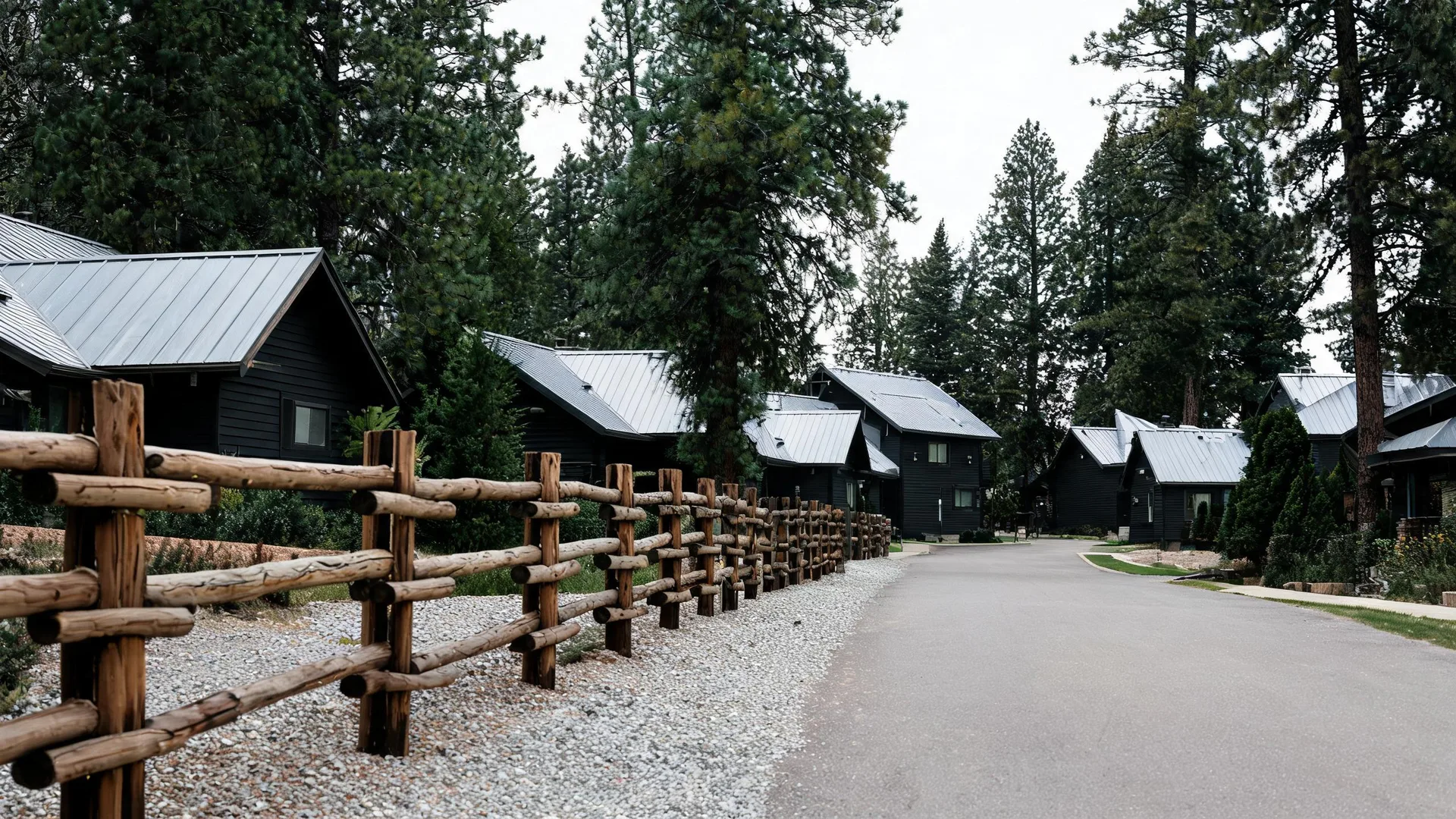
A paved road lined by a rustic wooden log fence and gravel leads past a row of dark-clad cabins with metal gable roofs among tall conifer trees under an overcast sky.

Heat Pump Repair in Omak, WA

Tell us about the job

Takes about a minute. No obligation.

RepairHeat PumpOkanogan County, WA
Step 1 of 2

What ZIP code is the job in?

A small fault spreads to other parts

A heat pump that keeps running on a bad capacitor forces the compressor to draw more current than it should. That heat builds up in the windings, and a compressor can burn out from a part that would have been a simple swap on its own. The same goes for a refrigerant leak. Run the system low on charge long enough and the compressor can suffer damage that has nothing to do with the original leak.


Shutting it off protects what still works

Leaving the system off until someone can look at it keeps the fault where it started. Running it in the meantime, hoping it holds, usually just adds a second problem to the one you already have. If it's tripping a breaker, making a grinding or clicking noise, or blowing air that isn't warm or cool, that's the system telling you to stop running it, not push through.

10 months
September through June, your system heats
19°F
the average winter night it heats against
74°F
the average summer afternoon it cools against
Isometric line illustration of a cutaway house showing interior rooms with furniture, ceiling ductwork under a dark shingled roof, and an outdoor condenser unit connected by lines on the right.

Heat here starts in September and the system runs clear through to June.

August is when a weak part still has time to get looked at before the first cold morning asks more of it.

Wind and snow are frequent here, but the cold itself is the harder test

38 damaging wind events from 2015 to 2024
243 winter storms from 2015 to 2024
Winter nights average 19°F

Half the homes around Omak were built in 1982 or earlier, half in 1982 or later, and that split doesn't point to any one cause when a heat pump quits. Older homes don't mean older equipment. If your system came with the house, that's worth checking, but a lot of these units have been swapped out since. Mobile homes make up close to a fifth of the housing here, and the heat pumps serving them fail for the same reasons as any other. A worn capacitor. A low refrigerant charge. A reversing valve that's stuck. Whatever's wrong with yours, it's probably not the house. It's the part.

Probably a known part, not a mystery

Nothing about Omak makes a heat pump fail in some unusual way. It's most likely a worn capacitor, a low charge, or a stuck reversing valve, the same parts that wear out on any heat pump anywhere. A unit working harder than it should to heat or cool shows up on the electric bill, and at 11.90 cents per kilowatthour that adds up over a season. Worth having someone look at it now rather than wait and find out in the cold.

Find a contractor
A man in a cap, long-sleeve shirt and work pants climbs porch steps toward a dark blue front door, carrying a worn canvas tool bag, with a small potted evergreen beside the entry.
A gray heat pump outdoor unit mounted on a concrete pad next to a residential house with lap siding and stone accents.

The steady cold is the load it was built for

Winters here run cold, averaging 19°F overnight through December, January and February, and that's the steady load a heat pump here is built to carry. It's not the same as the wind and snow events that hit Okanogan County dozens of times a year. Day into night, year after year, that's what the compressor is sized for. A unit that's otherwise sound usually keeps up with it. So if yours is struggling, look at the part that's failing before you assume the system is worn out. A capacitor, a valve, a low charge, those fail on their own timeline, not because the climate finally caught up with the machine.

Check the thermostat and the breaker first

Make sure the thermostat is set to the right mode and the temperature actually calls for heat or cool. Check the breaker panel too. A tripped breaker will shut the whole system down and reset is sometimes all it takes. If it trips again right after you reset it, stop there and leave it off.

Look at the outdoor unit and the filter

Walk outside and check that the outdoor unit isn't buried in leaves, ice, or anything blocking the fan. A coil that can't breathe makes the whole system struggle. Then check the filter inside. A filter packed with dust chokes airflow and can make a heat pump run long and still fall short of the set temperature.

Short cycling is one of the clearest signs something's wrong. A heat pump that turns on, runs for a short while, then shuts off again isn't resting, it's tripping on a safety switch somewhere, and that points to a refrigerant problem or a failing sensor. Ice on the outdoor coil in the middle of a mild day, not a cold snap, usually means the defrost cycle isn't kicking in when it should. Warm air blowing when the thermostat is set to heat, or air that never quite reaches the set temperature no matter how long it runs, points to the reversing valve or a loss of charge. A hissing or bubbling sound near the lines is refrigerant escaping somewhere it shouldn't. None of these fix themselves by waiting.

Age is the first thing worth weighing, but not the only one. A heat pump that's still fairly young can usually be repaired and keep running fine for years after. One that's older and already on its second or third failure in a short stretch is telling you something different than a single worn part would. What's actually broken matters more than how old the unit is. A failed sensor, capacitor, or contactor is a straightforward fix on almost any system. A failed compressor is a much bigger job, and on an older unit it's worth asking whether that repair money is better put toward a replacement that won't be followed by another failure soon after. A technician checking the refrigerant charge, the electrical draw, and the condition of the compressor can tell you which of those situations you're actually in.