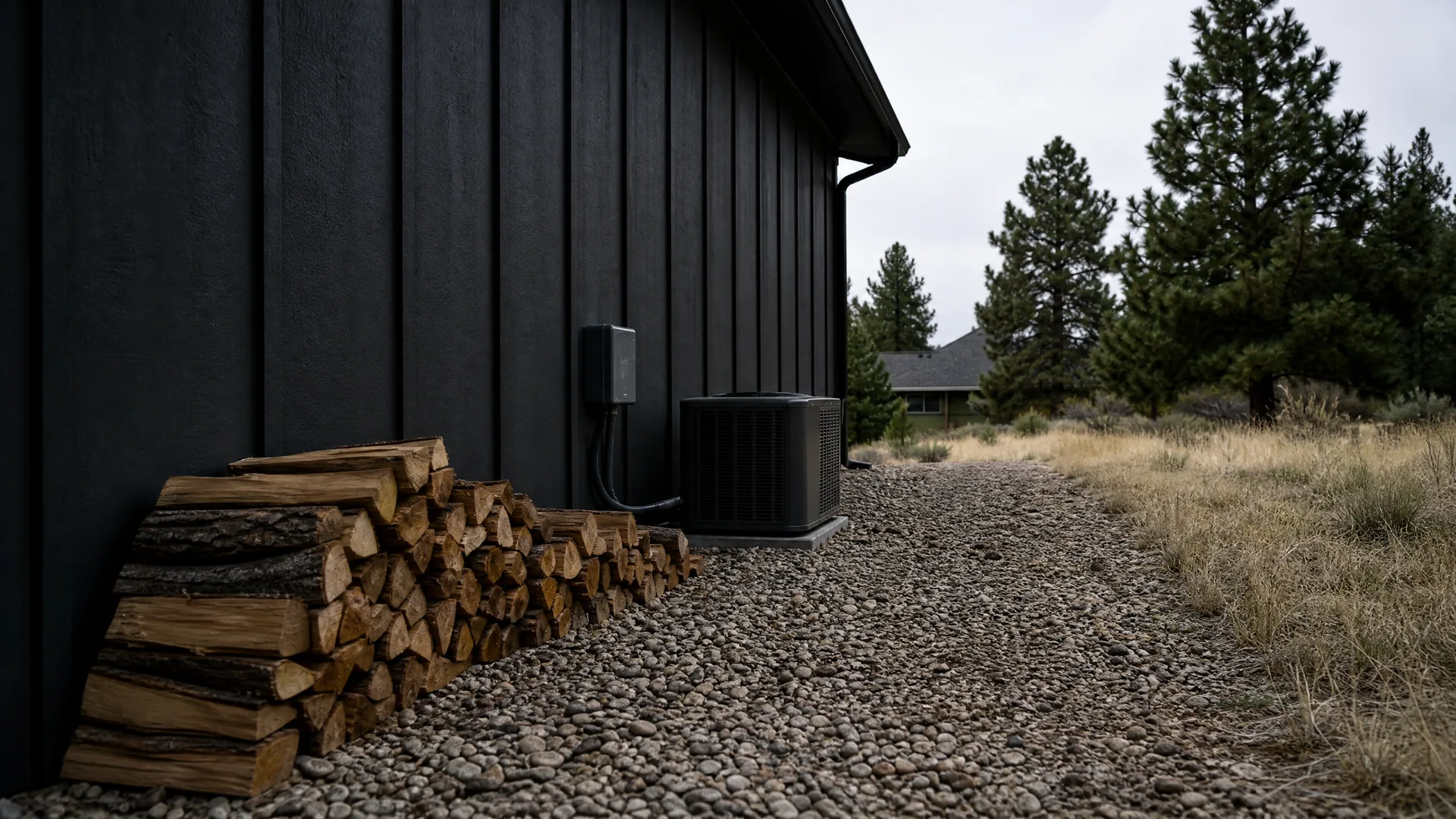






Exterior corner of a dark board-and-batten house with a stacked firewood pile, an electrical box and an outdoor condenser unit on a gravel bed, with dry grass and pine trees under an overcast sky.

Heat Pump Repair in Pasco, WA

Tell us about the job

Takes about a minute. No obligation.

RepairHeat PumpFranklin County, WA
Step 1 of 2

What ZIP code is the job in?

Winter here is not that hard on a heat pump. The overnight low across December, January and February only averages 28°F, which is mild compared to what these systems are built to handle. A unit here isn't fighting single-digit nights for weeks at a stretch. That means less strain on the compressor and the coils year after year. When a heat pump in Pasco starts acting up, it's usually something wore out or came loose, not a system that's been run into the ground. That's worth knowing before you decide whether to repair it or replace it.

8 months
October through May, your system heats
2 months
July through August, it cools
28°F
the average winter night it heats against
85°F
the average summer afternoon it cools against
Isometric cutaway illustration of a two-room house showing an indoor air handler with ductwork connected by lines to an outdoor condenser unit on a pad.
Your system heats October through May and cools July through August.

NOAA nClimDiv, 1991–2020 normals

Half the homes in Franklin County were built in 1997 or later.

A heat pump installed with a newer house still has years left in it, which is why repair is usually the better call here.

September and June are when a weak part finally gets found

Cooling runs July through August
Heat runs October through May
Climate zone 5B
If your heat pump is still young, fix itHalf the homes in Franklin County were built in 1997 or later.

A system that hasn't been fighting brutal cold for years is a good candidate for a repair instead of a replacement. Worn contactors, a failing capacitor, a sensor out of calibration, that's what a tech usually finds. None of it means the unit is done. Wind is the bigger risk here, Franklin County saw damaging wind 25 times between 2015 and 2024, enough to rattle outdoor unit connections or knock debris into the cabinet. That's a different problem than a compressor worn out from strain, and it's usually a simpler fix. Get it looked at before you assume the worst.

It's usually worth repairing

It has an easier job here than in most places, so your heat pump is often in decent shape. Repair is usually worth it.

Find a contractor
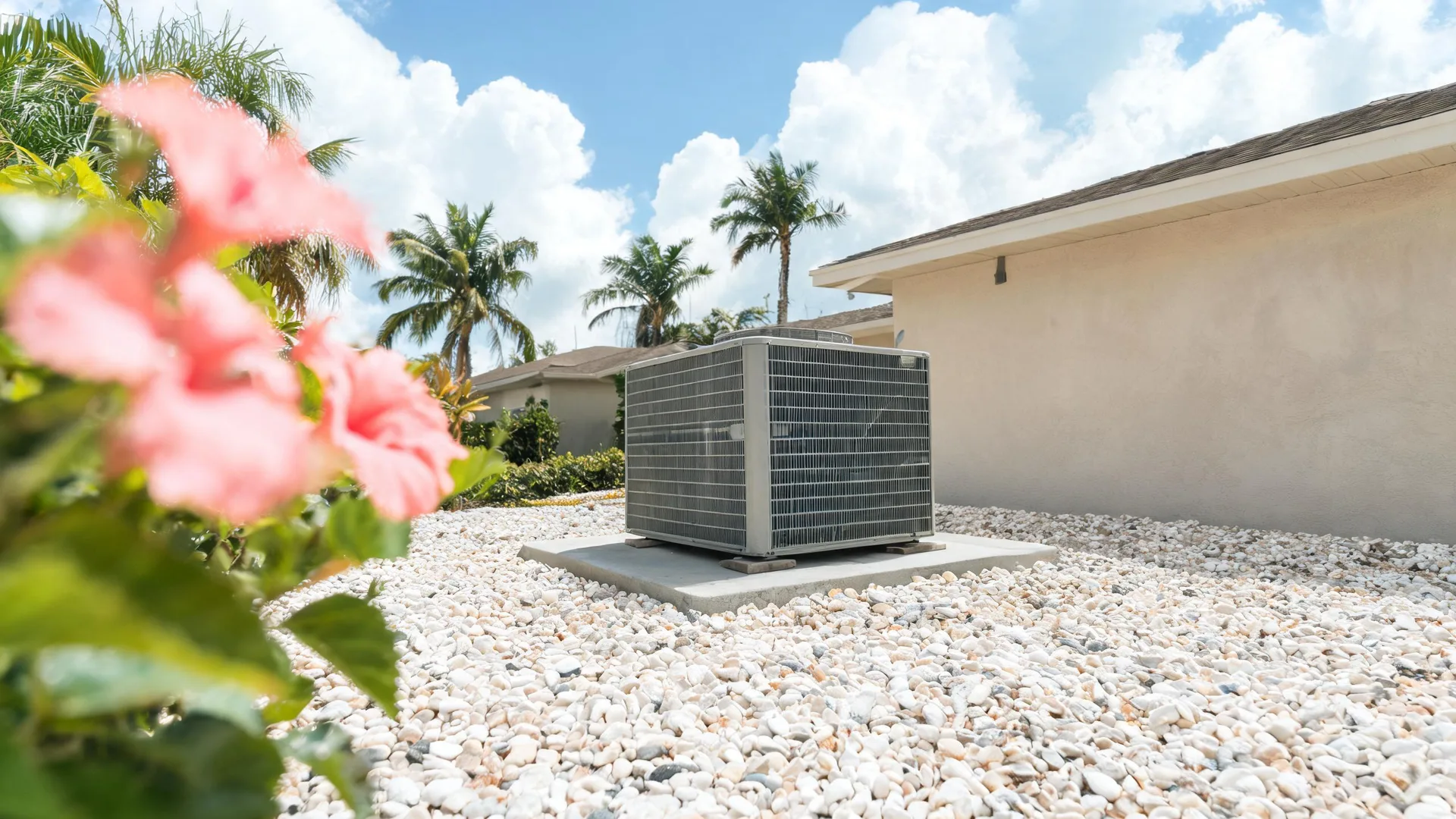
A residential heat pump outdoor unit mounted on a concrete pad next to a house with gray vinyl siding.

What wears out in a heat pump, regardless of climate

The reversing valve is the part unique to this machine, and it takes a hit every time the system switches between heating and cooling. Over enough cycles the valve can stick or leak, and when it does the unit may blow the wrong temperature air or get stuck in one mode. The outdoor coil is the other common failure point. It sits outside through everything, and dirt, leaves and grime build up on the fins until the coil can't give up heat or absorb it the way it should. Defrost is where a lot of winter failures start, and it has nothing to do with how cold it gets. The system needs to sense frost on the coil and clear it on a schedule, and a bad defrost sensor or control board leaves ice building up until airflow stops. Capacitors wear out from the heat of normal operation, which is why a unit can run fine for years and then fail to start on an ordinary day. None of this takes a hard winter. It's just what switching modes and running hours do to the parts over time.

A small problem doesn't stay small

A heat pump that's low on refrigerant or losing airflow across a dirty coil will keep trying to hit the set temperature anyway. The compressor works harder to make up the difference, running hotter and longer than it should. Left alone, that strain is what turns a slow leak or a dirty coil into a failed compressor.
Some faults get found sooner if you shut it off

A reversing valve that's starting to stick, or a defrost sensor reading wrong, will often get worse the longer the system keeps cycling on the fault. Ice can build past what the next defrost cycle clears, and a valve can wear into a position where it won't move at all. Rough cycling or ice that isn't melting off is worth calling in rather than waiting to see if it clears on its own.

Before you call anyone, look at the outdoor unit. If the fins are packed with leaves or grime, or something is sitting against the cabinet blocking airflow, clear that away and see if the unit runs better. Check the indoor filter too. A clogged filter starves the system of airflow and can mimic a much worse problem. Look at the outdoor coil for a heavy layer of ice. A little frost in winter is normal, the system clears it on its own, but ice that's thick or has been there for hours means defrost isn't working. Check your thermostat batteries and settings before assuming the unit itself is at fault. If the system is blowing air that's not warm enough or not cold enough for the mode it's in, that's worth noting for the tech rather than something to chase down yourself.

A diagnostic call starts outside at the unit itself, checking the coil, the fan, and the line set before anything gets opened up. Inside, the tech checks static pressure and temperature split across the system, which says a lot about whether airflow or refrigerant charge is the problem. Electrical parts get tested under load, since a capacitor or contactor can look fine sitting still and fail the moment it's asked to work. The reversing valve gets checked by watching how the system responds when switched between heating and cooling, since a valve that's slow to shift shows up there before it shows up anywhere else. Expect the tech to walk you through what they found before any work starts.