A rustic log rail fence in the foreground beside a gravel shoulder and paved lane lined with dark-clad cabins with metal gabled roofs, surrounded by tall pine trees under an overcast sky.

Heat Pump Repair in Pomeroy, WA

Tell us about the job

Takes about a minute. No obligation.

RepairHeat PumpGarfield County, WA
Step 1 of 2

What ZIP code is the job in?

August is when a weak heat pump shows it

Heat in Garfield County runs September through June, ten months straight. The first cold stretch in August or early September puts a load on the system that summer never did, and a part that was already marginal tends to fail right then.


What that means for a repair call now

If your heat pump is struggling as the weather turns, the cause is usually something that was already wearing down, not damage from how this place runs the system. Getting it diagnosed now, before the long heating stretch sets in, is worth more than waiting to see if it works itself out.

10 months
September through June, your system heats
2 months
July through August, it cools
27°F
the average winter night it heats against
80°F
the average summer afternoon it cools against
Isometric cutaway illustration of a single-story house showing interior ductwork, an indoor air handler, and an outdoor condenser unit connected by lines along the exterior wall.
Your system heats September through June and cools July through August.

NOAA nClimDiv, 1991–2020 normals

Winters here average 27 degrees overnight, but a heat pump cycling at that temperature isn't under unusual strain.

When one starts struggling in Pomeroy, the cause is almost always a part that was already failing, not the cold itself.

Half the homes in Garfield County date to 1957 or earlier, old enough that a struggling heat pump may just be worn out

Half the homes here were built by 1957
12 damaging wind events from 2015 to 2024
2 hail events from 2015 to 2024
A repair is usually worth it here34 winter storms between 2015 and 2024, and none of them wear out a heat pump by themselves.

If your heat pump came with the house, ask the contractor straight out how much life is left in it before you agree to a repair. Half the homes in Garfield County were built in 1957 or earlier, and a compressor or reversing valve failing in a system that old is often the first of several things to go. A repair can still be the right call, especially if the unit's been replaced more recently than the house itself. The point is to ask before you pay, not after.

Get it looked at early

Problems tend to show up in the first weeks of the season, when the load hits a part that was already weak.

Find a contractor
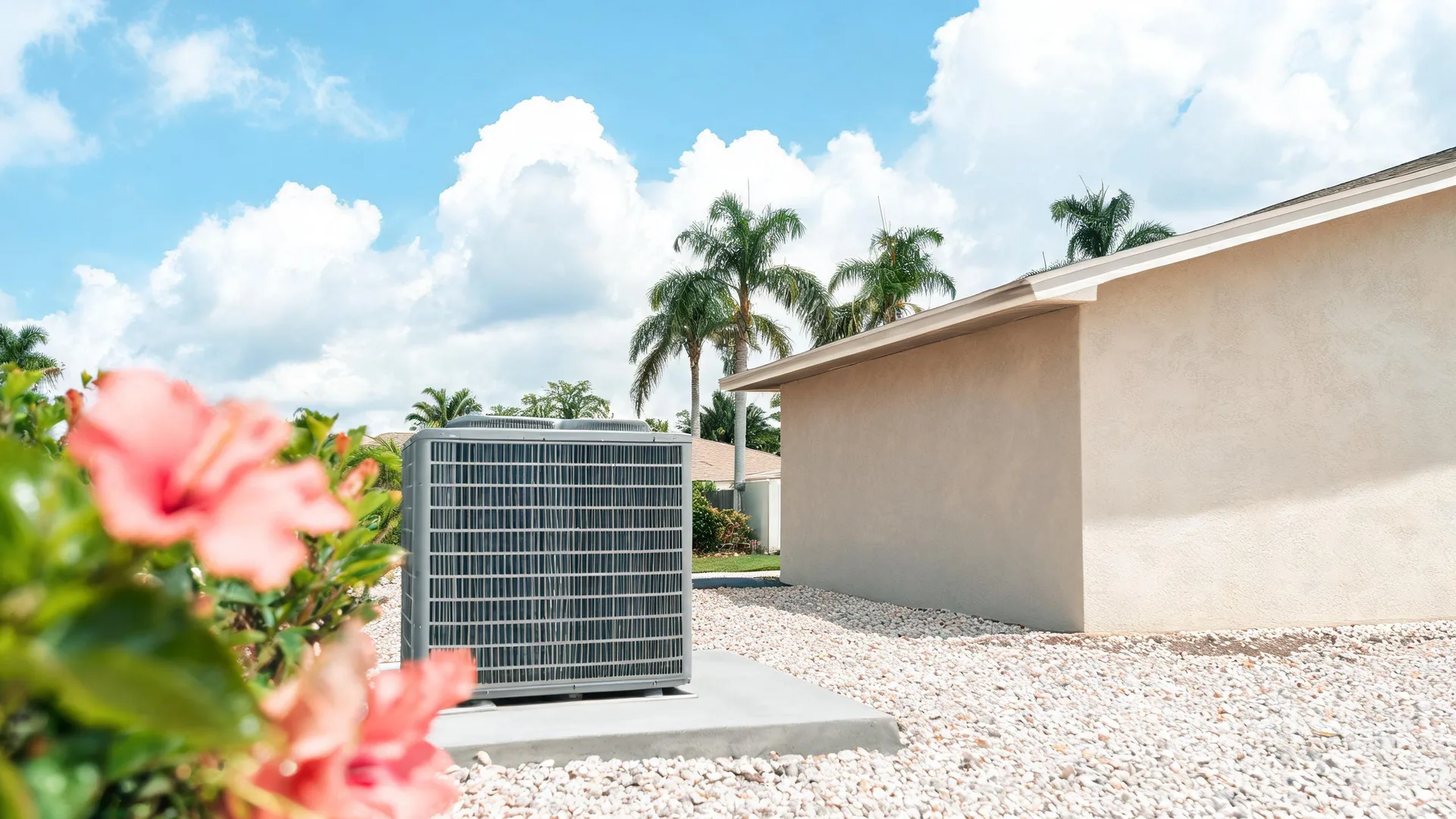
A gray heat pump outdoor unit mounted on a concrete pad next to the stone-accented exterior wall of a house.

Running it while it struggles spreads the damage further

A heat pump that's struggling doesn't fix itself by staying on. If the reversing valve is sticking, the system keeps trying to switch between heating and cooling and wears the valve further each time it tries. A low refrigerant charge means the compressor runs longer to make the same heat, and that extra runtime is what burns out a compressor that might have otherwise lasted years more. A failing capacitor puts strain on the motor it's supposed to start smoothly, and a motor working against a bad capacitor runs hotter than it should every time it kicks on. None of this gets better with more hours on the clock. Left alone, a part that's struggling drags down whatever's next in line, and a problem that was small becomes the reason the whole system needs replacing.

What you can check yourself

Look at the outdoor unit first. If the coil is caked with ice beyond the thin frost that's normal in defrost cycles, or if leaves and debris are packed around it, that's worth noting before anyone comes out. Check the thermostat is set to heat and the temperature is actually set above room temp. Check your breaker panel for a tripped breaker, since a heat pump that won't start at all is sometimes that simple. Check the filter. A filter packed with dust chokes airflow and can make the system struggle or ice up even when every other part is fine.

What to leave alone

Don't take the outdoor unit apart or touch the refrigerant lines. Low refrigerant charge is a repair that needs gauges and a license, not something to top off yourself. Don't chip ice off the coil with a tool, since that can bend the fins or puncture the coil itself. If the system is making a grinding or clicking sound, or the reversing valve seems to be hunting between heating and cooling, shut it off at the thermostat and let a contractor look at it rather than running it to see if it clears up on its own.

Most calls start with the system running but not keeping up. The house feels cooler than the thermostat says it should, or warm air comes out of the vents but not warm enough to keep pace. Sometimes it's short cycling, turning on and off in quick bursts instead of running a full cycle, which is hard on the compressor and a sign something's already off. A hissing or bubbling sound near the lines points to refrigerant escaping where it shouldn't. Ice on the indoor coil, not just the outdoor one, usually means airflow or charge is wrong somewhere in the system. If the outdoor fan isn't spinning while the unit is clearly trying to run, that's not something to wait out.

A diagnostic call starts outside, at the unit itself. The contractor checks the refrigerant charge with gauges, since that number tells them whether the compressor is working harder than it should. They'll check the capacitor and the contactor, the parts that get the compressor and fan started, because a weak one shows up under test long before it fails outright. Inside, they'll pull the filter and check airflow across the coil, since restricted air can look like a refrigerant problem when it isn't one. They'll run the system in both directions, heating and cooling, to see whether the reversing valve actually switches clean or hangs partway. Most of what's wrong doesn't show while the system sits off. It shows once it's running and loaded up, which is why the visit includes watching it work, not just looking at it.