A row of illuminated timber-frame and stone houses photographed at dusk, with evergreen trees and a mountain range in the background.

Heat Pump Repair in Pullman, WA

Tell us about the job

Takes about a minute. No obligation.

RepairHeat PumpWhitman County, WA
Step 1 of 2

What ZIP code is the job in?

Most breakdowns happen early in the season

A heat pump that struggled last year often makes it to the end of the season anyway, then fails as soon as it's asked to work hard again. That first cold snap in September or the first warm stretch in July is when a weak part finally gives out.


The cause is usually something ordinary

A failing capacitor, a low refrigerant charge, a worn contactor. These are the parts that give out under load, and they're the same parts that fail in heat pumps anywhere. Nothing about a system here makes it more likely to be something else.

9 months
September through May, your system heats
2 months
July through August, it cools
27°F
the average winter night it heats against
82°F
the average summer afternoon it cools against
Isometric line illustration of a cutaway single-story house showing interior ductwork, an indoor air handler unit, and an outdoor condenser connected by refrigerant lines, with a dark shingled roof.
Your system heats September through May and cools July through August.

NOAA nClimDiv, 1991–2020 normals

Winters here hold around 27°F on average, not deep cold that pushes a heat pump to its limit for months on end.

A heat pump that's been kept up usually has the life left in it to make repair the right call.

An older house here doesn't change what's wrong with your heat pump

Half the homes here were built by 1977
Climate zone 5B
Power costs 11.9 cents a kWh statewide
Pullman heat pumps don't work hard hereWinter lows average 27°F, well short of what pushes a heat pump past its limit

The age of the unit matters less than what's actually wrong with it. A heat pump that won't switch into defrost mode might just need a new defrost control board, a straightforward fix. One that's lost refrigerant and lost it again the following year has a leak somewhere in the coil, and that's a different conversation. The compressor is the part that decides things. It's the most expensive part to replace on its own, and if it's failing, putting money into anything else on that unit doesn't make sense. A tech can tell you which situation you're in by checking pressures and listening to how the system runs, not by looking at how many years it's been outside.

Get it looked at early

Problems tend to show up in the first weeks of the season, when the load hits a part that was already weak.

Find a contractor
A man in a dark shirt and work boots carries a canvas tool bag filled with tools up wooden porch steps toward a navy blue front door of a shingled house, with a potted shrub to the right.
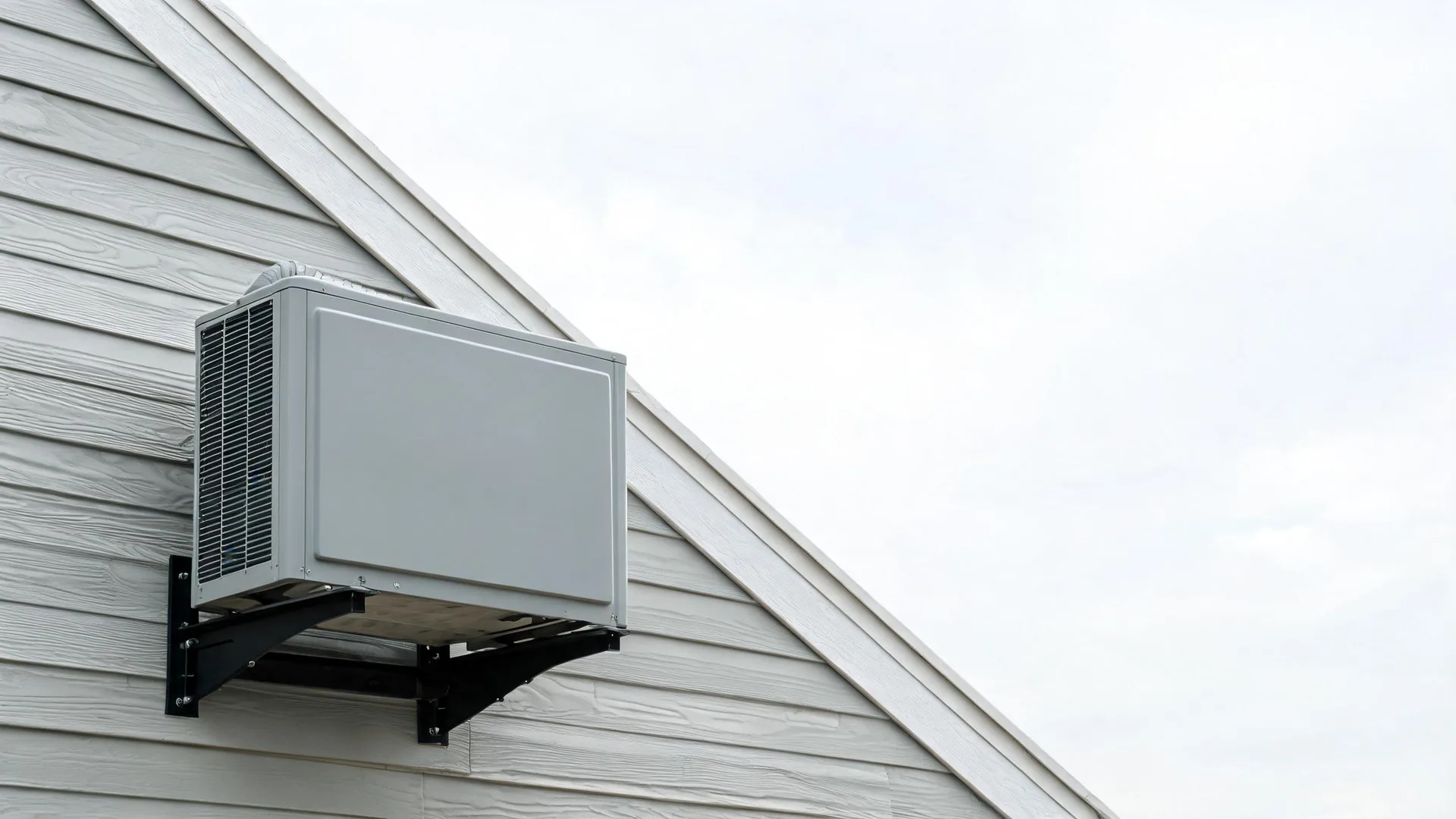
A residential heat pump outdoor unit mounted on a concrete pad next to a house with gray vinyl siding.

What to check before anyone comes out

Before anyone comes out, check the thermostat first. Make sure it's set to heat and the setting is above room temperature, and swap the batteries if it uses them. Go outside and look at the outdoor unit. If ice is covering the coil and the system isn't cycling into defrost on its own, that's worth noting for the tech. Clear away anything blocking the unit, leaves, a snow drift, a storage bin pushed too close, so air can move through it. Inside, check the air filter. A filter clogged with dust and pet hair chokes airflow and can make a heat pump run constantly without ever catching up. Walk around the house and check that every supply vent is open and nothing's sitting on top of a return. Look at the breaker panel for a tripped breaker, especially if the system stopped suddenly rather than gradually losing performance. None of this fixes a bad capacitor or a refrigerant leak, but it rules out the simple stuff first, and it gives the tech a clearer picture of what you saw before they even get out of the truck.

A weak part gets worse under load

A capacitor that's starting to go still lets the system run, just with the compressor or fan motor pulling harder to start and stay running. Every cycle after that stresses the same weak point a little more. What would have been a simple part swap can end with a damaged compressor from repeated hard starts.

A refrigerant leak doesn't hold still

A heat pump low on refrigerant forces the compressor to run outside the pressures it's built for, and the compressor runs hotter than it should every time the system cycles on. Left alone, a small leak that needed a patch and a recharge can end with the compressor itself failing, a far bigger repair than the leak on its own.

Warm air coming out of the vents instead of hot usually means the system is losing ground against a weak part, not failing outright. Long run times that never quite catch up to the thermostat setting point the same way. Short cycling is different. That's the unit kicking on and off every few minutes, and it's often electrical rather than mechanical, wearing on the compressor a little more each time it happens. A hissing or bubbling sound near the lines is worth paying attention to. That's usually refrigerant escaping, not the system running normally. If the outdoor unit stays caked in ice and never clears on its own, the defrost cycle isn't doing its job. These point to different problems, but they all mean the same thing. Something is working harder than it should, and waiting won't fix it.

A diagnostic visit starts with questions, not tools. A tech wants to know what you noticed, when it started, and whether it came on suddenly or built up over time. Then they check the thermostat against what the outdoor unit is actually doing, since a mismatch between what's being asked for and what's happening points to where the trouble starts. Gauges go on the lines to read refrigerant pressure, because that one reading can point toward several different problems depending on what it shows. They'll check the amp draw on the compressor and fan motor too, since a motor pulling more current than it should is a motor on its way out. Electrical connections get checked for corrosion and loose wiring, especially around the contactor and the defrost board. None of this is guesswork. Each reading rules something out or points at something specific, and by the end the tech knows which part is actually at fault rather than just which part looks old.