




A lit craftsman house with glowing windows on a rainy night, surrounded by tall evergreen trees and a wet reflective street.

Heat Pump Repair in Raymond, WA

Tell us about the job

Takes about a minute. No obligation.

RepairHeat PumpPacific County, WA
Step 1 of 2

What ZIP code is the job in?

A heat pump that's struggling will often keep trying to hit the set temperature, and that's where the damage spreads. A refrigerant leak gets worse because the compressor keeps pumping what's left through the system, running hotter and wearing harder than it should. A failing capacitor puts extra strain on the compressor every time it tries to start, until the compressor itself gives out. Ice building up on the outdoor coil blocks airflow, so the system works harder to move heat and gets even colder, which only builds more ice. If a heat pump is making a bad noise, tripping its breaker, or not switching between heating and cooling the way it should, shutting it off and getting someone out to look at it protects the parts that are still working.

10 months
September through June, your system heats
35°F
the average winter night it heats against
71°F
the average summer afternoon it cools against
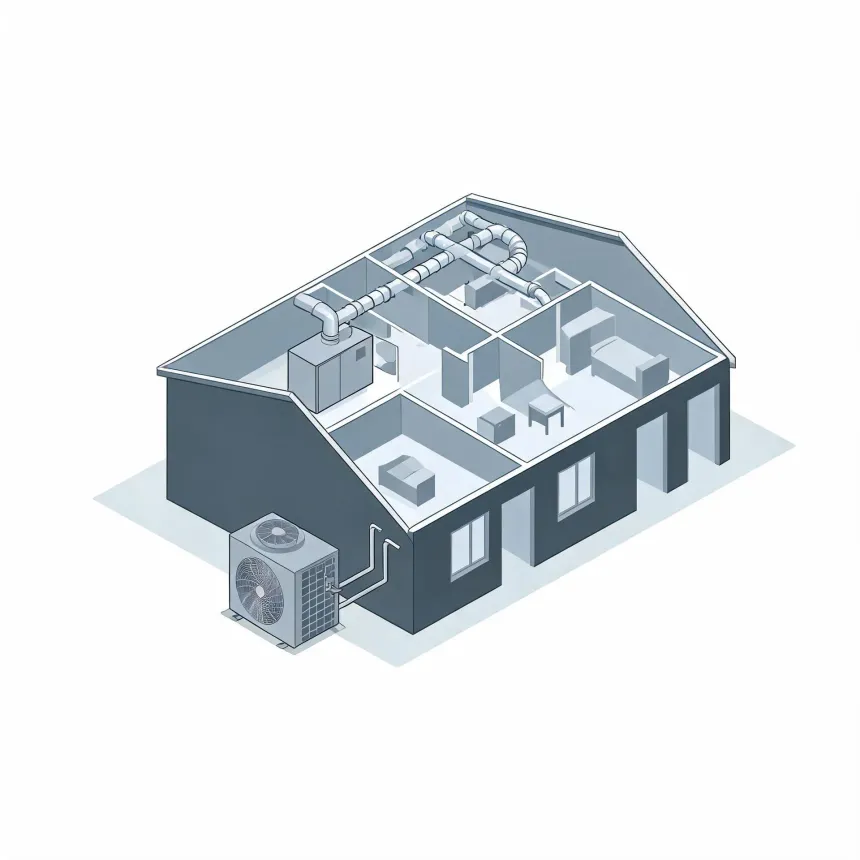
Isometric cutaway illustration of a single-story house showing interior rooms, attic ductwork and an air handler, with an outdoor condenser unit connected by lines along the exterior wall.

A compressor failure usually means replacement, since it's the most expensive part in the system and often costs as much as the unit itself to swap alone.

A bad capacitor or a stuck reversing valve is a repair, and the compressor it was about to damage gets to keep working.

Half these homes were built by 1979, but a heat pump here fails for the same reasons it fails anywhere

Half the homes here were built by 1979
12 damaging wind events from 2015 to 2024
Winter nights average 35°F

Winters here aren't hard on a heat pump. Overnight lows average 35°F through December, January and February, so the unit isn't fighting single-digit air or running flat out for months to keep up. A compressor working in that range wears the way age and use wear it, not the way cold climates wear one. So when a heat pump here is acting up, the cause is usually something specific and fixable, a capacitor, a reversing valve, a refrigerant leak, rather than a system that's been pushed past what it can handle. That's worth knowing before deciding whether a repair makes sense.

Get the usual fix

Nothing about this area is especially hard on it. It's most likely the usual problem with the usual fix.

Find a contractor
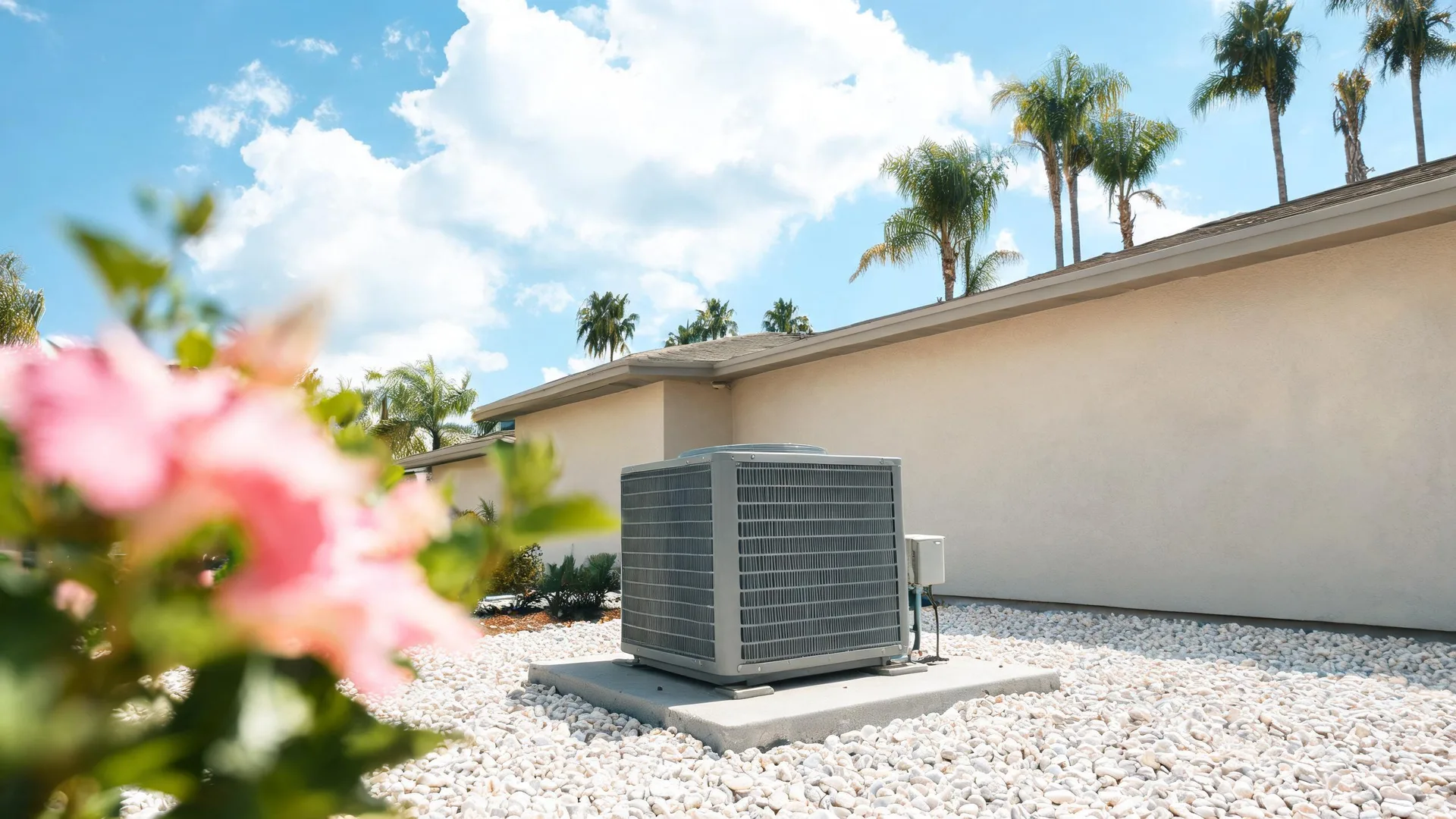
A gray air-source heat pump mounted on a concrete pad next to a house with gray vinyl siding, surrounded by gravel and flanked by green shrubs and white hydrangea flowers.

It works both seasons, and that adds up

A heat pump runs on both sides of the year, heating one season and cooling the next, so it logs more total hours than a system built for only one job. Those hours land on the same parts. The reversing valve is the part unique to a heat pump, and it's the one that tends to stick after enough cycles switching the system between modes. Contactors and capacitors wear from the number of times the system starts up, not from any one hard stretch of weather. Outdoor coils collect dirt and debris over time, which cuts airflow and makes the compressor work harder to move the same amount of heat. None of this is a system being pushed past its limit. It's ordinary parts reaching the end of an ordinary working life, and it happens at roughly the same pace wherever a heat pump runs.

What you'll notice first

Warm air out of the vents when it should be cold, or cool air when it should be warm. A unit that runs constantly but never quite hits the set temperature. Ice on the outdoor coil that doesn't clear on its own. Short cycling, where it kicks on and off every few minutes instead of running a full cycle. Any of these means something is already failing, not about to.
What the sound tells you

A heat pump makes a certain amount of noise normally, a steady hum and the whoosh of air. A new rattle, a hard clank at startup, or a squeal from the outdoor unit is a part telling you it's wearing out before it quits. Catching it at the noise stage is usually a smaller job than catching it after the part fails and takes something else with it.

Before you call, check the thermostat is set to the mode you expect and the temperature is actually past the setpoint, since a thermostat bumped into the wrong mode looks exactly like a failing reversing valve. Go outside and look at the unit. If the outdoor coil is caked in ice, flip the system off and let it thaw on its own rather than chipping at it, then see if it runs normally once it's clear. Check that nothing is blocking airflow around the outdoor unit, no leaves, no siding too close, no snow piled against it. Inside, pull the air filter and hold it up to light. If you can't see through it, swap it, since a clogged filter can mimic a lot of bigger problems by starving the system of airflow. Check the breaker panel for anything tripped. None of this fixes a bad capacitor or a stuck valve, but it rules out the simple stuff before anyone comes out.

A diagnostic starts outside at the unit, checking refrigerant pressures with gauges and watching how hard the compressor works to hit them. Electrical readings come next. Voltage at the contactor, current draw on the compressor, a capacitor tested under load rather than just eyeballed. The reversing valve gets checked both ways, since a valve that switches fine in one direction can still be the reason the system won't go the other. Indoors, the tech checks airflow across the coil and the temperature split between the air going in and the air coming out, which says a lot about whether the system is actually moving heat the way it should. Most of this takes less time than people expect, because a trained ear and a set of gauges narrow things down fast. What it does take is seeing the unit actually running, since a problem that only shows up under load won't show up sitting still.