






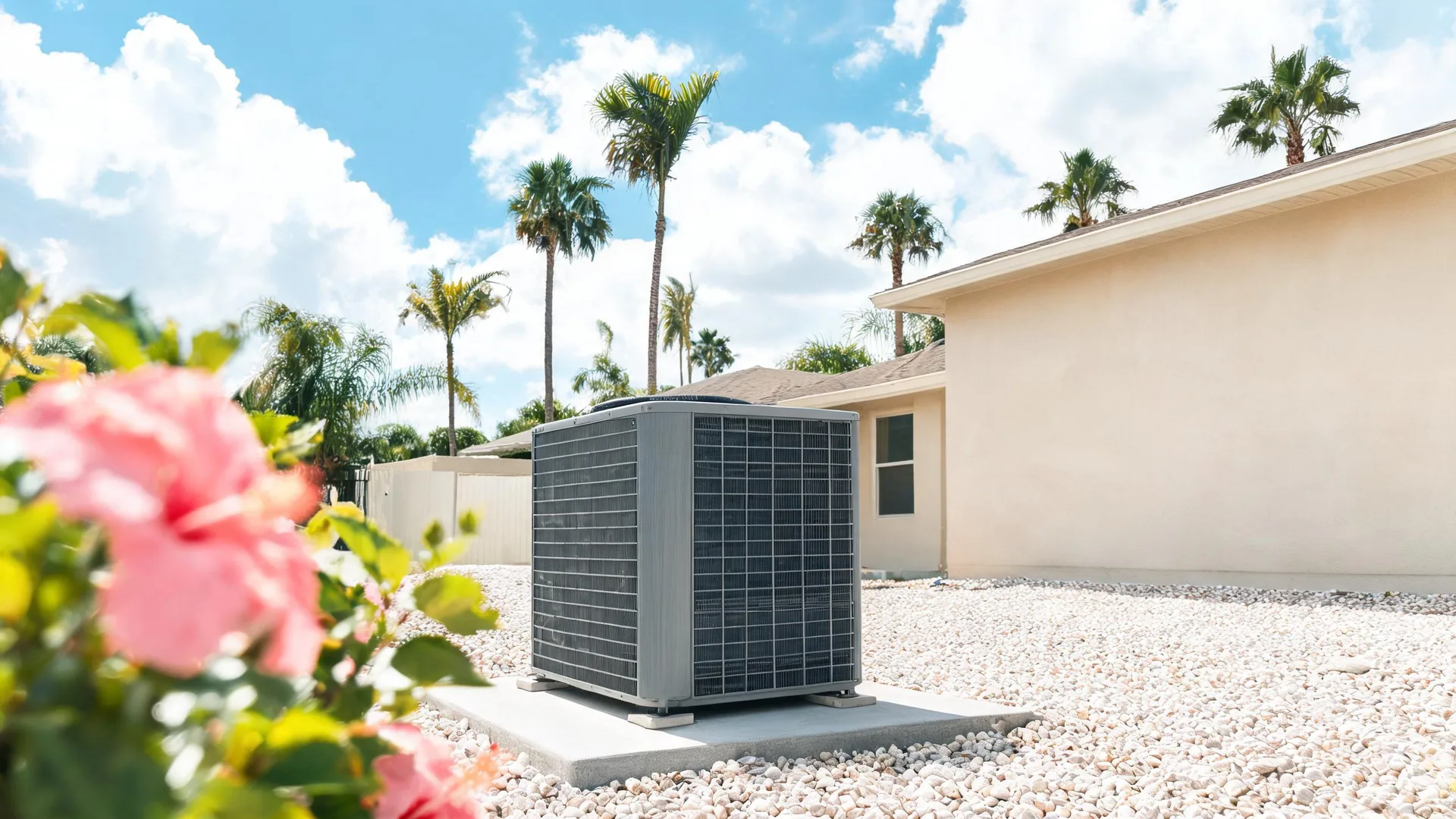
An outdoor heat pump unit mounted on a concrete pad in front of a two-story suburban house with a landscaped lawn.

Heat Pump Repair in Seattle, WA

Tell us about the job

Takes about a minute. No obligation.

RepairHeat PumpKing County, WA
Step 1 of 2

What ZIP code is the job in?

Winter nights here average 32°F. That's not the kind of cold that pushes a heat pump to its limit. In a lot of the country, a heat pump is fighting single-digit nights for weeks at a stretch, and that wears on the compressor and the coils. Seattle doesn't ask for that. A heat pump acting up here is more likely dealing with a worn part or something that was never quite right than a system that's been run into the ground. That's usually worth fixing.

10 months
September through June, your system heats
32°F
the average winter night it heats against
70°F
the average summer afternoon it cools against
Isometric line illustration of a cutaway single-story house showing interior rooms, ceiling ductwork connected to an indoor air handler, and refrigerant lines running to an outdoor condenser unit on a pad.

Half the homes in King County were built in 1983 or later.

A heat pump in a King County house that age still has years ahead of it, worth fixing when something goes wrong.

A heat pump worth fixing, in a house worth fixing it in

Half the homes here were built by 1983
Winter nights average 32°F
Power costs 11.9 cents a kWh statewide
A heat pump that's earned another repairWinter nights average 32°F here, so a heat pump isn't working against the kind of cold that wears one out fast.

Age is the first thing to look at, and the compressor tells you most of it. That's the expensive part, the one that's sealed and hard to get to, and if it's failing, you're usually looking at a new system rather than a repair. Everything else on a heat pump, the fan motor, the reversing valve, the capacitor, the board, gets swapped out on its own without touching the rest of the unit. So a system that won't switch between heat and cool might just need a new reversing valve. One that's short on refrigerant might have a leak that gets patched and recharged. The question worth asking a contractor isn't just what's wrong, it's whether that part has a history of failing again once it's replaced. Some repairs settle a system down for good. Others are the first of several, and that pattern matters more than any single fix.

It's usually worth repairing

It has an easier job here than in most places, so your heat pump is often in decent shape. Repair is usually worth it.

Find a contractor
A gray heat pump condenser unit mounted on a concrete pad against the gray lap-siding exterior wall of a house.

What a failing heat pump sounds and feels like

A heat pump that's failing usually says so before it quits. It kicks on, runs a few minutes, shuts off, then starts again without ever settling into a normal run. That short cycling is hard on the compressor, and it usually points to a bad sensor, low refrigerant, or a thermostat that's lost track of what it's doing. Ice on the outdoor coil is another sign, especially if it stays caked over instead of clearing during the defrost cycle. That usually means the defrost cycle isn't kicking in or the reversing valve is stuck. Warm air blowing when the thermostat is set to cool, or the reverse, points to that same valve. A system that runs all the time without ever reaching the set temperature is losing ground somewhere, whether that's airflow, a low charge, or a compressor on its way out. Grinding, buzzing, or clicking that wasn't there before usually means a motor bearing or a relay is failing. None of this means the system is done. Most of the time it means one part is.

What's safe to check yourself

Clear anything piled against the outdoor unit, leaves, branches, snow built up against the side. Check the air filter and swap it if it's gray or clogged, since restricted airflow makes a heat pump work harder and can cause icing that has nothing to do with the compressor. Check the thermostat is set to the mode you think it's in and the batteries aren't dead. Walk the vents and make sure air is moving out of each one.
When to stop and call someone

A coil caked in ice that doesn't clear on its own, or a system that keeps shutting off and restarting within a few minutes, needs a contractor rather than a reset. Running the unit in either state stresses the compressor. A tripped breaker, a burning smell, or water pooling near the indoor unit are reasons to shut the system off at the thermostat and leave it off until someone looks at it.

A heat pump that's struggling will keep trying to do its job unless something shuts it down, and that's the problem. Low refrigerant makes the compressor work harder to move the same amount of heat, and it keeps doing that every cycle until someone catches it. A failing capacitor makes the compressor strain on startup, over and over, until it finally gives out. Ice on the coil blocks airflow, so the system runs longer to make up for it, which pulls more moisture out of the air and feeds the ice that's already there. A dirty filter does something similar, forcing the blower to push against resistance it wasn't built for. None of these start out as compressor problems. Left alone, a lot of them end up there, because the compressor is the part that absorbs whatever the rest of the system can't handle.

A diagnostic visit starts outside, at the unit itself, before anything gets opened up. A tech checks static pressure, measures the temperature split between supply and return air, and checks refrigerant pressures against what the system is supposed to be running. Those numbers point to whether the problem is airflow, charge, or something electrical, before a single part gets replaced. The outdoor unit gets checked too, since a failing capacitor or a weak contactor often shows up as a voltage reading that's off from where it should be. Electrical components get tested with a meter rather than guessed at, because a part can look fine and still be failing. By the end, the tech can usually point to one part and explain why it's the one causing what you're seeing, rather than replacing things to see what helps.