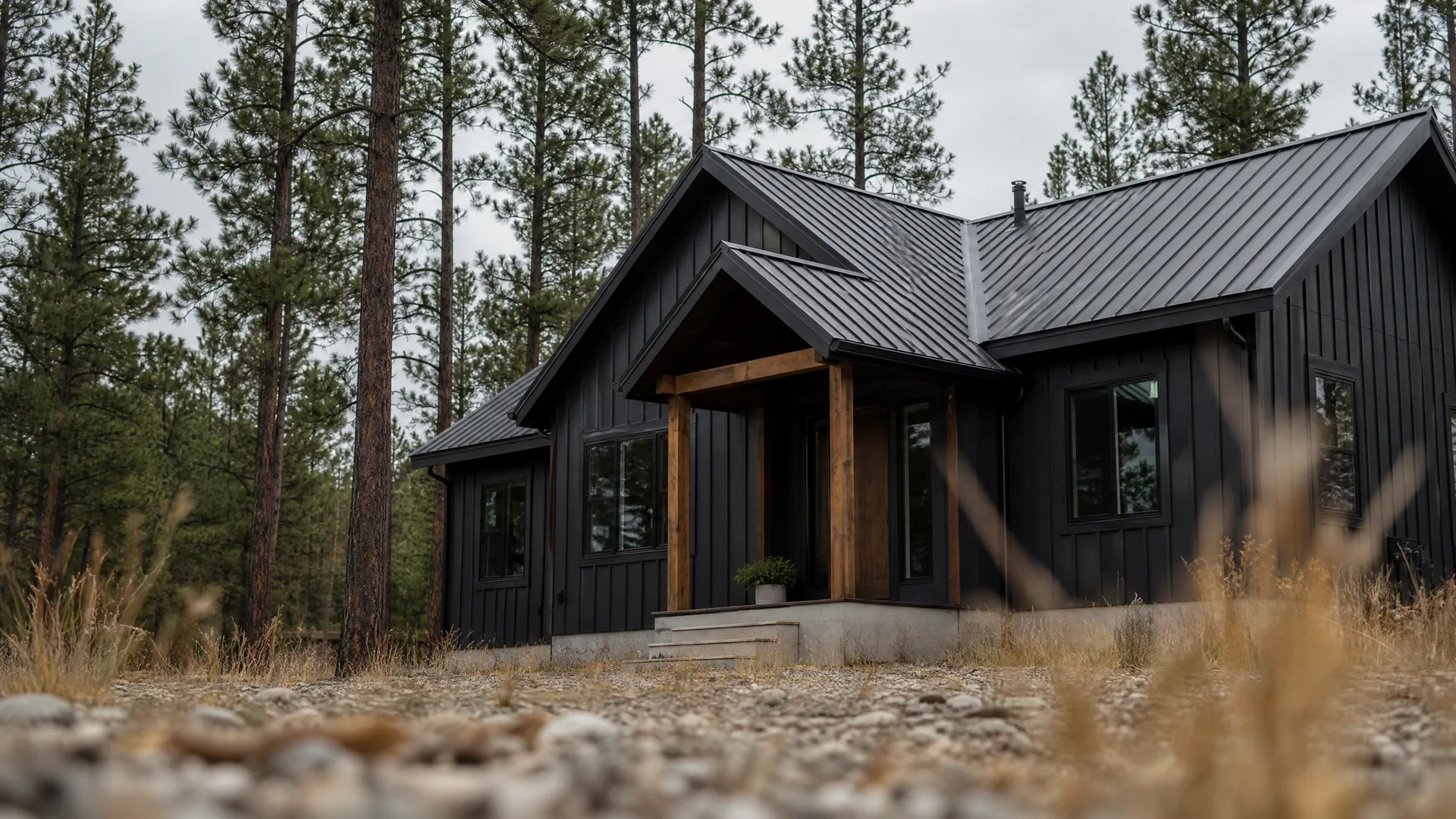
A single-story black board-and-batten house with a dark metal gable roof and wood-post covered entry porch, set among pine trees with dry grass and gravel in the foreground.

Heat Pump Repair in Spokane, WA

Tell us about the job

Takes about a minute. No obligation.

RepairHeat PumpSpokane County, WA
Step 1 of 2

What ZIP code is the job in?

Check the thermostat and the breaker first

Make sure the thermostat is set to heat or cool and not just fan, and check that the breaker for the outdoor unit and the air handler haven't tripped. A heat pump that seems dead sometimes just lost power to one side of the system while the other side still runs.

Look at the outdoor unit and the filter

Walk outside and see if the coil is caked with ice or buried in leaves and debris, since airflow problems there show up as weak heat or weak cooling inside. Then pull the filter and hold it up to light. A filter that blocks light is choking airflow and can be why the system is struggling.

10 months
September through June, your system heats
2 months
July through August, it cools
24°F
the average winter night it heats against
80°F
the average summer afternoon it cools against
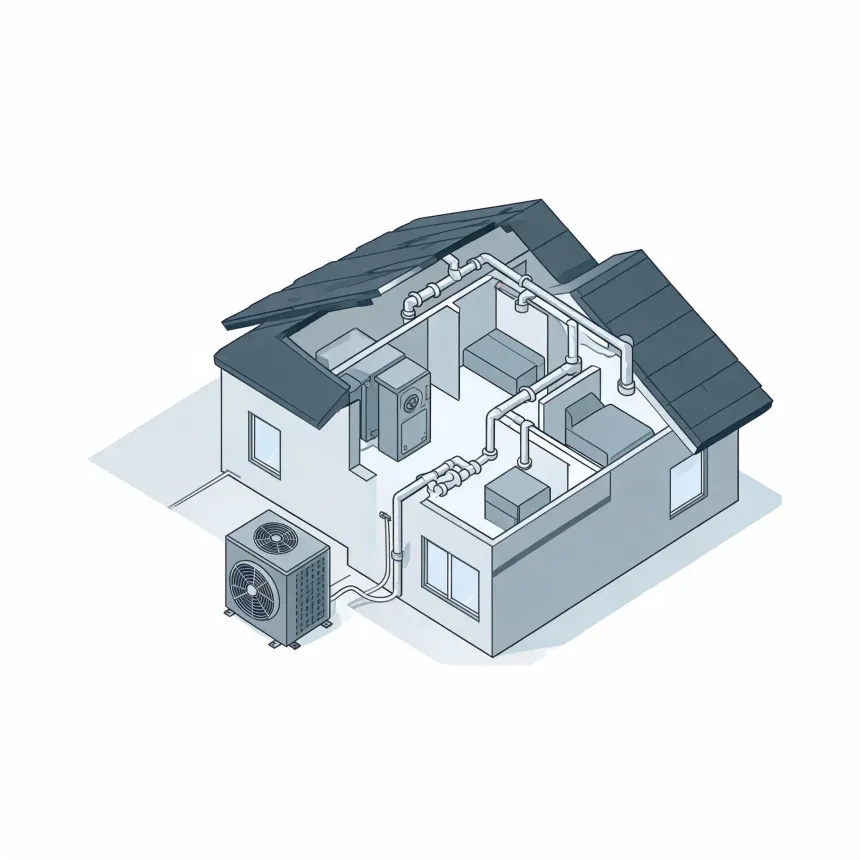
Isometric grayscale illustration of a cutaway two-story house showing interior ductwork, an indoor air handler unit, and an outdoor condenser unit on a pad beside the building.
Your system heats September through June and cools July through August.

NOAA nClimDiv, 1991–2020 normals

Spokane winters hold a 24°F average overnight low, not a deep freeze that runs a heat pump into the ground.

A heat pump here has usually earned its keep, so most problems trace back to age or a skipped filter, not a system worked past its limit.

Half the homes here were built by 1978. That doesn't change what's wrong with your heat pump.

Half the homes here were built by 1978
120 damaging wind events from 2015 to 2024
8 hail events from 2015 to 2024

Most heat pump repair calls here have nothing to do with the cold. They come down to the same parts that fail on a heat pump anywhere, a worn contactor, a bad capacitor, a defrost board that stopped switching. Fixing those costs what it costs no matter where the house sits. Washington power runs 11.90 cents per kilowatt-hour, cheaper than a lot of the country, so running the system while you wait on a repair isn't the expense people sometimes brace for. That's one less thing to worry about while you get someone out to look at the actual problem.

Get it looked at before September asks more of it

Heat here starts up in September. August is when a weak part still gets by on mild days, then the first real cold snap in September asks the system for full output and whatever was already failing gives out. If your heat pump is struggling now, that's worth sorting before the load gets heavier, not after.

Find a contractor
A man in a cap, dark jacket and tan work pants carries a canvas tool bag up white porch steps toward a dark blue paneled front door, with a potted shrub beside the entry.
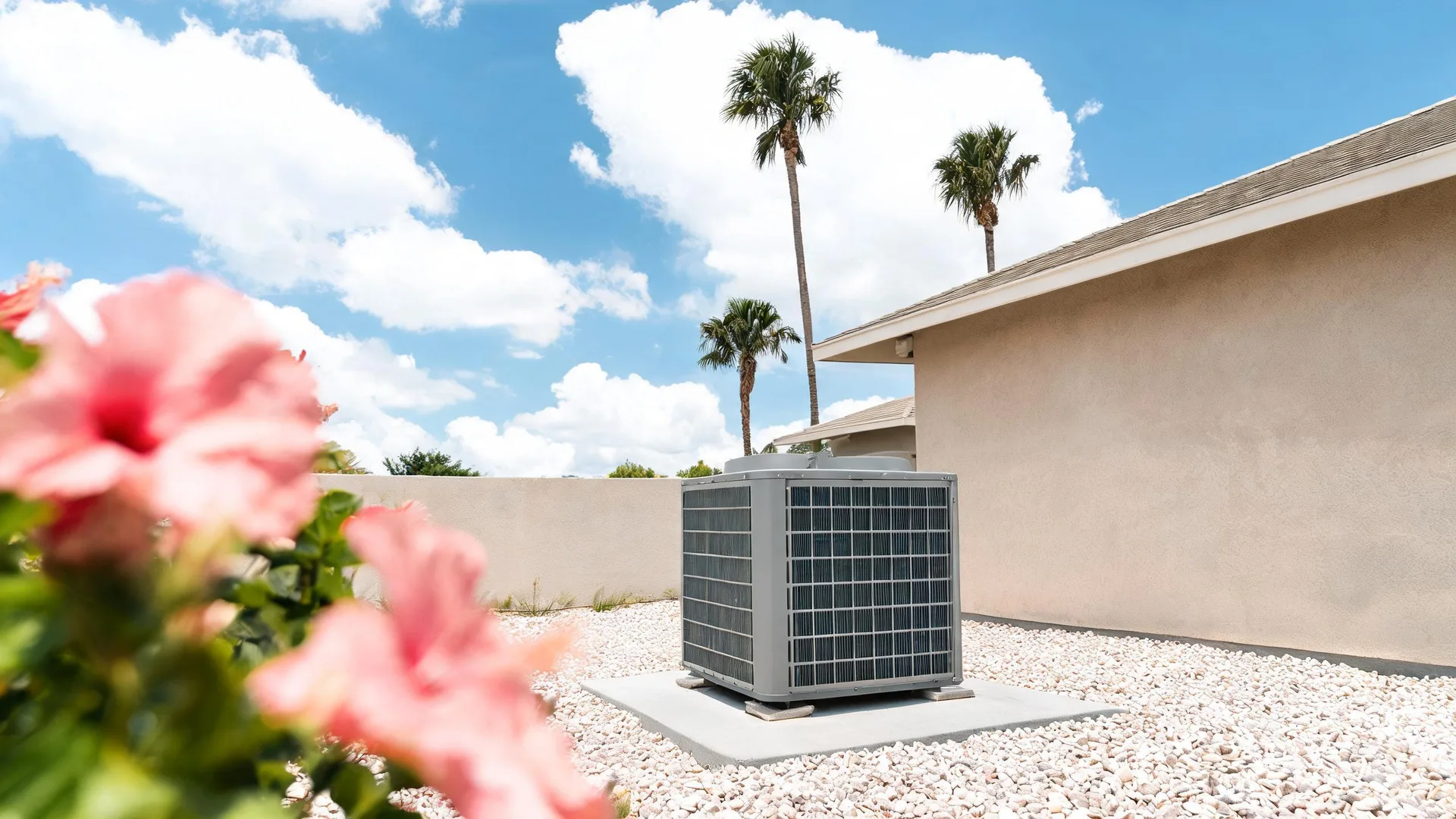
A residential heat pump outdoor unit mounted on a concrete pad next to a house with gray vinyl siding.

Running all year means the warning signs show up all year too

A heat pump that's working fine makes a steady sound and holds whatever temperature the thermostat is set to. Pay attention when that changes. Short cycling, where the system kicks on, runs a couple minutes, then shuts off before the house feels it, points at a part that's struggling to keep the compressor running or a defrost board calling for a cycle it doesn't need. Air that's lukewarm instead of warm often means the reversing valve isn't fully switching into heating mode. A hissing or clicking from the outdoor unit when it starts up usually traces back to the contactor or capacitor. Ice building up on the outdoor coil faster than the system clears it is the defrost board falling behind. None of these fix themselves by waiting, and a system left to run in a failing mode puts more strain on the compressor than the part that's actually broken.

A frozen coil gets worse, not better

A heat pump that's already struggling to defrost will keep piling ice on the outdoor coil the longer it runs. Thicker ice blocks airflow further, so the system works harder to pull heat from outside air, which slows the defrost cycle even more. Left alone, the coil can ice solid enough that the unit can't recover on its own.

A failing part drags down the ones next to it

A weak capacitor makes the compressor draw more current to start, and a compressor running on strained starts wears out faster than one getting a clean start every time. The same goes for a reversing valve that's slow to switch, it makes the compressor work against pressure it shouldn't have to fight. Letting a small part slide can turn into a compressor replacement instead of a part swap.

Most heat pump failures start with the parts that handle switching and starting, not the parts that move heat. The contactor is a small switch that sends power to the outdoor unit, and its contacts pit and burn with every cycle until they stop closing reliably. The capacitor stores the charge that kicks the compressor and fan motor into motion, and it weakens with age until the motor strains to start or doesn't start at all. The reversing valve is what lets a heat pump switch between heating and cooling, and when it sticks, the system can blow cold air when it should be heating or get stuck in one mode. The defrost board reads the outdoor coil temperature and tells the system when to melt off ice, and a board that stops switching leaves the coil to ice over until airflow is cut off entirely. None of these are failures brought on by hard weather. They fail from age and from the simple fact that a heat pump cycles on and off thousands of times a year.

A diagnostic visit starts with questions. When did it start, is it heating, cooling, or stuck doing neither, does it make noise it didn't used to. Then the tech checks pressures and electrical readings before opening anything up, since those numbers point toward which part is at fault instead of guessing. They'll check the capacitor's output against what it's rated for, watch the contactor close under power, and see whether the reversing valve actually switches when it's told to. Outside, they'll look at the coil and the defrost cycle itself, since a board that's misreading temperature looks a lot like a dirty coil until you test it. The goal is to find the one part actually causing the problem, not to replace parts until something works.