





A lit craftsman house with glowing windows on a rainy night, surrounded by tall evergreen trees and a wet reflective street.

Heat Pump Repair in Tacoma, WA

Tell us about the job

Takes about a minute. No obligation.

RepairHeat PumpPierce County, WA
Step 1 of 2

What ZIP code is the job in?

Pierce County's housing is newer than a lot of the country's. Half the homes here were built in 1986 or later, which puts a lot of heat pumps well within reach of a straightforward repair instead of a replacement. If your system came with a newer house, the cabinet, the coils and the wiring behind it are likely in decent shape too, so a repair holds up. That's worth knowing before anyone tells you it's time for a new unit.

10 months
September through June, your system heats
31°F
the average winter night it heats against
70°F
the average summer afternoon it cools against
Isometric grayscale illustration of a cutaway single-story house showing interior rooms, ductwork and an air handler, an exterior condenser unit connected by lines, and dark solar panels on the roof.

Winter nights here average 31°F, not far below freezing.

A heat pump in Tacoma isn't working against the cold most of the year, so parts tend to hold up and a repair is usually the right call.

Ten months of runtime, and September is where a weak part gives out

Heat runs September through June
Climate zone 4C
Power costs 11.9 cents a kWh statewide

So when a tech comes out for a short cycling issue or a unit that's lost output, the compressor itself is often still sound. The problem is more likely something smaller around it. A contactor. A capacitor. A sensor out of place. Get the diagnosis before anyone talks about a new system. A repair here is more likely to fix the actual problem, not patch over a unit that's been straining for years.

A newer system is worth getting fixed

If your heat pump came with a house built in 1986 or later, get a tech out to diagnose it before you plan on replacing it. The cabinet and wiring behind a newer install are usually in good shape, and that's what a repair depends on.

Find a contractor
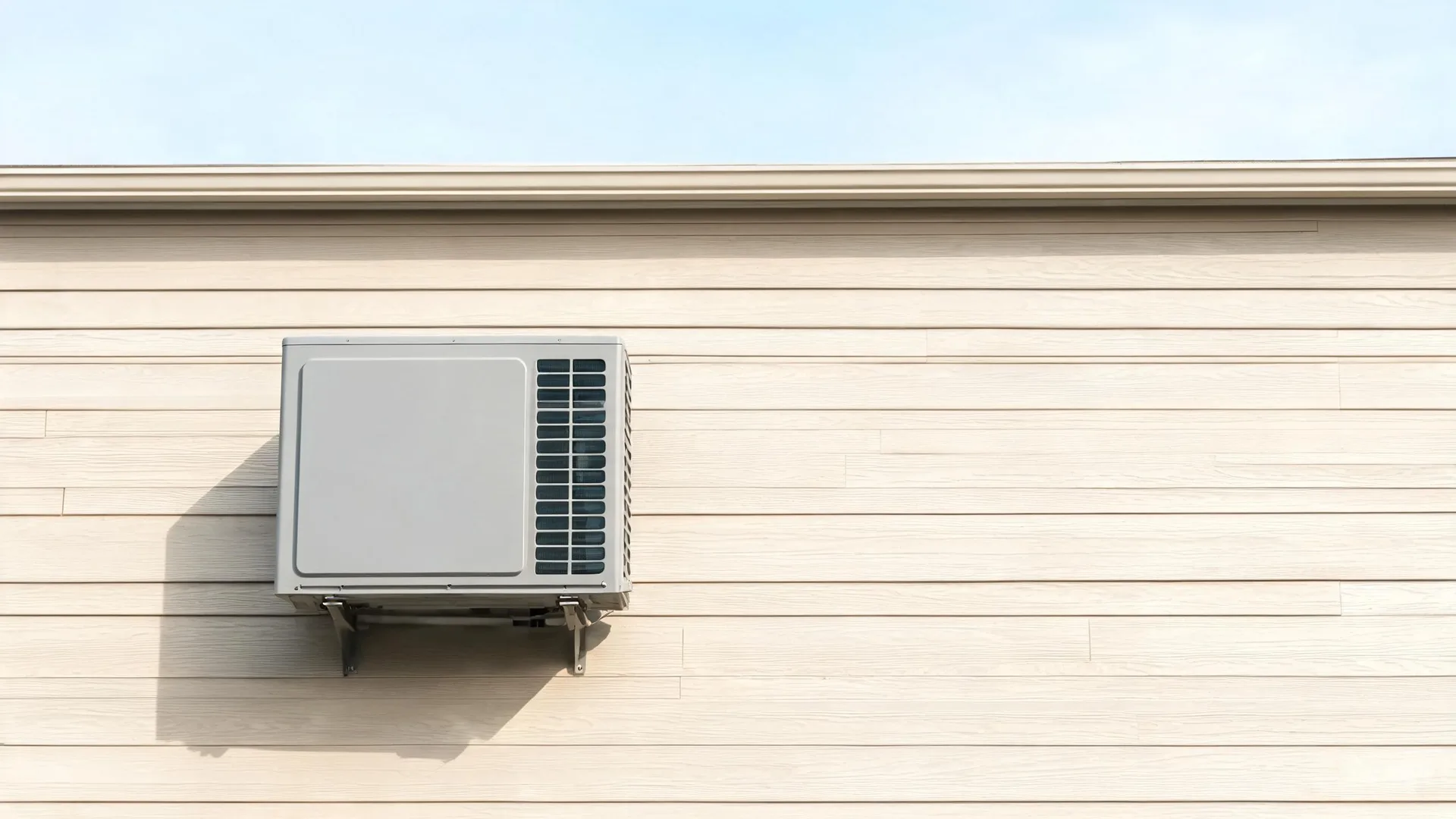
A gray heat pump outdoor unit mounted on a concrete pad next to a residential house with lap siding and stone accents.

What you can check before anyone drives out

Start outside. If the coil is caked in ice or buried in leaves, that alone causes weak heating or cooling, and clearing it away is simple. Check the thermostat is actually set to the mode you want. One stuck between heat and cool will make the whole system act confused. Walk the house and make sure every vent is open and nothing is blocking return air. Check the breaker panel. A tripped breaker shuts the whole unit down, and resetting it is just flipping it back. If the outdoor fan is not spinning, or it hums without turning, do not take anything apart. Note it for the tech. None of this fixes a bad capacitor or a stuck reversing valve, but it rules out the easy stuff first.

A weak capacitor won't fix itself

A capacitor that's starting to go still lets the compressor start, just harder each time. That extra draw heats the windings a little more on every cycle. Left alone, it ends up taking the compressor down with it, and that turns a small part swap into a much bigger repair.
A stuck reversing valve wears on everything around it

If the valve won't fully shift, the system runs long trying to reach the temperature it's set to. Longer run times mean the contactor is cycling more than it should and the compressor is working against a system that isn't actually heating or cooling right. Catching it early keeps the problem at the valve.

A few things take heat pumps down more than the rest. The run capacitor is one. It gives the compressor and fan motor the extra push they need to start, and it weakens with every cycle until a start gets missed. The contactor is another. It's the switch that sends power to the compressor, and its contacts pit and burn a little each time it closes, until one day it doesn't close all the way. Outside, the defrost control can stop sensing properly, so the coil ices over and stays iced instead of clearing on schedule. None of these are the compressor itself. They're the smaller parts around it that wear out first and take the system down with them if nobody catches it.

A diagnostic starts with what the system is doing, not what's wrong with it yet. The tech asks whether it's stuck in one mode, short cycling, running long, or not starting at all. Each of those points somewhere different. From there it's gauges and a multimeter. Refrigerant pressure gets checked first, then the capacitor's output gets tested against what it's rated for. The contactor's contacts get a look under a light to see how much they've pitted. Outside, the coil gets checked for ice, and the tech watches whether the defrost control actually cycles the system out of it or just lets it sit there. Most of this does not mean opening up the compressor compartment at all.