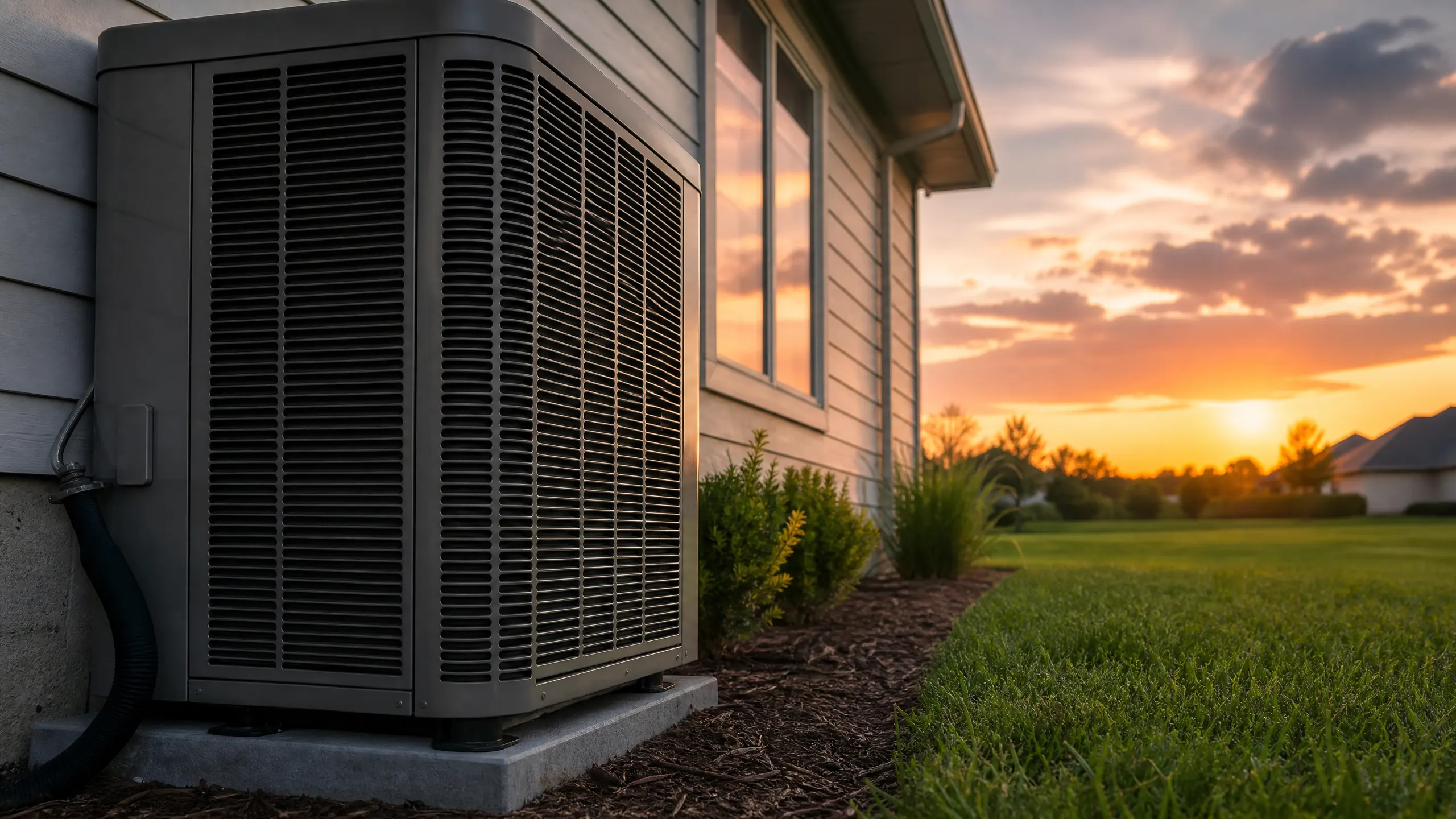
An outdoor air conditioning condenser unit mounted on a concrete pad beside a house at sunset.

Heat Pump Maintenance in East Wenatchee, WA

Tell us about the job

Takes about a minute. No obligation.

Tune-up, service, or cleaningHeat PumpDouglas County, WA
Step 1 of 2

What ZIP code is the job in?

The refrigerant charge is never visible from outside

A heat pump low on refrigerant will still blow air and still run, so nothing looks wrong at the thermostat. But it has to work harder to move the same heat, and that strain lands on the compressor over time. Checking the charge means gauges and temperature readings a homeowner has no way to take.


The reversing valve only shows a problem in one direction

The reversing valve switches the system between heating and cooling, and a sticking valve can leave the house fine in summer but short on heat all winter, or the other way around. A tune-up tests the valve in both directions on purpose, which is the only way to catch a fault before the season that needs it.

A heat pump runs every month of the year here, cooling in summer and heating all winter.

One tune-up a year checks it in both directions before the season that needs it arrives.

Wind and snow hit this county hard. The heat pump itself has it easy.

38 damaging wind events from 2015 to 2024
209 winter storms from 2015 to 2024
Winter nights average 22°F
Heat pump maintenance in East WenatcheeHeat runs here from September through May. Book the check in August.

Half the homes in Douglas County were built in 1988 or later, so there's a good chance yours is one of the newer ones. A heat pump that age still has most of its working life ahead of it. A yearly check is what gets it there. The tune-up catches the slow stuff. A refrigerant charge drifting low. A reversing valve starting to stick. A capacitor weakening before it fails outright. None of that shows up at the thermostat until it turns into a bigger job than it needed to be. Catch it early every year and a newer system tends to stay out of trouble for a long time.

Have the outdoor unit checked before storm season gets to it

Douglas County saw 253 severe weather events between 2015 and 2024, most of it wind and winter storms. Your outdoor unit sits through all of it. Nearly a quarter of Washington households lost power for a day or more last year, and a heat pump needs that power to run. Have the unit checked before storm season gets to it.

Find a contractor
A man in a dark long-sleeve shirt and tan work pants, seen from behind, carries a worn canvas tool bag up steps toward a navy blue front door of a gray clapboard house, with a large blue planter and shrub to the right.
A dark gray heat pump unit mounted on a concrete pad next to a house with gray siding and a stone veneer wall.

No season off, no year off either

A heat pump does not get a season off. It runs on the hottest day of summer and the coldest night of winter, and every month between those. Skip the yearly check and nothing fails right away. The thermostat calls for heat or cool and the system answers, same as always. Underneath that a refrigerant charge drifts a little lower, a contactor pits a little more, a motor bearing wears a little rougher, and none of it trips a switch. It just makes the system work harder to do what it used to do without strain. That strain does not stay flat. A compressor laboring under a low charge runs hotter than it should, and heat is what wears a compressor down over time. Skip one year and the system likely gets through it fine. Skip it for several years running and the small stuff has time to turn into a compressor problem, and that is the one part in the whole system that cannot be patched once it fails.

Airflow that isn't what it used to be

A heat pump pulling air through a dirty filter or a coil caked with dust still turns on and still moves air, so it rarely gets noticed. The system just runs longer to move the same heat, and a tune-up includes pulling the panels and checking the coil where you can't see it from the vents.

Sounds and smells on startup

A hum that lasts a beat too long before the compressor kicks in, a rattle that only shows up at the start of a cycle, a burnt smell from the blower motor. Any of these is worth a check on its own, not something to wait on until the next scheduled visit.

Between visits, the filter is the one thing worth checking on your own. Pull it every month or so and hold it up to the light. If you can't see through it, it's done its job and needs replacing. A clogged filter starves the system of airflow, and a heat pump moving less air has to run longer to heat or cool the same space. Outside, keep the area around the outdoor unit clear. Leaves, dead plants, a stack of anything piled against the cabinet all block the airflow it needs to work. After snow or ice, look for a buildup on top of or around the unit, and clear it if you can reach it safely. None of this replaces the yearly check, but it keeps the system from working harder than it has to in between.

A tune-up starts outside at the unit itself. The tech checks refrigerant pressure against what the system calls for, and looks at the coil for dirt or bent fins that block airflow. The contacts and connections inside the control panel get checked too, since a loose wire can run fine for months before it finally arcs or fails. The compressor gets tested under load, not just looked at, because a compressor can sound fine and still be drawing more current than it should. Inside, the blower motor and its capacitor get checked, along with the condensate drain, which clogs quietly and backs up water where you won't see it until it's already a problem. Every part of this is routine for the tech and invisible to you, which is the whole reason to have it done.