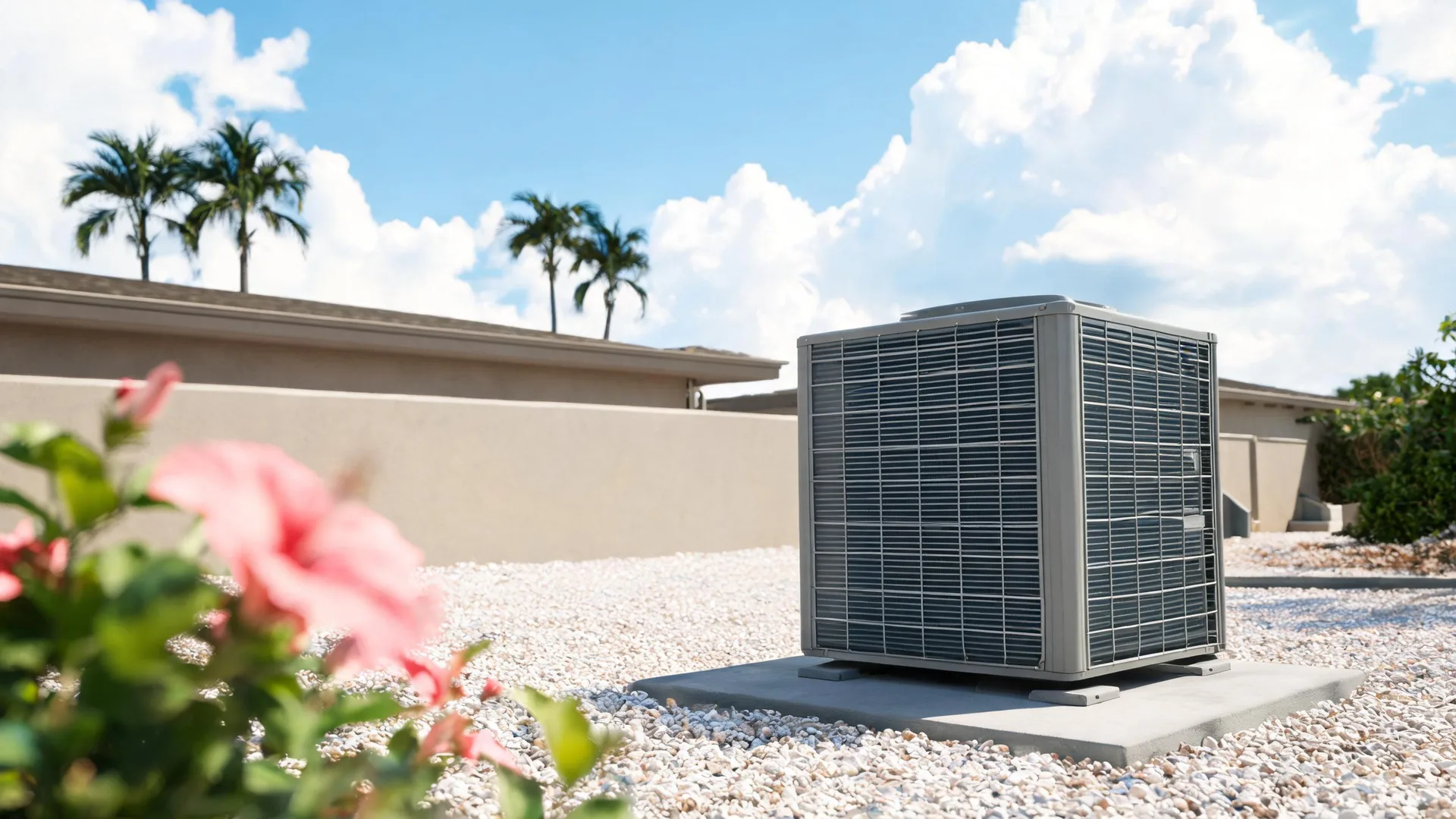
Cold nights still mean long runtimes
Winters here average 23°F overnight through December, January and February. A heat pump covers that by running longer, not harder, so the wear is steady rather than severe.
Takes about a minute. No obligation.
Winters here average 23°F overnight through December, January and February. A heat pump covers that by running longer, not harder, so the wear is steady rather than severe.
A heat pump that isn't overworked can still lose a capacitor or drift low on charge. A yearly check catches that early, before a cold snap finds it first.
Half the homes in Kittitas County were built in 1993 or later.
A heat pump that age still has years ahead of it, and a yearly check is what keeps it getting there.



One visit a year covers a heat pump that isn't struggling. That visit is where someone checks the refrigerant charge, tests the capacitor, and clears anything blocking the outdoor coil. None of that changes because electricity here runs 11.90 cents per kilowatt-hour. What it does mean is that a dirty coil or a low charge costs more to ignore, since the unit draws more power to make up for it. Catching that early costs less than catching it once the system is already struggling to keep up.
Easy duty still wears parts. A yearly check keeps it going a long time.
Find a contractorThose winter storms, 26 of them between 2015 and 2024, are what a yearly check is for. Ice and heavy snow around the outdoor unit come back most winters here, not once in a while, and a technician can only clear a path for drainage and airflow if the visit happens before the cold sets in. Put it on the calendar for the same month each year.
A thorough tune-up has the technician pull the panel, check refrigerant charge with gauges, test the capacitor under load, and inspect the contactor for pitting. A quick visit looks at the thermostat setting and calls it done. If no one opens the outdoor unit, the parts that actually fail went unchecked.
The reversing valve is what lets the system switch between heating and cooling, and it only gets tested by running the unit in both modes and watching what happens. A tune-up that skips this can look complete and still miss the one part that leaves you without heat on the day you need it most.
A tune-up also means pulling the air filter and checking it against the light, not just asking if it was changed recently. Behind it, the blower wheel can carry a layer of dust thick enough to cut airflow without the system ever telling you. Outside, the technician checks that the defrost control is actually cycling the unit into defrost and back, since a stuck sensor there can leave frost building on the coil all night with no sign at the thermostat. Low refrigerant charge shows up the same way a dirty coil does, as weaker heat and longer runtimes, so the only way to tell them apart is gauges on the lines. None of this is visible from the thermostat, and none of it announces itself until the unit is already working harder to cover for it.
A tune-up also checks things most people never think to ask about. The technician measures static pressure across the system, since ductwork that's too restrictive makes the blower work harder no matter how clean the coil is. Electrical connections at the disconnect box and inside the air handler get checked for looseness, because a connection that's slightly loose heats up over time and eventually fails at the worst moment. The condensate drain gets flushed too, since algae and debris build up there whether the system is heating or cooling, and a clogged drain backs up into places it shouldn't. Each of these takes a few minutes to check and far longer to fix once it's failed on its own.