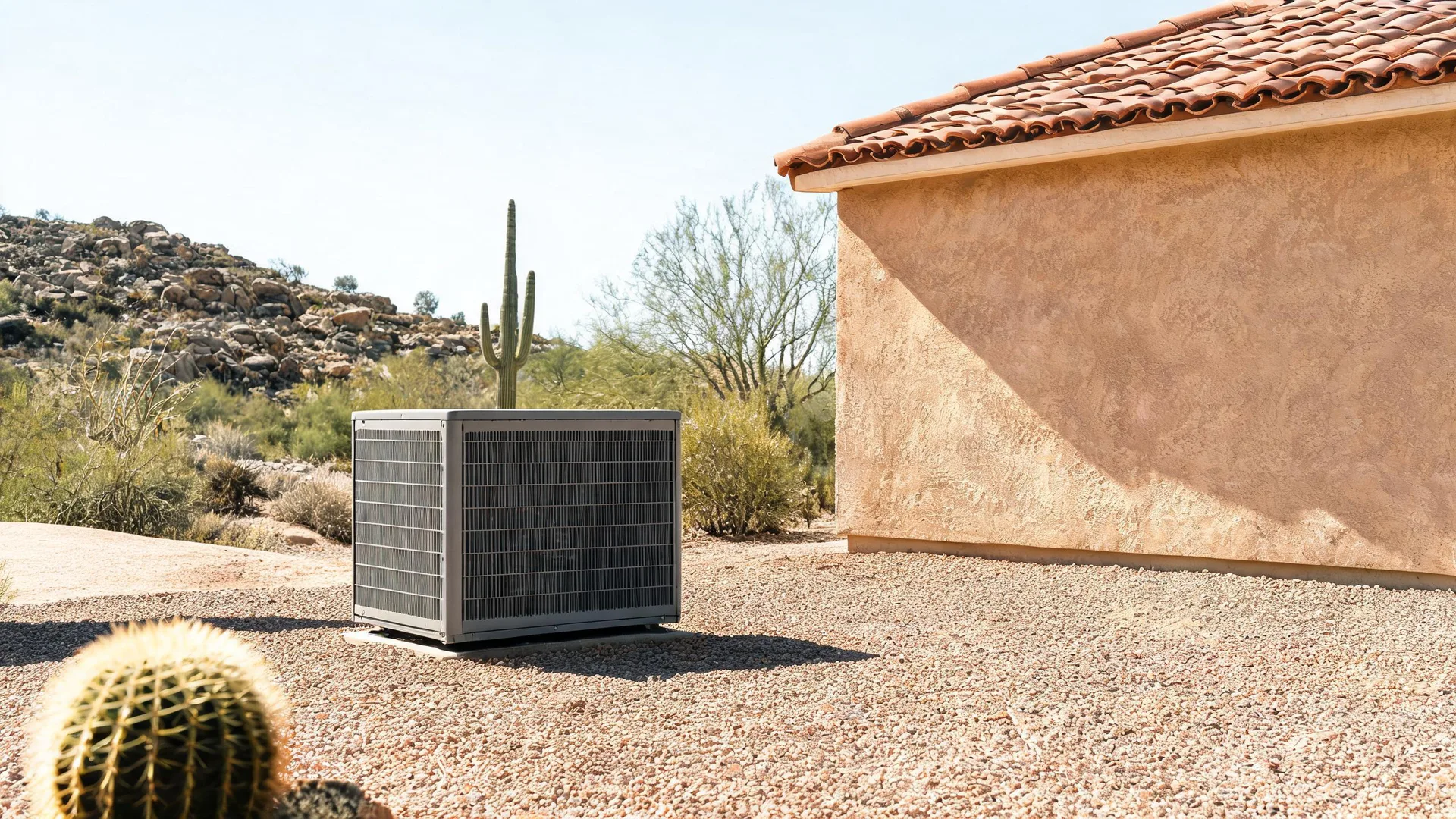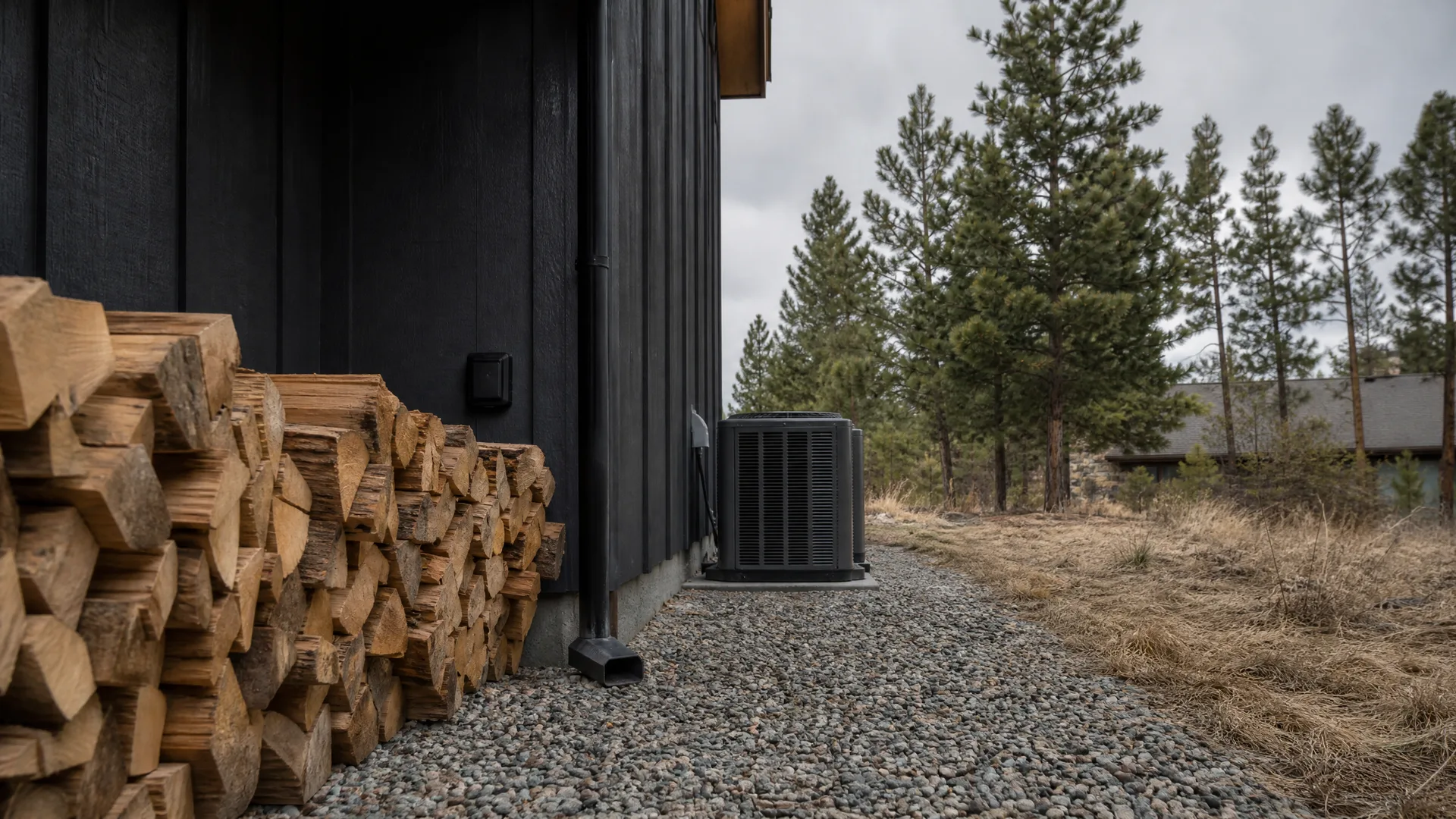
A stack of split firewood beside a dark vertical-board house wall, with an outdoor air conditioning condenser unit on a gravel path and pine trees under an overcast sky.

Heat Pump Maintenance in Kennewick, WA

Tell us about the job

Takes about a minute. No obligation.

Tune-up, service, or cleaningHeat PumpBenton County, WA
Step 1 of 2

What ZIP code is the job in?

The coil gets dirty before you notice anything wrong

A heat pump's outdoor coil has to shed heat in summer and pull heat from the air in winter. Dust and grass clippings build up on the fins a little at a time. The system still runs, just with less of the coil doing any work, so it runs longer to reach the same temperature and the compressor carries more strain than it should.


A refrigerant leak doesn't announce itself

Low refrigerant doesn't make noise or trip a breaker. It just means less heat moved per cycle, so the house takes longer to come up to temperature and the compressor works harder for the same result. Left alone, that strain is what wears a compressor down well before its time, and the compressor is what the rest of the system depends on to run at all.

Benton County sees winter storms about once a year and hail about once every three years, nothing like the coastal or hail-belt counties.

A heat pump here isn't fighting the weather near as hard, so a yearly check is usually enough to catch what age or neglect does to it.

Your heat pump works October through May. Have it checked in September.

Cooling runs June through August
Heat runs October through May
25 damaging wind events from 2015 to 2024
Once a year is enough hereA yearly check catches what age wears down, before the season that uses it most.

Half the homes in Benton County were built in 1988 or later, so there's a good chance yours is one of them. A heat pump that age has plenty of working life left in it, and a yearly check is what keeps it on track to use all of it. The homes are only half the picture. A system that hasn't been fighting bad ductwork or old wiring for decades has less working against it to begin with. Worth checking what year your system went in, especially if it came with the house.

Keep up the yearly check

Easy duty still wears parts. A yearly check keeps it going a long time.

Find a contractor
A man in a cap, gray long-sleeve shirt and tan work pants climbs porch steps toward a dark blue front door, carrying a canvas tool bag with tools in its outer pockets.
A gray outdoor HVAC unit mounted on a concrete pad beside a house with gray lap siding and a stone foundation.

Between checks, the filter is what you've got

The filter is the one thing worth looking at between visits. Pull it out and hold it up to a light. If you can't see through it, swap it or rinse it depending on the kind you have. A clogged filter starves the indoor coil of airflow, and a heat pump moving less air has to run longer to do the same job. Outside, keep the area around the unit clear. Leaves, grass clippings and anything leaned against the cabinet block the airflow the outdoor coil needs to work at all. A garden hose can rinse dust off the fins if you're gentle about it, but bent fins or anything inside the cabinet is a job for whoever does the yearly check. Past the filter and keeping the outdoor unit clear, there isn't much else for an owner to do, and that's by design.

A quick visit checks if it runs

Someone shows up, looks at the outdoor unit, flips the system into heating and cooling long enough to see both work, and leaves. That tells you the heat pump turns on. It doesn't tell you the refrigerant charge is right, or how much static the ductwork is fighting, or whether the reversing valve is shifting clean.

A thorough visit checks why it runs that way

A proper tune-up means pulling the panel, checking refrigerant pressures against what the system is supposed to run at, measuring the temperature split across the indoor coil, checking amp draw on the compressor, and tightening electrical connections that loosen from vibration over time. Each of those catches something that silent, working equipment can still be hiding.

The filter, the coils and the drain all work together, and a heat pump only runs as well as the weakest one of them. Air comes in through the filter, crosses the indoor coil, and whatever condenses off that coil has to leave through the drain. Block any one step and the others feel it. A clogged filter cuts airflow across the coil, and less airflow means the coil can ice up even when it's doing its job right. A dirty coil, indoor or outdoor, can't move heat the way it's supposed to, so the system runs longer for the same result. A clogged drain backs up condensate with nowhere to go, which shows up as water where it shouldn't be, sometimes before anything else looks wrong. None of these fail loud. They just make the system work harder until something downstream gives out.

A reversing valve is what makes a heat pump a heat pump instead of just an air conditioner, and it's worth checking on purpose because it can stick without ever failing outright. That valve is what switches the system between pulling heat from outside air and dumping heat into it. A tune-up checks that it shifts clean both ways, not just one, since a unit can get stuck favoring cooling and still blow air in heating mode, just not warm air. Beyond the valve, a proper visit checks the defrost cycle, the sequence that melts frost off the outdoor coil in cold weather before it builds up enough to block airflow entirely. Skip that check and the first sign of trouble is a coil caked in ice and a house that won't come up to temperature.