




A lit craftsman-style house at night on a wet residential street lined with evergreen trees.

Heat Pump Maintenance in Lacey, WA

Tell us about the job

Takes about a minute. No obligation.

Tune-up, service, or cleaningHeat PumpThurston County, WA
Step 1 of 2

What ZIP code is the job in?

Winter nights here average 34°F. That's mild. Your heat pump isn't fighting single digit cold to keep the house warm, so it doesn't work as hard as the same unit would somewhere colder. Less strain on the compressor and coils over the years. That doesn't mean it runs forever without attention. A unit that rarely gets pushed hard can still lose refrigerant charge, build up dirt on the coils, or wear out a capacitor just from time passing. Mild duty slows down wear, it doesn't stop it.

Half the homes in Thurston County were built in 1991 or later.

A heat pump that age still has years ahead of it, and a yearly check is what keeps it getting there.

Ten months of work a year. Book the checkup before September.

Heat runs September through June
Winter nights average 34°F
Power costs 11.9 cents a kWh statewide

A yearly check on a newer system is about catching small things before they turn into service calls. A refrigerant charge that's drifted off a few ounces. A capacitor reading weak. A condensate drain starting to clog. None of that shows up as a problem yet. It just shortens the years the system has left if nobody looks. If yours came with the house, ask the technician for its install date and keep it on file. That tells you more about what to expect from it than anything else will.

Easy duty is still duty. Book the yearly check.

Mild winters mean less strain, but the parts still age on their own schedule. A yearly check is how small drift gets caught while it's still small. Get it on the books.

Find a contractor
A man in a cap, dark T-shirt and brown work pants walks up porch steps toward a navy front door, carrying a canvas tool bag.
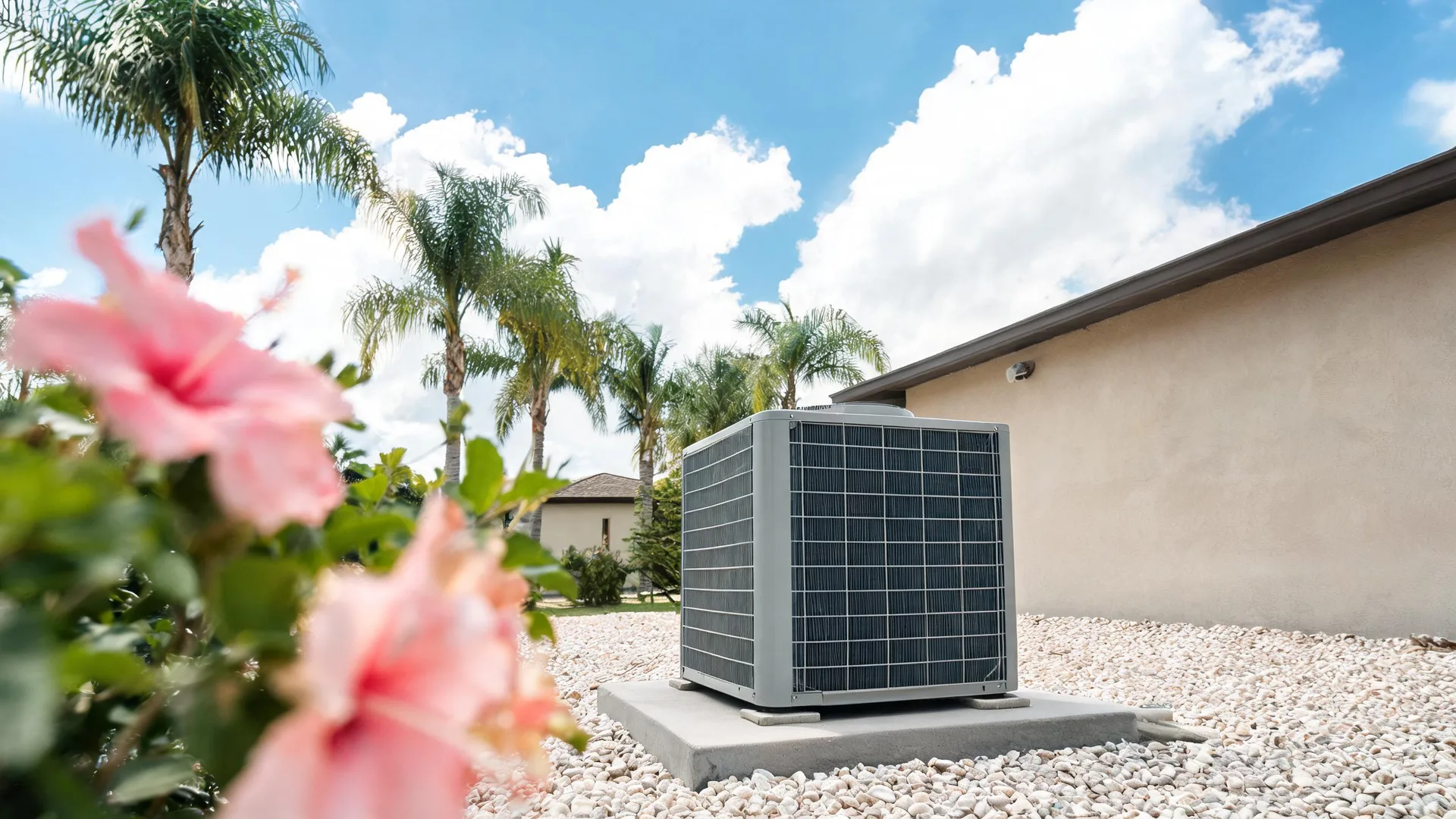
A gray heat pump condenser unit mounted on a concrete pad against the gray lap-siding exterior wall of a house.

The parts a furnace never asks to move

The reversing valve is the part a furnace never has. It's what lets the system switch between heating and cooling, and it moves every time that switch happens. Over months of cycling back and forth, a valve can start sticking, staying in one mode when it should change over. Nobody feels that from inside the house until the day it won't switch at all. Defrost control depends on a sensor reading the outdoor coil temperature. If that sensor drifts, the unit skips a defrost cycle it needed or runs one it didn't, and either way you're not standing outside watching the coil to notice. A technician checks that the valve shifts cleanly both directions and that defrost is triggering on an accurate reading, because both of those things keep working just well enough to hide a problem until they stop working at all.

Gauges go on, or they don't

A thorough check has the technician connect gauges and check refrigerant charge against the manufacturer's numbers for the outdoor temperature that day. A quick visit skips that and just confirms the system turns on and blows air. A heat pump can run low on charge for a long time before the house feels any different, so this step is the one most worth asking about.
Both directions, not one

Because a heat pump heats and cools through the same reversing valve, a real check cycles it into both modes and watches it switch cleanly. Someone only running it in whichever mode the season calls for can miss a valve that's starting to stick. That's a job that shows up as a no-heat call in the exact months you need the system most.

Between visits, the main thing worth doing is keeping airflow open on both ends. Outside, keep leaves, grass clippings and anything else away from the unit so air can move through the coil. Inside, check the air filter and swap it when it looks dirty rather than on a fixed schedule. A clogged filter makes the system work harder and can lead to the coil icing up. If you notice the outdoor unit covered in frost or ice outside of a normal defrost cycle, or hear it running but felt no warm air for a while, that's worth a call rather than a wait. Keep the area right around the outdoor unit clear year round, since restricted airflow is one of the few things that turns into a real problem fast.

A proper tune-up starts outside, with the technician pulling the panel off the outdoor unit and cleaning the coil rather than just rinsing the cabinet. A dirty coil is the most common thing driving a system to work harder than it should. From there it's gauges on, refrigerant charge checked against the manufacturer's target, amp draw tested on the compressor and fan motor, and the capacitor checked for how much capacitance it still holds instead of just whether the unit starts. The reversing valve gets cycled both ways, not left in whatever mode it happened to be running. The condensate drain gets checked for algae or sludge, since a clogged drain backs up and can shut the system down on its own. Electrical connections get tightened, since a loose connection generates heat and that heat is what eventually takes out a board or a contactor. None of this takes long when a system is healthy. It takes longer, and matters more, on a unit nobody has opened up in a while.