




A gravel road curves past dark-sided cabins with metal roofs among tall pine trees, with a rustic split-rail wood fence and grass along the left side.

Heat Pump Maintenance in Othello, WA

Tell us about the job

Takes about a minute. No obligation.

Tune-up, service, or cleaningHeat PumpAdams County, WA
Step 1 of 2

What ZIP code is the job in?

Adams County sees winter storms about 70 times a decade, and the overnight low only averages 25°F through December, January and February. That's cold, but it's not the kind of extreme that pushes a heat pump to its limit all winter long. Your outdoor unit isn't fighting triple-digit heat in summer either, so it never gets worked from both ends of the thermostat. The wear it does pick up comes from storms and the plain grind of winter running, not from strain built into the climate here. A yearly check is how you catch that wear before it turns into a breakdown.

Your heat pump runs heat here from September through May.

Book the checkup in August, before it has to carry the next nine months.

103 events in a decade is still one visit a year

103 severe weather events from 2015 to 2024
23% of homes statewide lost power a day or more in 2024
32 damaging wind events from 2015 to 2024

A heat pump that needs a look usually tells you before it quits outright. Listen for it running longer than it used to, cycling on and off more than it settles in. Watch the outdoor unit for ice building up on the coil that doesn't clear on its own during defrost. Inside, warm air that feels cooler than it should coming out of the vents is a sign the system is working harder to do the same job. A burning smell or a hum from the outdoor unit that wasn't there before is worth a call right away, not a wait and see. None of these mean the system is done. They mean it wants a tech to look at the coil, the refrigerant charge, or the defrost board before the small problem becomes the big one.

Book the yearly check before your heat pump carries another winter

A yearly check before the cold months catches the wear from storms and plain winter running before it turns into a breakdown. That's the whole job here, nothing more than this system actually needs.

Find a contractor
A man in a cap, gray jacket and tan cargo pants, seen from behind, carries a worn canvas duffel bag up steps toward a dark navy front door, with a potted shrub beside the entry.
A residential heat pump outdoor unit mounted on a concrete pad next to a house with gray vinyl siding.

If it's old, let a tech look before it tells you itself

If your heat pump came with an older house here, nobody can tell you what shape the line set or the electrical is in without a tech looking at it. That's not something to guess about. A yearly check is how a tech actually gets eyes on the coil, the refrigerant charge, and the wiring instead of waiting for one of them to fail first. Ask about it at the same visit where you book the checkup already covered above.

A real tune-up opens the cabinet

A thorough visit means the panels come off. A tech checks refrigerant charge against what the system calls for, measures the temperature split across the indoor coil, and tightens or tests electrical connections that loosen from vibration over time. The outdoor coil gets cleaned, not just looked at, because dirt and bent fins are what make a unit run longer than it should.
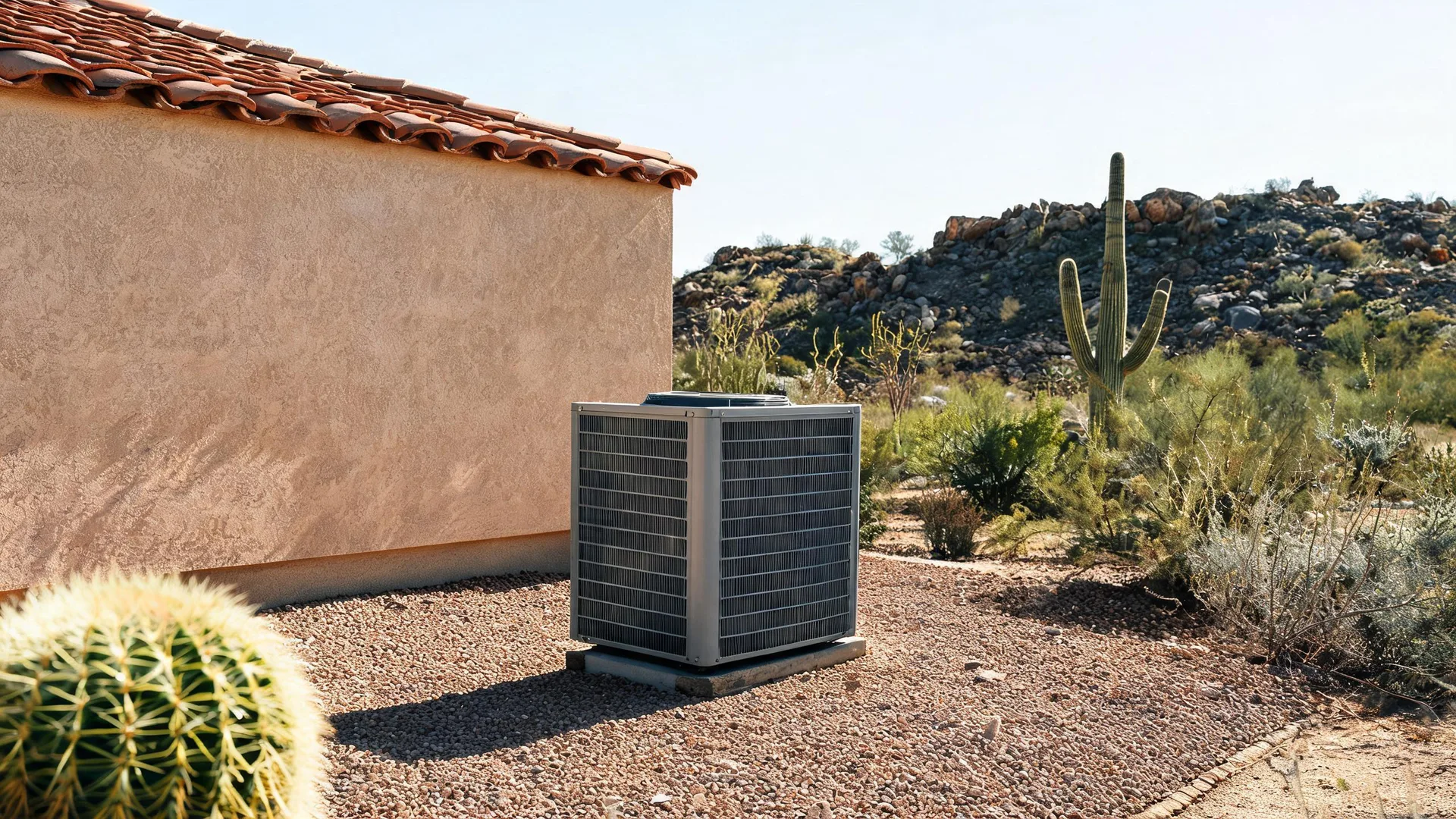
A quick one just looks and listens

A fast visit checks that the system turns on, blows air, and doesn't throw an error code, then calls it done. That catches a dead system but misses the slow kind of wear, a capacitor on its way out, a coil losing airflow, a defrost cycle that's not timing right. Those are the things that turn into a breakdown mid-season instead of getting caught ahead of it.

The filter is the cheapest part of this system and the one most people forget. A clogged filter starves the indoor coil of airflow, and once that happens the coil can ice up even when it isn't that cold out. The outdoor coil has the same problem in reverse. Dirt, grass clippings and bent fins block the airflow it needs to pull heat from outside air, so the system runs longer to move the same amount of heat. The condensate drain matters just as much and gets noticed least. If it clogs, water backs up instead of draining off, and that can mean a tripped safety switch that shuts the whole system down or water damage near the indoor unit. None of these parts fail on their own on a schedule. They fail from being ignored.

Changing the filter is the one job that's really yours, and it's worth doing on a schedule instead of waiting for a reason. A filter that's clogged doesn't just make the system work harder, it can choke off airflow enough to ice the indoor coil even in mild weather. Keep anything stacked near the outdoor unit cleared off, leaves, snow, a cover left on too long, since it needs open air around it to work at all. After a storm it's worth a look outside for ice sitting on the coil or the fan not spinning free. Past that, leave the cabinet closed. Checking refrigerant charge or testing the defrost board is a tech's job, not something to open the unit up for yourself.