




Illuminated timber-frame and stone houses along a residential street at night, with snow-capped mountains visible in the background.

Heat Pump Maintenance in Pasco, WA

Tell us about the job

Takes about a minute. No obligation.

Tune-up, service, or cleaningHeat PumpFranklin County, WA
Step 1 of 2

What ZIP code is the job in?

Half the homes in Franklin County were built in 1997 or later, so a lot of the heat pumps in this area are still well within their working life. A yearly check is what keeps a system that young working the way it did on day one. The coil needs to stay clean, the refrigerant charge needs to be correct, and the electrical connections need to be tight. Skip that for a few years and the unit starts working harder than it should just to hold the same temperature. A system that gets checked every year tends to stay reliable for a lot longer than one that doesn't.

Winter lows here average 28°F, not well below zero.

A heat pump in Pasco isn't fighting extreme cold most winters, so a yearly check is what catches wear before it turns into a breakdown.

Heat takes over in October. Have it checked in September.

Cooling runs July through August
Heat runs October through May
25 damaging wind events from 2015 to 2024

If your heat pump came with a newer build, a yearly check is a small thing to keep up with. A technician looking at the same system each year will notice what changes. A coil that is starting to collect dust. A charge that has drifted a little low. Those are easy to catch early and harder to catch after the system has been straining for a season or two. Book it for the same month each year if you can, so it becomes routine instead of something you have to remember.

Get the yearly check on the calendar now

A yearly check is a small thing to keep up with when the system isn't fighting hard winters. Get it on the calendar before the cold sets in, so a technician can look at the coil and the charge while the weather is still mild.

Find a contractor
A residential heat pump outdoor unit mounted on a concrete pad next to a house with gray vinyl siding.

It works in both directions, all year

A heat pump runs for heat, then switches over and runs for cooling, so the compressor and the reversing valve see work in both directions throughout the year. That is different from a furnace, which rests all summer, or an air conditioner, which sits idle all winter. Skip the yearly check and the first sign is usually efficiency. A dirty coil makes the system run longer to move the same amount of heat. A low charge makes the compressor work harder than it was built to. Neither one breaks the unit overnight. They wear on it, cycle after cycle, until a part that was fine starts to fail early. The reversing valve is the one most people never think about, since it only moves when the system switches modes, and a valve that never gets looked at can stick without anyone noticing until the system is stuck in one mode.

The filter is the first line of defense

A dirty filter chokes airflow across the indoor coil. The system pulls harder to move the same air, and in heating mode that makes the coil run hotter trying to keep up, in cooling mode colder. Either way the compressor works beyond what it should just to push air through a clogged filter. Checking it is the simplest part of the whole job.
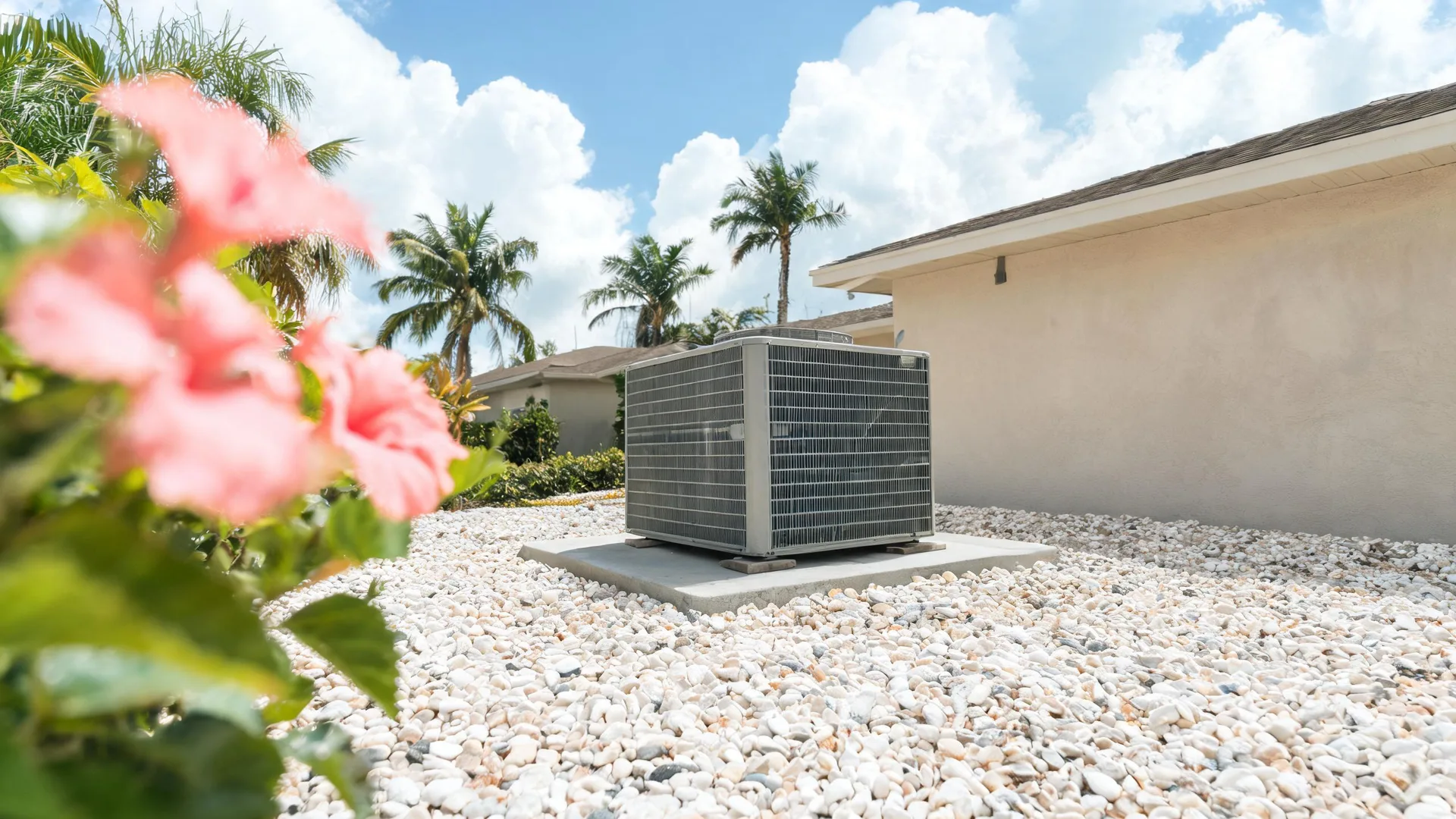
The outdoor coil and the drain line get missed

Dust and leaves settle on the outdoor coil over time and the fins can't shed heat the way they're built to. The drain line carries off condensation from the indoor coil, and if it clogs, water backs up instead of draining out. A technician clears both during a yearly check, before the coil fouls enough to matter or the drain backs up far enough to cause damage.

Between visits there are a few things worth keeping an eye on. Look at the outdoor unit now and then and clear away leaves, grass clippings or anything piled against it, since it needs open air on all sides to work right. Check the filter and change or rinse it when it looks gray or clogged, rather than waiting for a set schedule. Inside, keep an eye on the vents and make sure furniture or rugs aren't blocking them, since a heat pump depends on steady airflow through the whole house to heat or cool evenly. If you ever notice ice building up on the outdoor coil that doesn't clear on its own, or the system running constantly without catching up to the thermostat, that's worth a call rather than a wait. Everything else, the refrigerant charge, the electrical connections, the reversing valve, is a job for the yearly check.

A proper tune-up starts outside, with the technician checking refrigerant charge against what the system calls for. Too little and the compressor strains. Too much and it can flood back into the compressor and damage it over time. The electrical connections get checked too, since a loose connection builds resistance and heat right at the terminal. The contactor gets inspected for pitting, since that's a part that wears from normal cycling and eventually fails to make good contact. Inside, the blower motor and wheel get looked at, because a wheel caked with dust moves less air even when the motor itself is fine. The thermostat gets tested to confirm it's actually calling for heat or cooling and the system responds. None of this is guesswork. It's the same checklist every time, because the parts that fail are always the same ones.