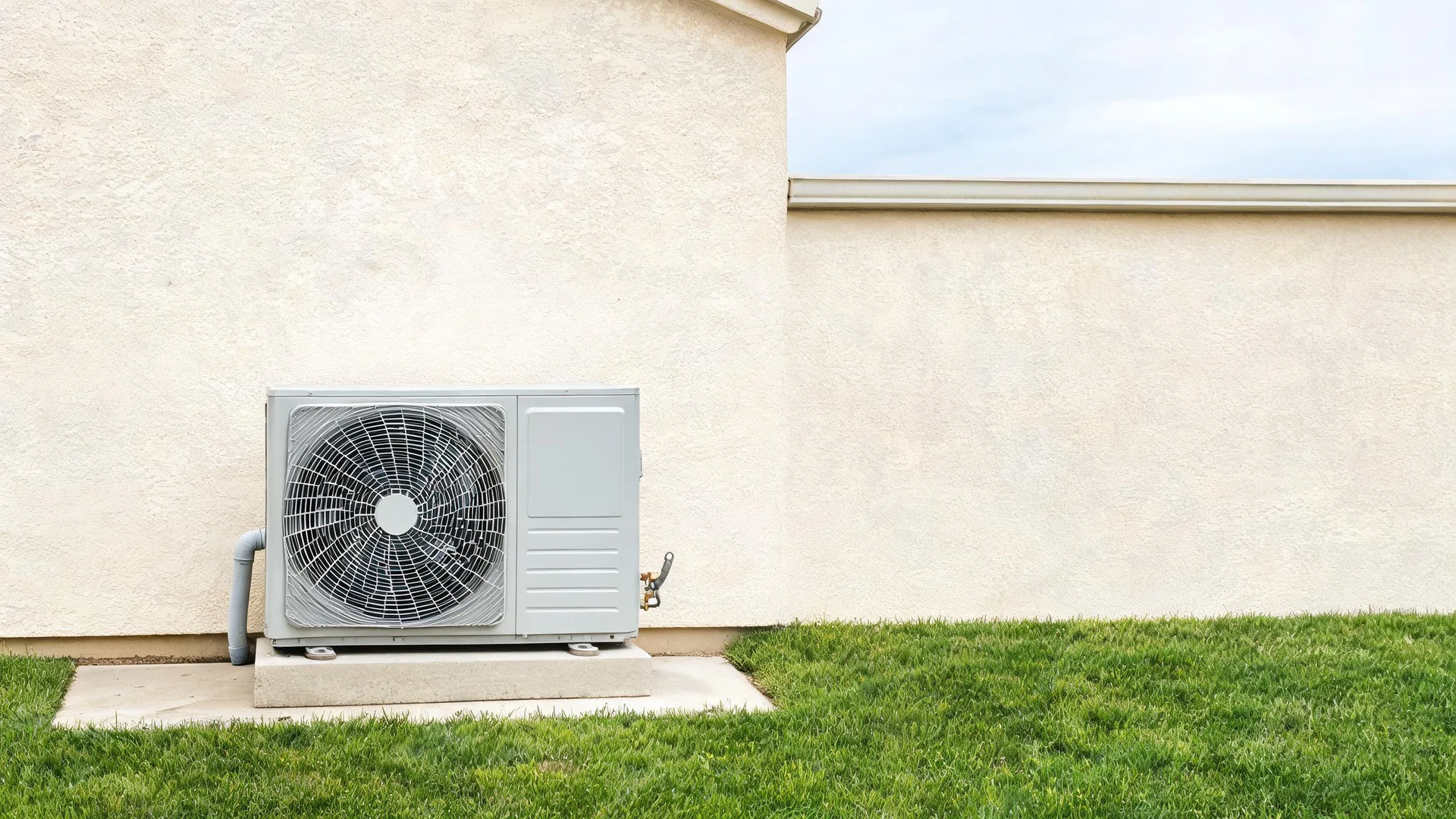
An outdoor heat pump unit mounted on a concrete pad in front of a two-story suburban house with a landscaped lawn.

Heat Pump Maintenance in Raymond, WA

Tell us about the job

Takes about a minute. No obligation.

Tune-up, service, or cleaningHeat PumpPacific County, WA
Step 1 of 2

What ZIP code is the job in?

Winters here don't ask much of it

Overnight lows in Pacific County average 35°F through December, January and February. A heat pump working against that doesn't have to work nearly as hard as one in a colder region, so it isn't straining to keep up most winters.


Light duty still needs a yearly look

Wind strong enough to cause damage has hit the county 12 times in the past decade, and a storm like that can knock a unit out of alignment or leave debris in it even if the machine itself never worked hard. A yearly check catches that kind of wear before it turns into a breakdown.

Heat pumps in Pacific County start their heating months in September.

Get yours checked in August, before it starts working for the season.

Nothing here works this machine hard. Checking it once a year still does.

Half the homes here were built by 1979
12 damaging wind events from 2015 to 2024
Winter nights average 35°F

A heat pump that isn't struggling can still drift out of tune. The reversing valve can start sticking, so it hesitates between heating and defrost instead of switching clean. The coil outside collects leaves and grass clippings that block airflow, and there's no obvious sign of it until the system is running long and hard to make up for it. Refrigerant charge can also drop slowly from a small leak, and a unit low on charge still runs, just weaker, holding the house a few degrees off where the thermostat says it should be. A yearly check catches these early, while the fix is still simple, instead of after something fails outright.

Keep up the yearly check

Easy duty still wears parts. A yearly check keeps it going a long time.

Find a contractor
A gray heat pump condenser unit mounted on a concrete pad against the gray lap-siding exterior wall of a house.

A real tune-up opens it up

A tech who's rushing hits the easy things and leaves. Filters get swapped, the thermostat gets checked, and the unit gets a quick glance before they're back in the truck. Nothing wrong with any of that, but it isn't a tune-up. A thorough visit means the panels come off. The reversing valve gets cycled both directions to see it switch clean, not just assumed to work because the system is heating right now. Refrigerant charge gets measured against what the manufacturer specifies for the outdoor temperature that day, not eyeballed. The coil gets looked at close, not just hosed off if it looks dirty, because debris packed between the fins doesn't always show from a few feet back. Electrical connections get tightened, since a loose one generates heat and wears out a contactor early. If nobody touches the reversing valve or pulls the panels, ask what they checked instead.

The system doesn't tell you what it's missing

A heat pump with a weak capacitor or a sticking reversing valve still turns on and still blows warm air. Nothing about running it feels different day to day. The strain shows up in parts wearing faster than they should, not in any warning the thermostat gives you.

Skipping a year rarely breaks anything by itself

One missed check usually just means dirt sits on the coil a little longer or a slow refrigerant leak goes a little further before anyone looks. The risk isn't that one skipped year causes a failure. It's that small problems left alone add up, and the system is already struggling by the time the symptoms are obvious enough to notice.

The filter is the cheapest insurance the system has. Once it's clogged, the blower has to pull harder to move the same air. That strain works backward through the whole unit. The indoor coil depends on steady airflow to do anything useful, and when the filter chokes that off the coil can ice over even in mild weather. The outdoor coil has the opposite problem. It sits in the open collecting leaves and pollen, and that buildup insulates it just enough to make the system run longer to move the same heat. The condensate drain matters less for how the unit heats or cools and more for what happens if it's ignored, since a clogged drain backs up and finds the nearest place to leak, usually somewhere that causes damage before anyone notices standing water.

A heat pump has one more part than a central air system, and it's the one that tends to get skipped. Defrost control manages the whole switch into reverse and back, melting frost off the outdoor coil before it builds up enough to block airflow. A tech checking that has to actually force a defrost cycle and watch it complete, not just confirm the board has power. The sensor that tells the system when to start defrosting can drift out of calibration, and when it does, frost keeps building past the point it should have cleared. That shows up as ice creeping up the outdoor unit in cold, damp weather, sometimes thick enough to stall the fan. It's not a part that fails often, but it's the part a rushed visit is most likely to miss, since the system looks fine sitting there heating on a mild afternoon.