






A row of illuminated timber-frame and stone houses photographed at dusk, with evergreen trees and a mountain range in the background.

Heat Pump Maintenance in Spokane, WA

Tell us about the job

Takes about a minute. No obligation.

Tune-up, service, or cleaningHeat PumpSpokane County, WA
Step 1 of 2

What ZIP code is the job in?

A heat pump that needs a look usually tells you before it quits outright. Listen for the outdoor unit running longer than it used to, or cycling on and off more than it should. Watch the airflow at your registers. If it feels weaker than it used to, the coil or the blower may be struggling, or the filter has gone past due. Ice on the outdoor unit that doesn't clear in the defrost cycle is worth a call, not a wait and see. Same with a system that blows air but can't seem to hold the temperature you set. Any burning smell or a breaker that trips when the unit starts means something electrical needs eyes on it soon.

Your heat pump switches over to heating in September and that's when it works hardest.

Get it looked at in August, before the long heating months put a struggling part to the test.

Spokane's weather gives a heat pump one real test a year, not several

Power costs 11.9 cents a kWh statewide
120 damaging wind events from 2015 to 2024
8 hail events from 2015 to 2024
Spokane doesn't tax a heat pump, but winter still finds its weak partsSpokane County saw 527 winter storms over the last decade, with overnight lows averaging 24°F in December, January and February.

Half the homes in Spokane County were built in 1978 or earlier, and half in 1978 or later. That split doesn't change what a heat pump needs. One yearly visit covers it, whether the system sits in a house from the fifties or one finished last year. The coil needs cleaning, the refrigerant charge needs checking, the electrical connections need testing, and none of that comes up more often just because a house has some age on it. What matters is that the visit happens once, on schedule, not how old the place is.

Check it before storm season

Storm season beats up outdoor units here. Have it checked for damage and debris before you need it.

Find a contractor
A man in a dark T-shirt, brown work pants, boots and a cap, seen from behind, climbs concrete steps toward a dark blue front door while carrying a worn canvas tool bag, with a potted shrub beside the entry.
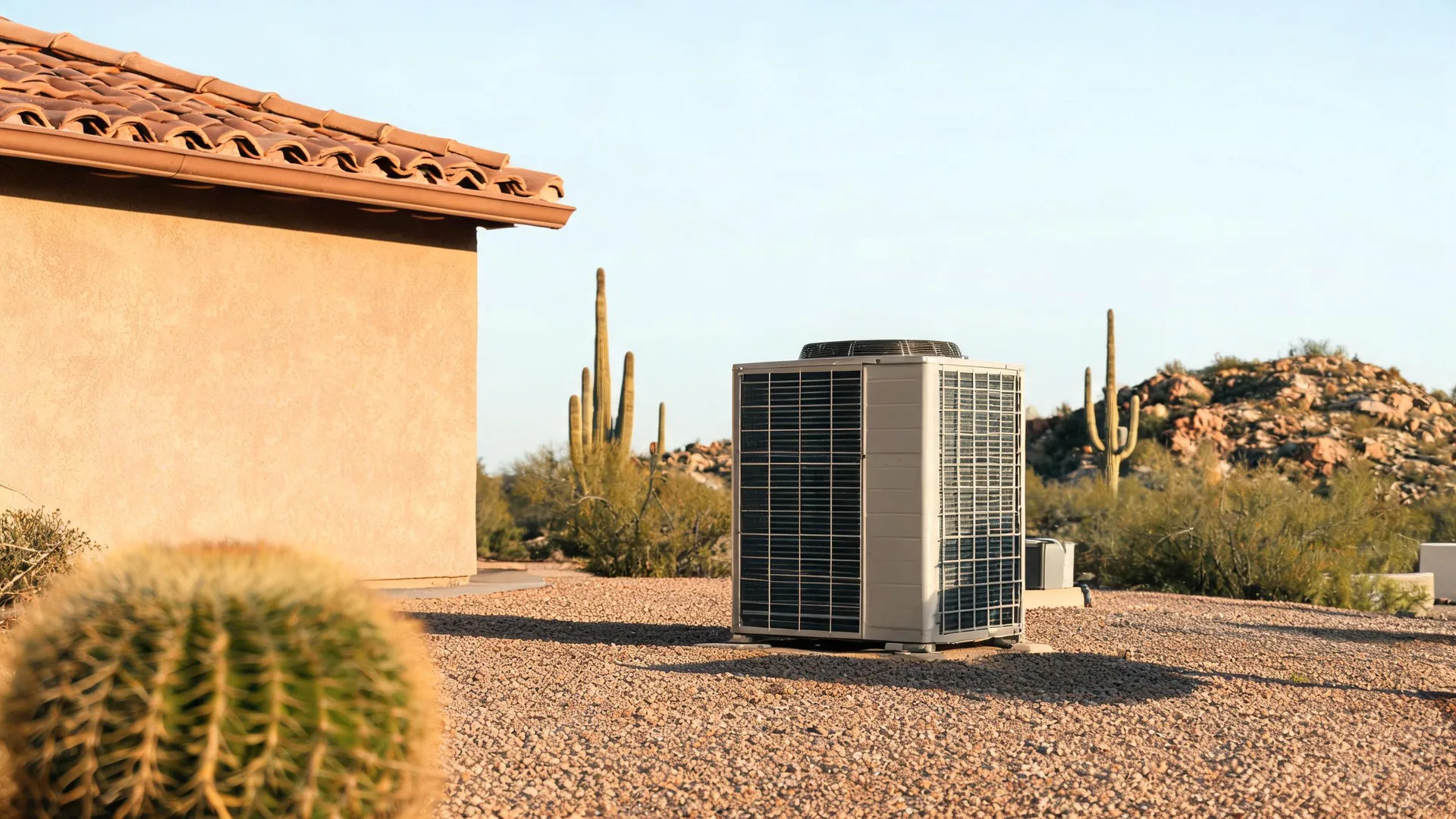
A white mini-split heat pump outdoor unit mounted on a concrete pad beside a gray-sided house, surrounded by gravel and green shrubs.

Low strain still needs a yearly look

A heat pump here isn't fighting extreme heat most of the year, so the compressor and coil don't take the beating they would somewhere hotter. That's the case for a yearly check being worth doing, not a case for skipping it. The parts that wear here tend to wear from sitting through storms and cold snaps, not from long hours of hard running. A yearly check catches a loose connection or a weak capacitor while it's still a fix, before a December night at 24°F turns it into a breakdown.

The filter decides what the coil has to deal with

A dirty filter chokes the airflow across the indoor coil. Starved of air, that coil can't move heat the way it's supposed to, so it runs colder than it should and ice can start to build on it even when the system is heating, not cooling. Checking the filter is something any homeowner can do without opening up the unit.
The drain is only a problem once it's ignored

A heat pump pulls moisture out of the air during the cooling months, and that water has to go somewhere. The condensate drain carries it out. Let that line clog with algae or dust and the water backs up into the pan, sometimes into the cabinet or the ceiling below it. Nobody notices a drain line until it stops draining, which is exactly why it belongs on a yearly check instead of a wait and see.

A tune-up gets inside the parts of the system you never see from the thermostat. A tech checks refrigerant charge against the manufacturer's spec, not just whether the system is cooling or heating. Too little charge and the compressor works harder than it should every time it runs, shortening its life a little more each cycle. They'll test the capacitor under load, since a capacitor can read fine sitting still and still fail to kick the compressor or fan motor on when it counts. Electrical connections get checked too. A connection that's loosened from vibration can run hot for months before it finally trips a breaker or burns through. None of that shows up as weak airflow or a strange noise. It shows up as a breakdown, unless someone looks for it first.

A heat pump tune-up also covers the reversing valve, since that's the part that switches the system between heating and cooling, and a valve that's stuck or leaking won't show up until the day it fails to switch. A tech checks it operates cleanly in both directions, not just the one the system happens to be running when they arrive. The defrost control gets tested too, since that's what tells the outdoor unit when to melt off the frost that builds up in cold weather. If that control is reading wrong, the unit either defrosts too often and loses heating capacity, or not often enough and ices over solid. Outdoor fan motor bearings get checked for wear, since a motor that's starting to go will often still spin fine during a quick visual look and only show the problem under a full load. These are the parts a homeowner has no way to see or test, which is the whole reason the visit is worth having someone do.