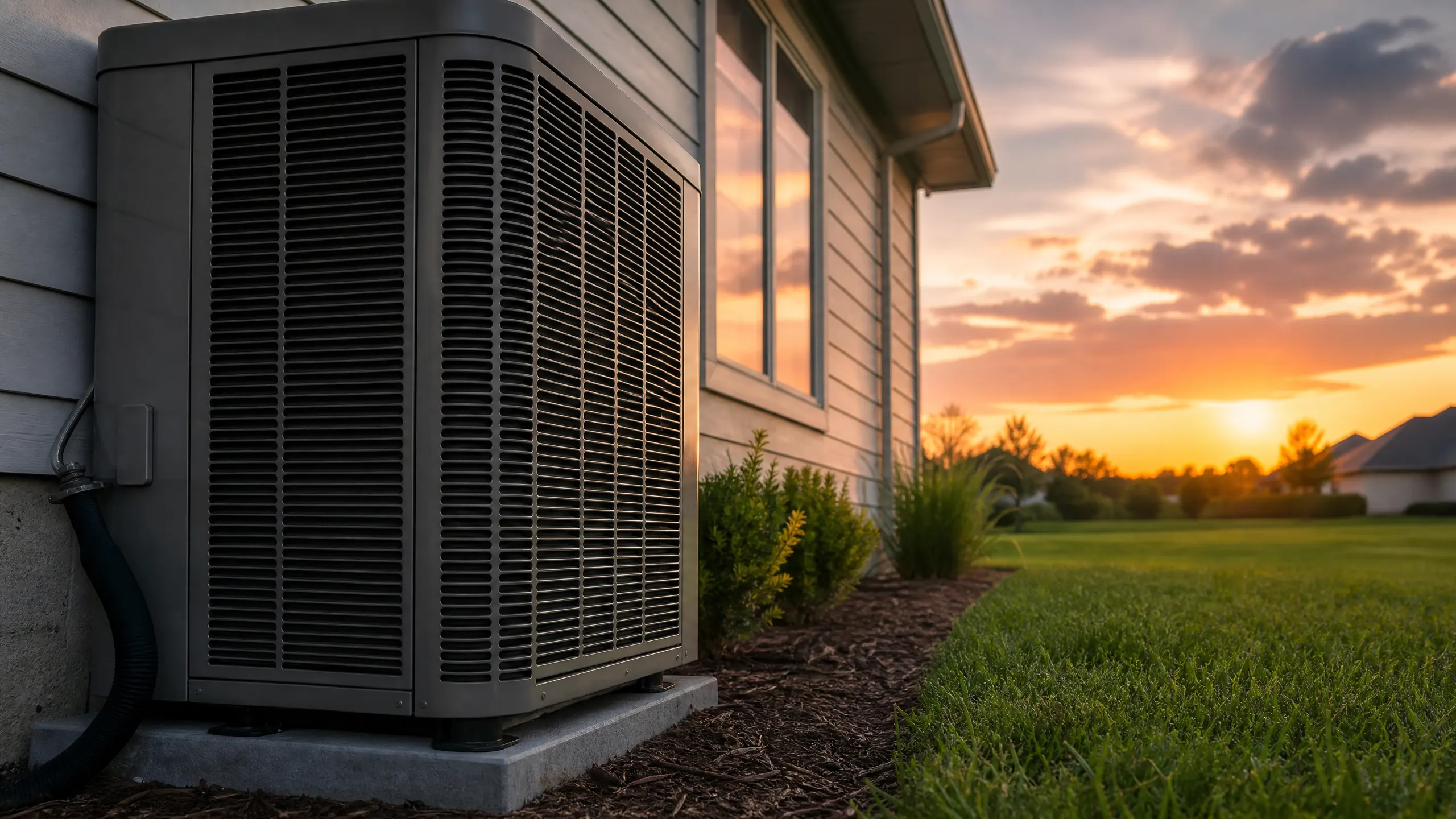





An outdoor air conditioning condenser unit mounted on a concrete pad beside a house at sunset.

Heat Pump Repair in Everett, WA

Tell us about the job

Takes about a minute. No obligation.

RepairHeat PumpSnohomish County, WA
Step 1 of 2

What ZIP code is the job in?

Half the houses in Snohomish County were built in 1990 or later. If yours is one of them, your heat pump probably hasn't logged the years a lot of old equipment carries. A system in a newer house is more likely in the first half of its life than the back half. That changes the math on a repair. A compressor or board issue on equipment with plenty of years left is usually worth fixing, rather than a sign the whole system is giving out.

10 months
September through June, your system heats
30°F
the average winter night it heats against
69°F
the average summer afternoon it cools against
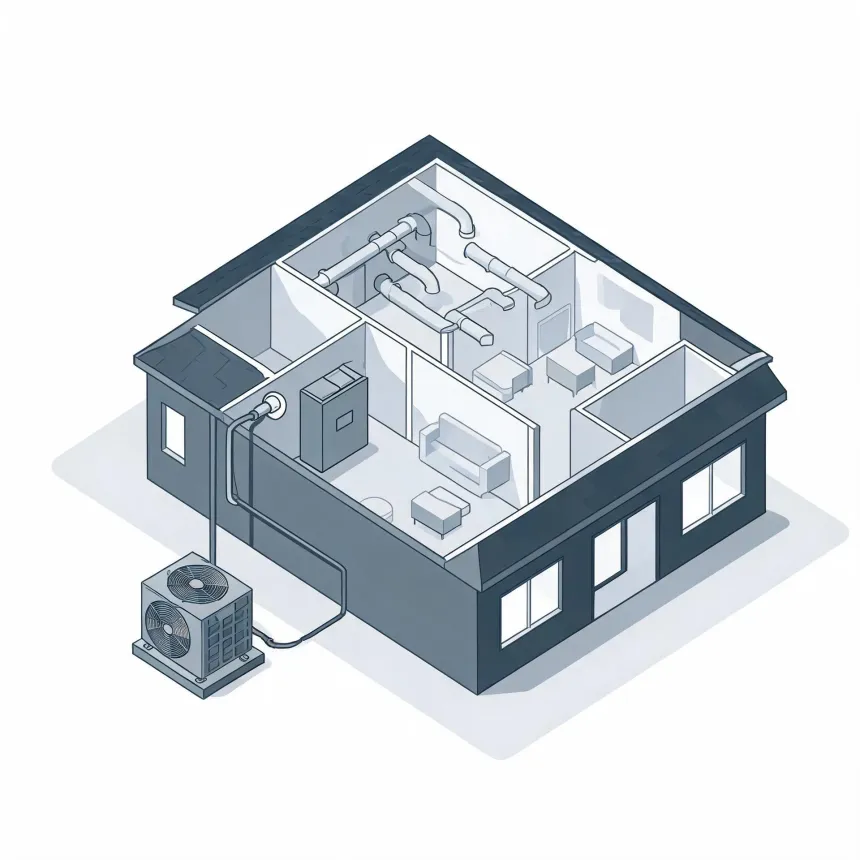
Isometric line illustration of a cutaway single-story house showing interior rooms, ceiling ductwork and an indoor air handler, connected by a line to an outdoor condenser unit on a pad beside the building.

Winter nights here average 30°F, not much below freezing.

A heat pump in Everett isn't working against brutal cold, so a repair usually brings it back to full use.

Ten months of running gives a weak part its chance to fail in September

Heat runs September through June
Winter nights average 30°F
Power costs 11.9 cents a kWh statewide
When storms hit your heat pumpClose to a quarter of Washington homes lost power for a day or more in 2024.

When a part wears out here, it's rarely the compressor giving up from strain. More often it's a capacitor, a contactor, or a board, something that failed on its own rather than got pushed past its limit. That's good news for the repair call. A tech isn't walking into a system that's been run hard all winter. Most of the time it's one part, and swapping it brings the whole unit back.

In a newer home, repair is the call that makes sense

Get a repair quote before you weigh it against replacement. If your house dates from 1990 or later, the heat pump is more likely in the first half of its working life than the back half, and that's the system worth fixing rather than swapping out.

Find a contractor
A dark gray heat pump unit mounted on a concrete pad next to a house with gray siding and a stone veneer wall.

Running most of the year wears the small parts, not the compressor

A heat pump doesn't shut off for the season the way a furnace does. It switches jobs instead, heating one month and cooling the next, so the parts that start it and move it get worked all year long. The contactor's contacts pit a little every time they close, cycle after cycle, until they stick or stop making good contact. The run capacitor loses its charge slowly over thousands of starts, and a motor that used to spin right up starts to hesitate or hum instead. The reversing valve, the part that switches the system between heating and cooling, can stick in one position if it sits too long without moving. Outside, the defrost board and its sensor earn their keep every time the coil frosts and needs a heat cycle to clear it. None of this is the compressor wearing out from strain. It's smaller parts reaching the end of how many times they can open, close, or fire before they quit.

What you'll actually notice first

The system runs but the air coming out doesn't feel like it's doing much, warm in heating mode or barely cool in summer. Sometimes it won't switch modes at all, stuck heating when you asked for cooling. Outside, the unit might run constantly without cycling off, or short cycle, starting and stopping every few minutes instead of running a normal stretch. A clicking or humming sound right before it should start, followed by nothing, usually means a capacitor or contactor is on its way out.
What's worth a same-day call

Ice building up on the outdoor coil and staying there instead of clearing during a defrost cycle means the defrost board or sensor isn't doing its job. A burning smell, a breaker that trips when the system starts, or the outdoor fan not spinning while you hear the compressor trying to run are all signs to shut it off and get someone out soon. Waiting on those usually turns a part swap into a bigger repair.

Before you call, a few things are worth checking yourself. Make sure the thermostat is set to the mode you actually want and the batteries are fresh, since a thermostat acting up looks exactly like a heat pump acting up. Walk outside and see if the unit is running at all, and whether the outdoor fan is spinning. If it's caked in ice, note that but leave it alone rather than chipping at it. Check the breaker panel for anything tripped, and if one has, reset it once. If it trips again, leave it off and call. Pull the air filter and hold it up to the light. If you can't see through it, swap it before anything else, since a clogged filter can cause a lot of what looks like a failing system. None of this fixes a bad capacitor or a stuck reversing valve, but it rules out the simple stuff first.

A part failing on its own is almost always worth fixing. A capacitor, a contactor, a defrost board, these are small, defined jobs. The tech knows what the part does, how it failed, and what putting a new one in restores. That's a different call than a compressor on its way out, where the repair might not hold and the unit's old enough that you're gambling on what fails next. Age and history matter more than which part happens to be broken. A system that's given you one isolated failure after years of running fine is telling you something different than one that keeps coming back for another service call. The second case is where replacement starts to make sense, not because any single part costs a lot, but because the pattern says the system as a whole is wearing out, not just one piece of it.