

Heat pump vs furnace in Snohomish County, Washington

Quote Both Systems

Get a price before you decide

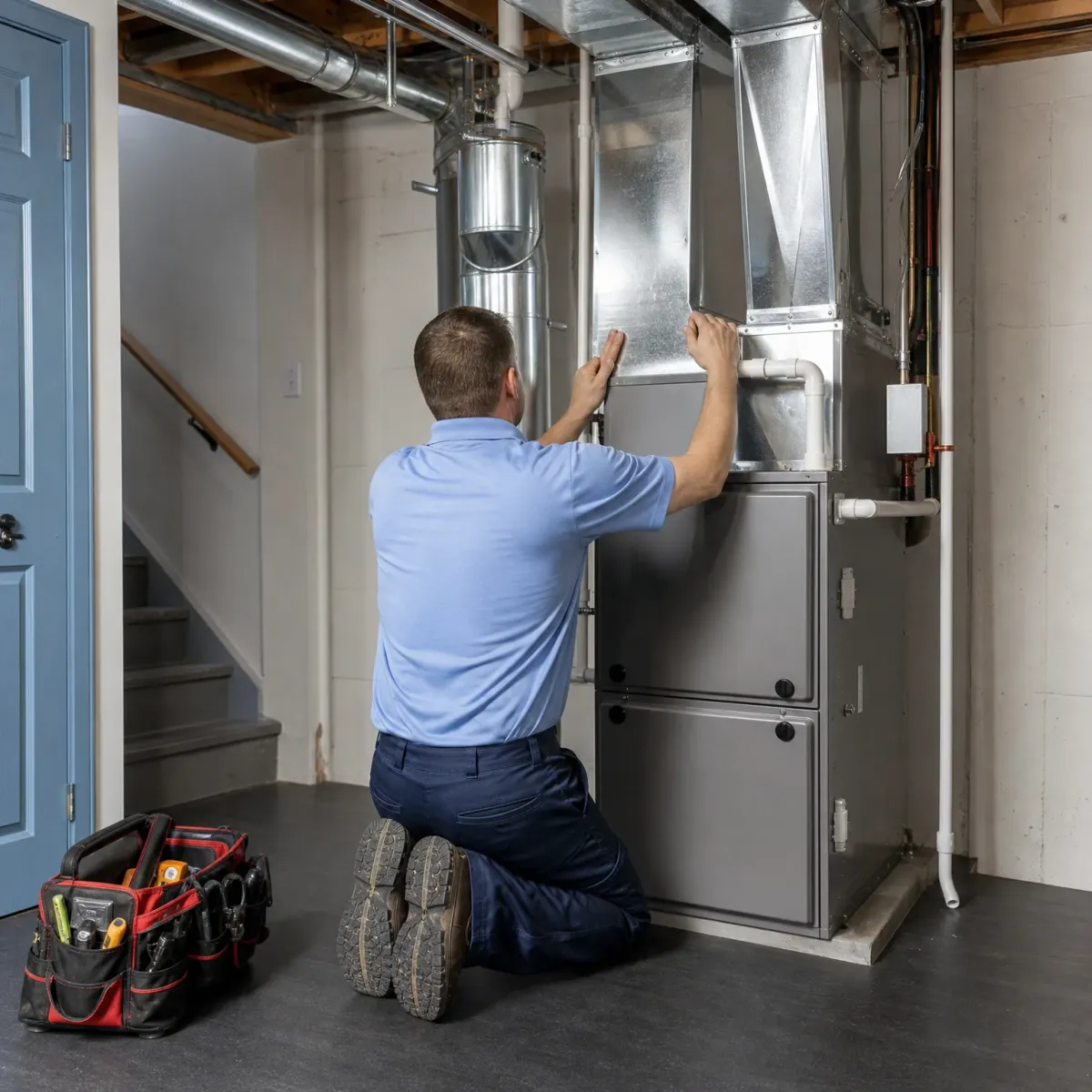
A man in a light blue polo shirt and dark jeans kneels in a basement, holding a panel on a gray furnace connected to sheet-metal ductwork, with an open tool bag on the floor nearby.

Tell us about the job

Takes about a minute. No obligation.

New system or replacementSnohomish County, WA
Step 1 of 3

What kind of equipment?

Which costs less to run in Snohomish County?

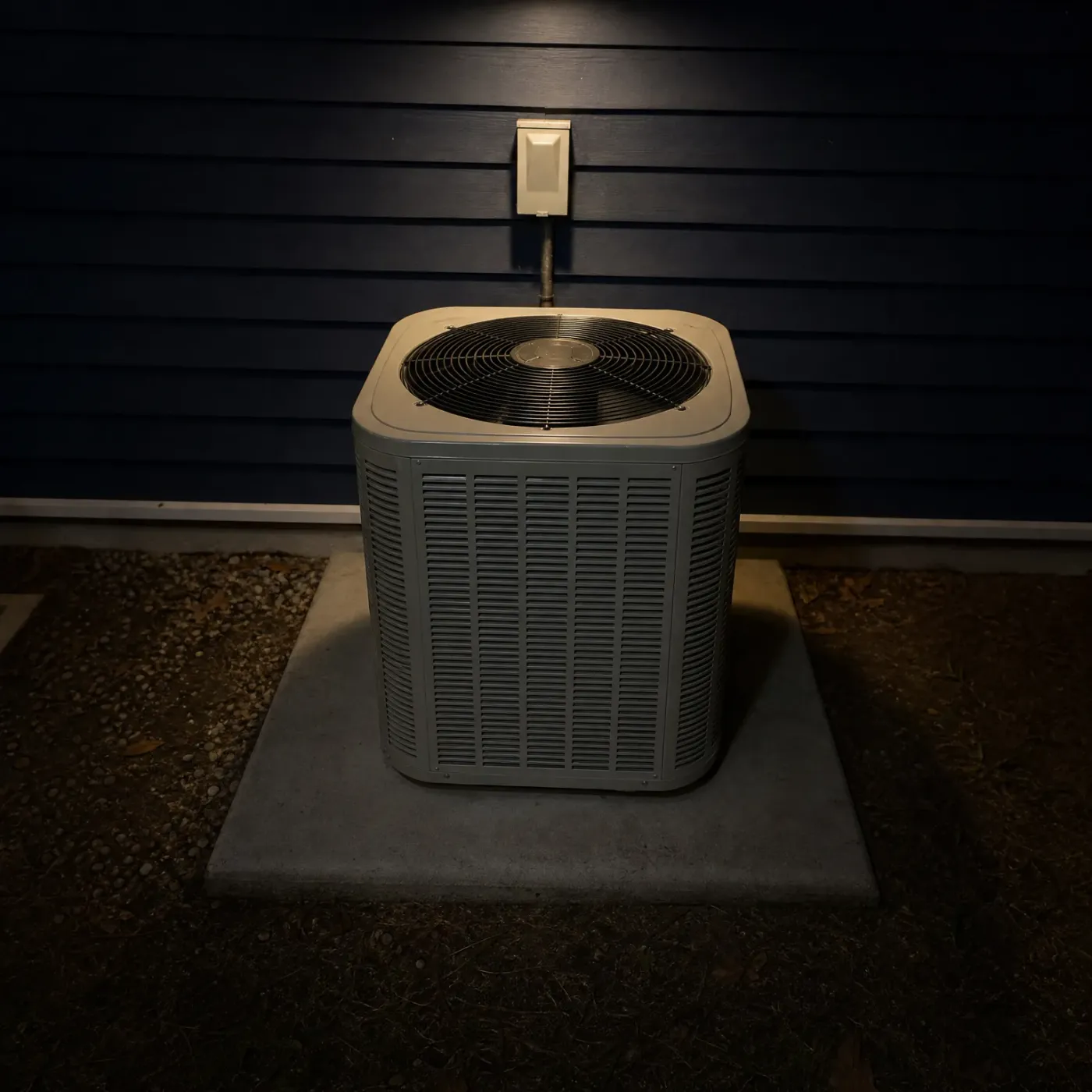
An outdoor condenser unit on a concrete pad at night beside a dark horizontal-lap sided wall, with a wall-mounted disconnect box and refrigerant line above it, lit from overhead.

Heat pump

To heat your home here$1.59per 100,000 Btu

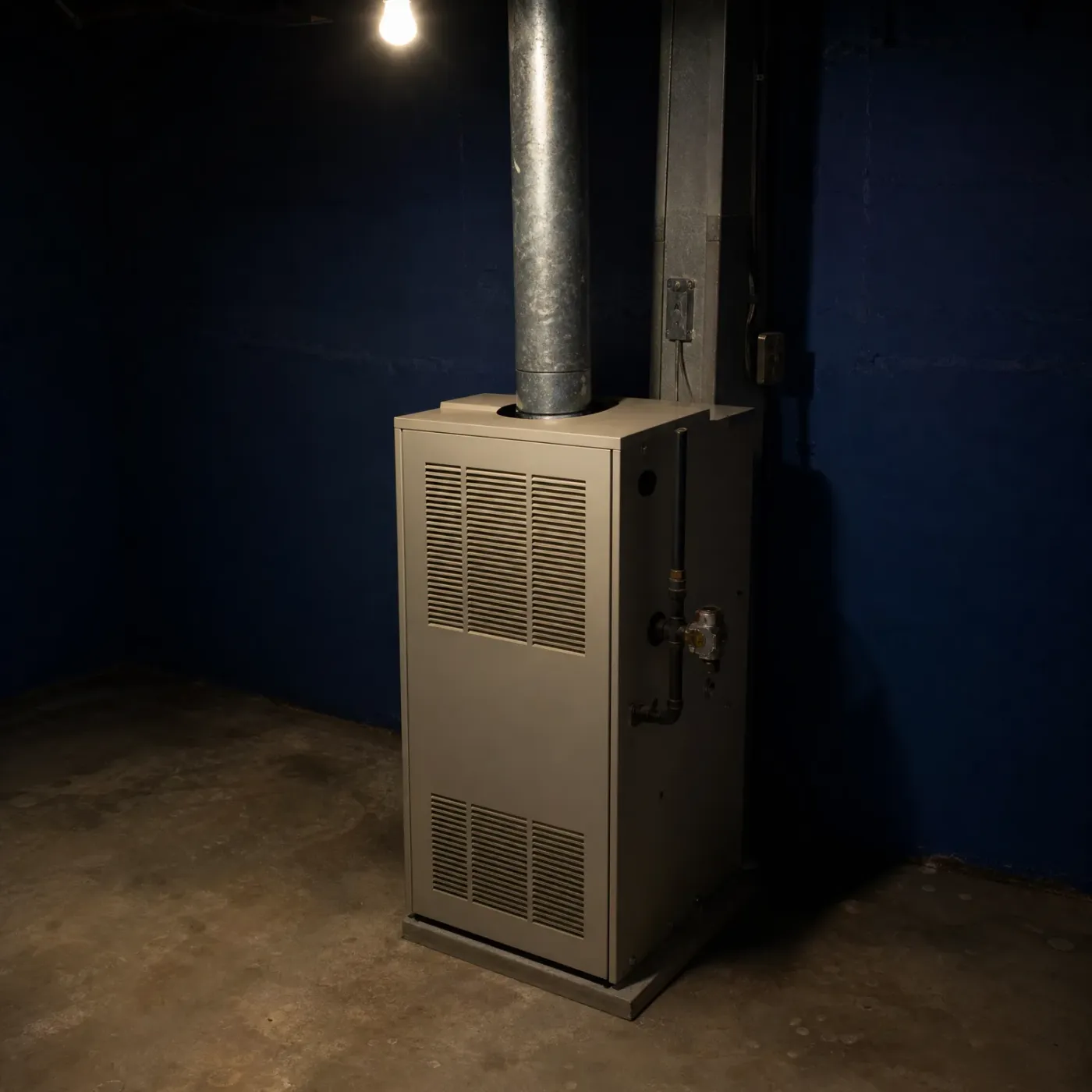
A beige sheet-metal furnace with louvered vent panels and side gas piping stands in a basement corner against dark blue painted walls, with a galvanized flue pipe rising to the ceiling and a bare light bulb overhead.

Furnace

To heat your home here$1.46per 100,000 Btu

At Washington's gas and electricity prices, a gas furnace makes the same heat as a heat pump for at least 8% less.

Btu stands for British thermal unit, the standard measure of heat energy.

Where does a heat pump shine?

  • No gas line, nothing burning in the house

    A heat pump runs on electricity alone. Nothing burns inside the house.

    Kitchen with light wood cabinets, white marble-look countertops and backsplash, a navy blue island with wooden stools, an induction cooktop with a steel kettle, two blue pendant lights, stainless refrigerator and black wall oven.
  • Steady, even comfort

    A heat pump runs long and low instead of blasting on and off. Rooms hold an even temperature all day.

    A dimly lit living room at night with a dark blue armchair holding an open book and knit throw, a lit table lamp, a stone fireplace with a log basket, and a yellow Labrador sleeping on a patterned rug.
  • Heats and cools in one system

    Winter and summer are covered by the same outdoor unit. That's one machine to service instead of two.

    A living room with a light gray sofa holding navy and pale blue pillows and a navy fringed throw, a rustic wood coffee table with a woven tray and hydrangeas in a white vase, a navy built-in bookshelf at left, and large windows showing green trees and flowering shrubs.

Where does a furnace shine?

  • Proven, simple, easy to get serviced

    Gas furnaces have heated homes for generations. Almost every HVAC tech knows them inside and out.

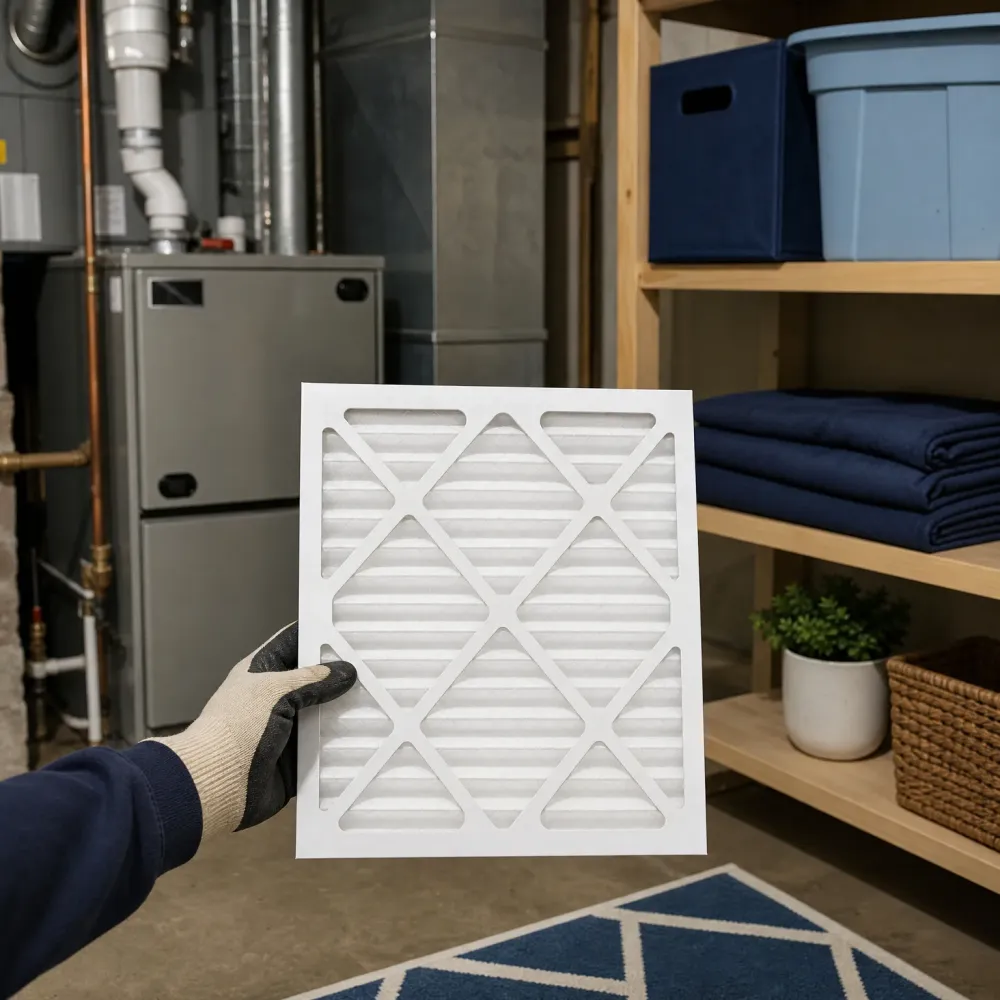
    A gloved hand holds a white pleated air filter in a basement utility area with a furnace, ductwork, and wooden shelves holding storage bins, folded blue fabric, a potted plant, and a woven basket.
  • Pairs with any central AC

    The ductwork that delivers heat in winter delivers cool air in summer once an AC coil is added.

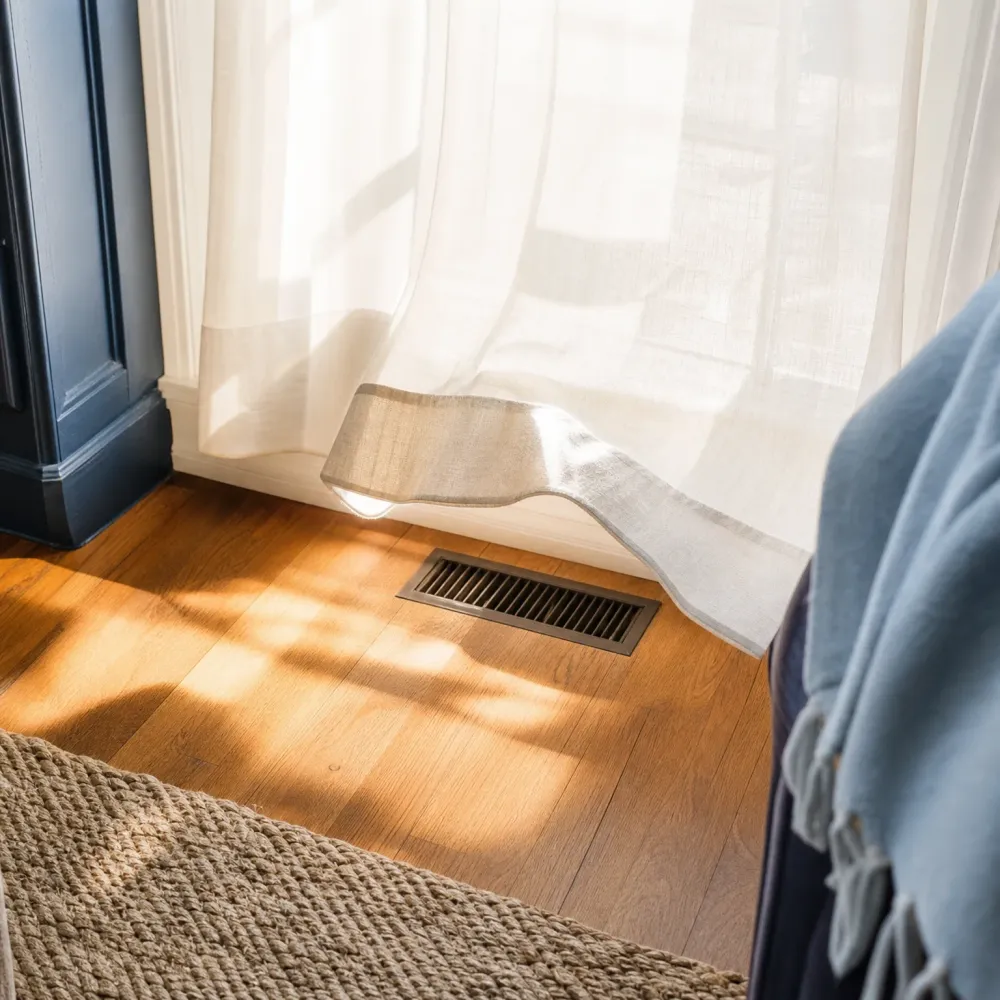
    A bronze-toned floor register vent set in a hardwood floor near a white baseboard, with a sheer curtain lifting above it, a woven jute rug in the foreground and a blue throw at right.
  • Fast, strong heat on demand

    The air coming from the vents feels genuinely hot. That's welcome on a freezing morning.

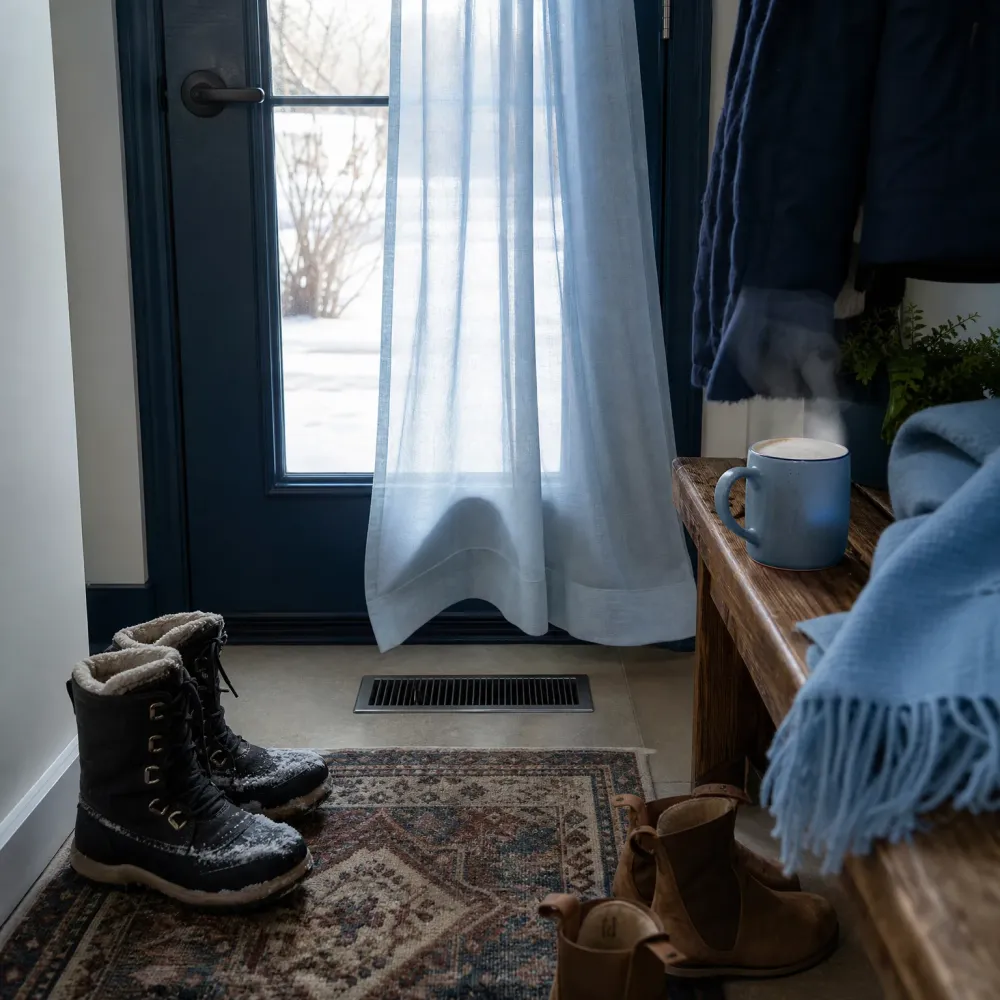
    An entryway with a navy door and sheer curtain showing snow outside, snow-dusted black winter boots and brown suede boots on a patterned rug, a floor air vent, and a wooden bench holding a steaming mug and a light blue fringed blanket.

Can a heat pump keep up here

Your winter low here averages 30°F, and that's the number that matters for this choice. A standard heat pump starts losing heating capacity below 40°F and often needs backup heat below about 35°F. Thirty degrees is under both marks, and so is every one of the roughly 45 nights a year here that hit freezing or below. That doesn't mean a heat pump can't heat your house. It means on an average winter night, it's working below the point where it puts out its full rated heat.

The cold doesn't go much further than that, though. Fewer than one night a year here drops to 0°F, and almost none of your 45 freezing nights get close to it. That matters because a heat pump's hardest test is deep cold, and Snohomish County barely sees it. A cold-climate heat pump, the kind certified to hold at least 70 percent of its heating capacity at 5°F, is built for weather colder than what this county mostly delivers. In a two-winter test of those units in occupied homes, backup heat covered only a small share of the load between 0°F and 35°F, and running on backup alone was rare even above 0°F. That's the range your winters actually sit in.

A furnace doesn't have this problem at all. It burns gas and makes its full rated heat whether it's 30°F or 10°F outside. If steady output on the coldest nights of the year is the main worry, a furnace removes the question entirely.
A single-story blue house with white-trimmed windows, light blue shutters and front door, and a gray shingled roof, set behind a lawn and stone retaining wall with fallen orange leaves on the wet street and sidewalk under a large autumn tree.

What it costs to run, and what else it does

Heat runs ten months a year here, September through June, so the cost per unit of heat adds up over a long season. At Washington's current fuel prices, a furnace built to the federal minimum makes heat for $1.46 per 100,000 Btu. A heat pump at the federal minimum runs $1.59 for the same heat, and that figure doesn't include backup heat on the colder nights, which would push it higher. A gas furnace is the cheaper machine to run here, by at least 8 percent before backup heat is counted.

The other two months of the year don't change this calculation much either way. Summer afternoons here average 69°F, and the county has no real cooling season. A furnace only heats, so it sits idle those two months regardless. A heat pump would run your air conditioning in that same stretch, but with highs averaging 69°F, there's not much cooling load to speak of.

Right now a little over half the homes in the county heat with electricity and about two in five heat with gas, so neither fuel is unusual here. If your house already has a gas line and ducts sized for a furnace, staying with a furnace is the simpler path and the cheaper one to run. A heat pump is worth choosing if what you want is one system for heat and air conditioning, or you'd rather not burn gas in the house, and you're prepared for backup heat to carry some of the coldest nights.

Sources: NOAA nClimDiv · NOAA 1991–2020 seasonal normals · PNNL Building America guide · PNNL-37127 field study · ENERGY STAR product criteria · EIA SEDS 2024 · 10 CFR 430.32 · Census ACS 2020–2024

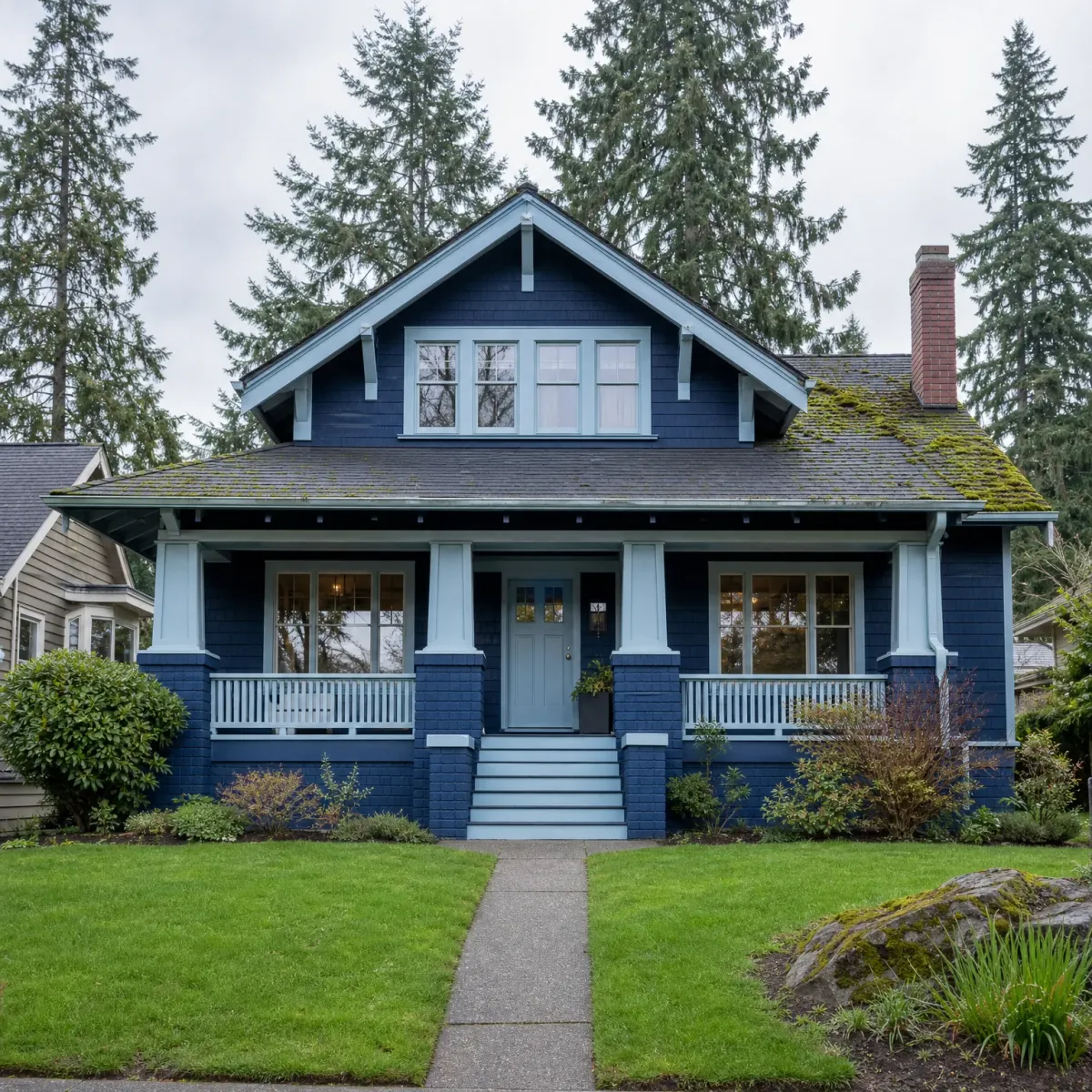
A navy blue Craftsman bungalow with light blue trim, a covered front porch with square columns, a mossy roof, and a brick chimney, fronted by a mowed lawn and concrete walkway with tall conifers behind.

Common questions about heat pumps and furnaces

  • Do I need backup heat with a heat pump here?

    On most nights, no, but not on all of them. The average winter low here is 30°F, and a standard heat pump's output starts falling short of its rating below 40°F and often needs backup below about 35°F. About 45 nights a year here drop to freezing or below, which is where backup heat earns its place, though a cold-climate heat pump holds onto most of its capacity much further down than a standard one does.

  • Can I keep my furnace and add a heat pump?

    Yes, and in Snohomish County that pairing covers both problems a heat pump alone runs into here. The heat pump does the work down to somewhere in the mid-30s, then the furnace takes over for the roughly 45 nights a year that drop to freezing or below. You get a gas furnace's strong heat on the coldest nights and a heat pump's lower running cost the rest of the ten months the heat runs.

  • What if my house doesn't have a gas line?

    A heat pump is the one worth comparing against propane or oil, and it wins on how it runs the house. It heats and cools from one system, and there's nothing burning inside the house. Propane and oil furnaces burn fuel that has to be delivered and stored, and neither gives you cooling, which a heat pump does even though cooling barely matters here with no real cooling season.

  • Is a heat pump cheaper to run than a furnace in Snohomish County?

    No, a gas furnace runs cheaper here. At Washington's average fuel prices a furnace makes the same heat for $1.46 per 100,000 Btu against $1.59 for a heat pump, both built to the federal minimum. That heat pump figure also assumes no backup heat is needed, which isn't the case on the coldest nights here.