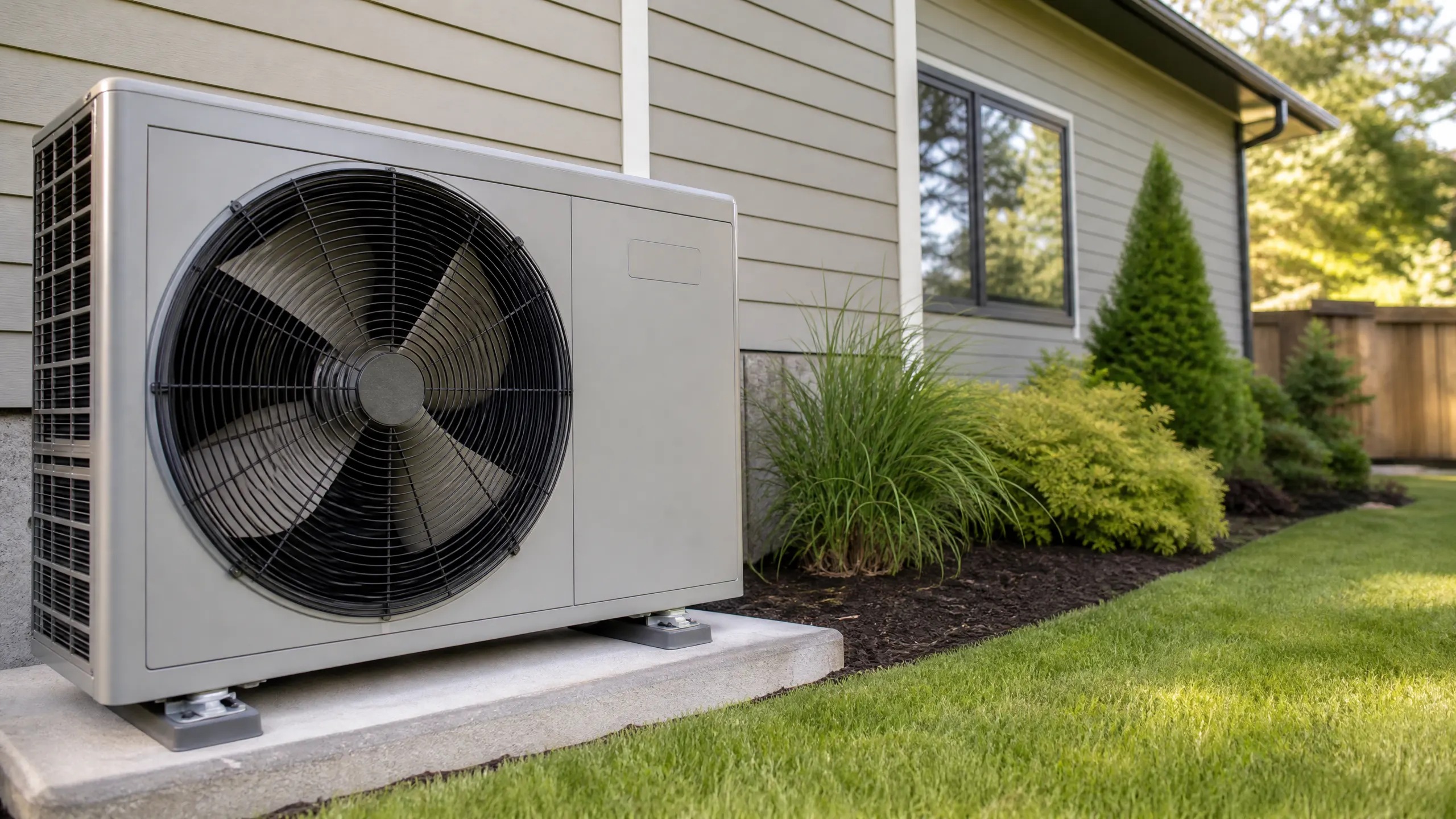
An outdoor heat pump unit mounted on a concrete pad beside a house with beige siding and a landscaped garden bed.

Heat Pump Repair in Port Angeles, WA

Tell us about the job

Takes about a minute. No obligation.

RepairHeat PumpClallam County, WA
Step 1 of 2

What ZIP code is the job in?

Winters here don't ask much of a heat pump

Overnight lows in Clallam County average 33°F through December, January and February. That's mild work for a heat pump compared to most places, and it means the unit isn't grinding through months of hard freezes every year.

So a breakdown is usually about age or wear, not overwork

When a heat pump hasn't been pushed hard, trouble tends to trace back to a specific worn part rather than a system run into the ground. That's the kind of problem worth fixing rather than replacing.

33°F
the average winter night it heats against
67°F
the average summer afternoon it cools against
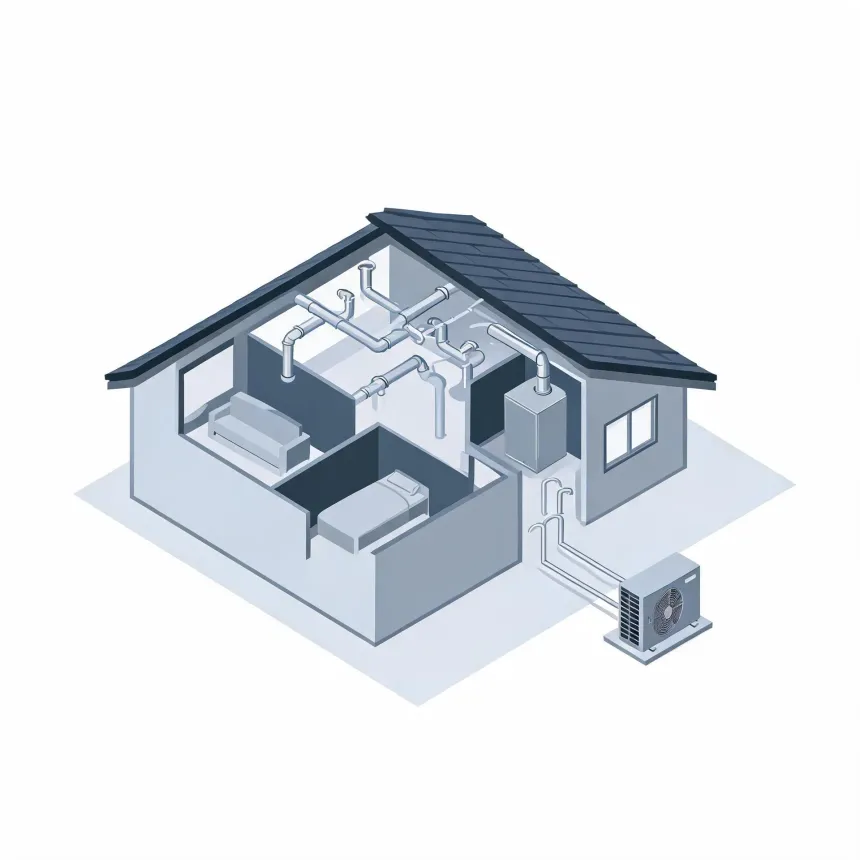
Isometric cutaway illustration of a small house showing ducted air distribution, an indoor air handler, and an outdoor condenser unit connected by lines, with a sofa and bed in the rooms.

Half the homes in Clallam County were built in 1982 or later.

A heat pump installed with a newer house still has years of working life in it, which is why repair is usually the right call here.

Nearly a quarter of homes here lost power for a day or more last year

23% of homes statewide lost power a day or more in 2024
Winter nights average 33°F
Power costs 11.9 cents a kWh statewide
A heat pump that's earned a repairMild winters mean most problems come down to one worn part

If your heat pump went in when the house was built, check the paperwork before you assume the worst. A unit that age still has plenty of working parts in it. Most breakdowns at that stage come down to one failed component, a contactor, a capacitor, a sensor, not a system giving out. That's a repair, and usually a straightforward one. Worth asking the contractor what actually failed before you talk about replacing anything.

If the outdoor unit took a hit in the last storm, get it looked at

Even a heat pump that's still running can have hail dents or debris damage from the last outage. Worth having it checked, not just left alone because it's still keeping the house warm.

Find a contractor
A white mini-split heat pump outdoor unit mounted on a concrete pad beside a gray-sided house, surrounded by gravel and green shrubs.

What to check before you pick up the phone

Before calling anyone, look at the outdoor unit. A thin layer of frost is normal in cold weather, but if it's caked in ice or the fan can't spin, that's worth telling whoever comes out. Check the air filter. A clogged one chokes airflow and can make the whole system struggle to keep up, and it's the one thing you can fix yourself. Go to the thermostat and make sure it's set to heat and the setpoint is actually above room temperature, simple as that sounds. Listen for anything new, a clicking that won't stop, a hum with no fan movement, a grinding sound. Check the breaker panel too. A tripped breaker can look exactly like a dead system. None of this tells you what's broken, but it gives the contractor a place to start, and it rules out the handful of things that aren't a repair at all.

It's running, just not keeping up

A heat pump that runs constantly but never quite hits the setpoint, or blows air that doesn't feel warm, is usually low on refrigerant or losing capacity in the compressor. The system isn't off, it's just losing the fight, and that's easy to miss until the house feels wrong.

Short cycling wears out the parts that are left

A unit that kicks on and off in quick bursts instead of running a full cycle is stressing the compressor every time it restarts. Left alone, it turns a thermostat or sensor problem into a compressor problem, which is a much bigger repair.

A few things cause most heat pump failures, and they're the same whether the unit is old or new. The reversing valve, the part that switches between heating and cooling, can stick and leave the system blowing the wrong temperature air or stuck in one mode. Capacitors wear out from the heat and vibration of normal running and either delay the compressor's start or stop it from starting at all. Refrigerant doesn't get used up, so a low charge almost always means a leak somewhere in the line, not just a top-off. Outdoor coils get dirty or coated in debris and lose their ability to pull in or release heat, which makes the whole system work harder for less result. A failing defrost control can leave frost building up on the outdoor unit instead of clearing it on schedule. Most of these show up as one part failing, not the whole system failing at once.

A repair is worth it when the part that failed is small next to the system around it, a capacitor, a sensor, a stuck valve. Replacing one part on a compressor and coil that are otherwise sound is normal, not a stopgap. What changes the math is the compressor itself. It's the one part that's expensive enough and central enough that a shop will usually walk you through replacing the whole unit instead, because a new compressor on an old system often isn't worth what it costs. Ask the contractor straight out which kind of repair this is before you decide anything.