







Three illuminated Craftsman-style houses with stone and wood-shingle facades line a wet residential street at night, surrounded by trees and landscaped gardens.

Heat Pump Repair in Port Townsend, WA

Tell us about the job

Takes about a minute. No obligation.

RepairHeat PumpJefferson County, WA
Step 1 of 2

What ZIP code is the job in?

Winter lows here average 31°F in December, January and February. That's mild work for a heat pump. It doesn't have to drag heat out of air that's near zero, the way units do further inland, so the compressor isn't straining through most of the winter. A heat pump that's seeing trouble here more likely has a specific problem than a system worn out from overwork. That's worth knowing before you decide whether a repair makes sense.

31°F
the average winter night it heats against
66°F
the average summer afternoon it cools against
Isometric line illustration of a cutaway single-story house showing interior rooms, ceiling ductwork connected to an indoor air handler, and refrigerant lines running to an outdoor condenser unit on a pad.

Half the houses in Jefferson County were built in 1988 or later.

A heat pump that came with a newer house still has a lot of working life to give back for a repair.

Nothing about Port Townsend works a heat pump harder than normal

Power costs 11.9 cents a kWh statewide
Winter nights average 31°F
Climate zone 4C
If the outdoor unit took a hit in a storm, get it checked23% of Washington households lost power for a day or more in 2024

A repair tech can usually find a cause when a heat pump has it this easy. A compressor that was never pushed hard, a coil that was never iced over night after night, shows its actual problem instead of just general wear. That means a technician can point to the failed part. A bad capacitor, a stuck reversing valve, a low charge from a slow leak. None of that is tied to how many hours the system ground through a hard winter. So when something does go wrong here, it's worth getting a straight diagnosis before deciding the unit is done.

Get the diagnosis before you write off the system

If your heat pump came with the house, check the year it was installed against the year the house was built. A system that's only a few years into its life is worth a straight repair call, not a replacement quote.

Find a contractor
A man in a gray t-shirt and tan work pants, seen from behind, climbs concrete steps toward a dark blue front door while carrying a canvas tool bag, with a potted shrub beside the entry.
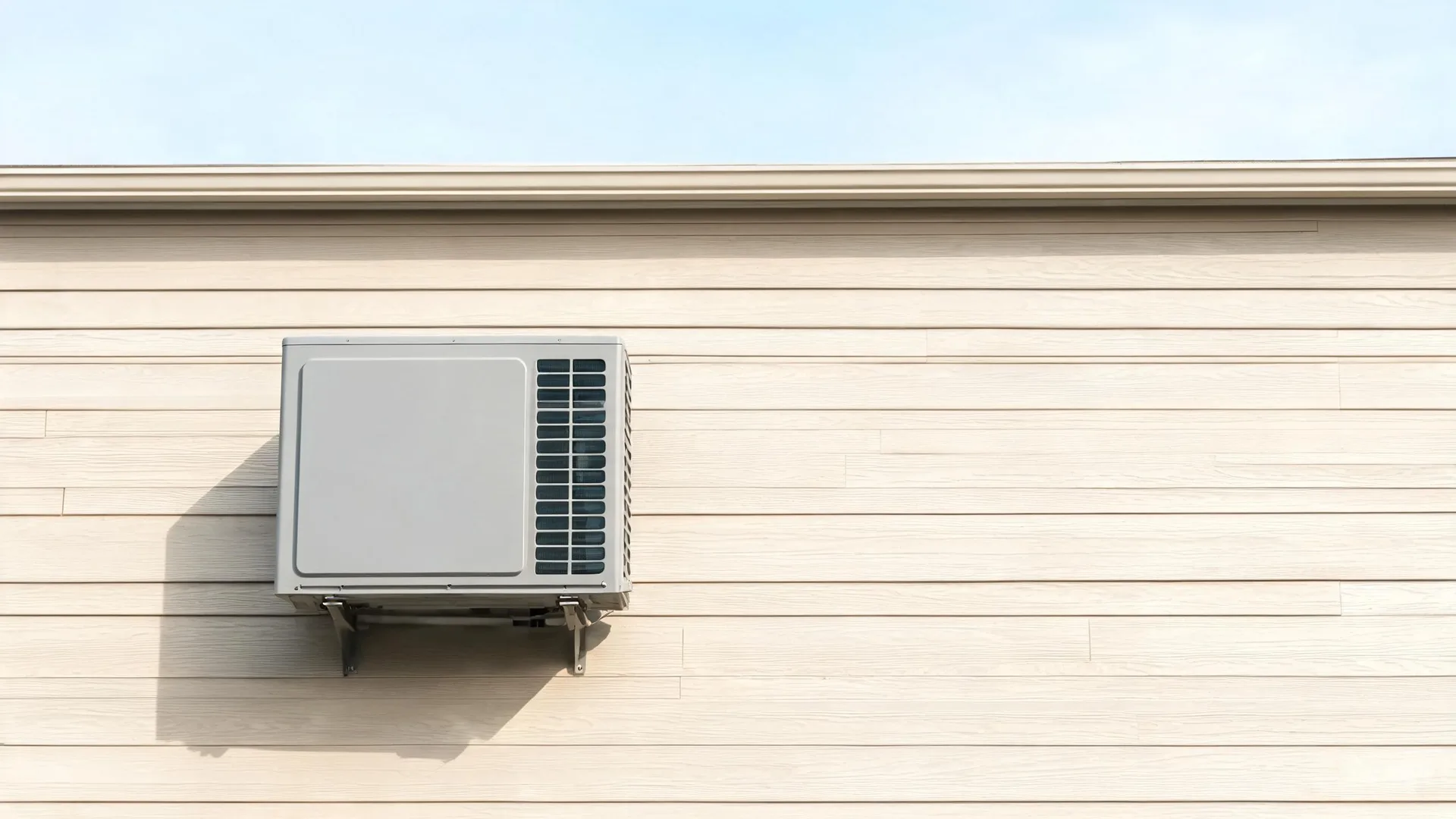
A gray heat pump outdoor unit mounted on a concrete pad next to a residential house with lap siding and stone accents.

What a heat pump sounds and feels like when something's wrong

A heat pump that needs attention usually tells you before it quits outright. In cooling mode, air from the vents feels warm instead of cool, or barely moving at all. In heating mode, you might notice it blowing cool air, or running long stretches without the house warming up. Listen for the outdoor unit too. A hard clunk when it switches between heating and cooling points to the reversing valve. A hum with no fan turning points to a capacitor or motor. Ice building up on the outdoor coil and staying there, instead of clearing during the defrost cycle, usually means that cycle isn't working right. Short cycling, where the system kicks on and off every few minutes instead of running a full cycle, wears on the compressor and is worth a call on its own. None of these mean the system is finished. They mean a specific part is asking for attention, and the sooner it gets looked at, the less chance it drags another part down with it.

Check the thermostat before anything else

Make sure it's set to heat, not cool, and set below room temperature. Check the batteries if it has a screen that's dim or blank. People call about a dead system and the whole problem is a thermostat that lost power or got bumped into the wrong mode.
Look at the outdoor unit and the filter

Walk outside and check that nothing is stacked against the unit or blocking the sides. Leaves, branches, anything sitting close enough to choke the airflow. Then pull the air filter inside and hold it up to a light. If you can't see light through it, it's choking the system from the other end, and a dirty filter alone can cause a lot of what looks like a bigger problem.

A refrigerant leak is a good example. A system that's low on charge still runs, so it's tempting to let it ride until the next service visit. But a compressor needs enough refrigerant moving through it to stay cool and lubricated. Run it low for long enough and the compressor itself takes the damage, so a slow leak left alone can end up taking the compressor with it. The same goes for a dirty filter that keeps getting ignored. Airflow drops, the coil can't shed heat properly, and the system works harder to move less air. Short cycling is another one. Every stop and restart puts a surge of strain on the compressor, and a system doing that all day wears out parts that would otherwise last for years. None of these announce themselves as urgent. They just quietly turn into a bigger repair the longer the system runs on them.

A diagnostic visit starts outside, at the unit itself, before anything gets taken apart. A technician checks refrigerant pressures, checks that the compressor is drawing the right current, and watches how the system responds when it's told to switch between heating and cooling. Inside, they'll check the temperature of the air coming off the coil against the air going into it, which says a lot about whether the system is actually moving heat the way it should. Electrical parts get tested directly rather than guessed at. A capacitor either holds its rated charge or it doesn't, and a meter settles that in a minute. The reversing valve gets checked by listening to it shift and watching what happens to both coils when it does. None of this takes long, and most of it points to one part rather than a handful of possibilities. A straight diagnosis is usually the shortest part of the whole repair.