





An outdoor air conditioning condenser unit mounted on a concrete pad in front of a single-story suburban house.

Heat Pump Repair in Republic, WA

Tell us about the job

Takes about a minute. No obligation.

RepairHeat PumpFerry County, WA
Step 1 of 2

What ZIP code is the job in?

A diagnostic visit starts with the tech asking what the system is doing, or not doing, and when it started. Then they check the thermostat settings and the breaker before anything gets opened up. Outside, they look at the outdoor unit, checking refrigerant pressure, the compressor, and whether the fan is turning the way it should. Indoors they check airflow at the vents, the condition of the filter, and the coil. If the system is stuck in one mode or won't switch between heating and cooling, they'll check the reversing valve, since that part is what tells the system which direction to move heat. By the end they can usually point to the failed part and explain what it does, so you know what you're paying to fix and why it matters.

10 months
September through June, your system heats
19°F
the average winter night it heats against
76°F
the average summer afternoon it cools against
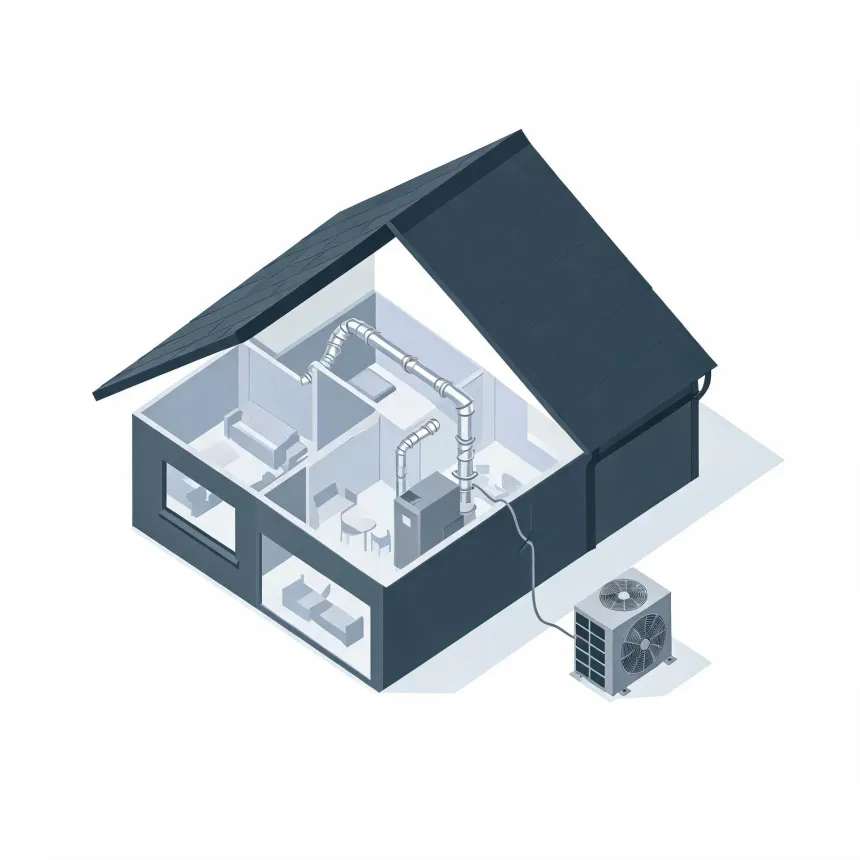
Isometric illustration of a cutaway house showing interior rooms with furniture, a furnace and ductwork, connected by a line to an outdoor condenser unit on the ground outside.

Republic sees winter storms that can knock out power for a stretch.

A heat pump that won't start after an outage usually just needs a reset, not a repair.

Heat starts in September here, and that's when a weak part gives out

Heat runs September through June
113 winter storms from 2015 to 2024
Winter nights average 19°F
Nothing unusual here, just an older housing stockHalf the homes here were built in 1985 or earlier, and a fifth are mobile homes.

What breaks on a heat pump here is what breaks on one anywhere. A failed capacitor, a low refrigerant charge, a dirty coil, a thermostat that stopped talking to the unit. None of that is specific to Republic. Electricity runs 11.90 cents per kilowatt-hour here, in line with the rest of the state, so what you pay to run the system isn't pushing it to fail any sooner. When a tech finds the problem, it's almost always a part that wears out on any heat pump after enough years of cycling on and off, not something particular to this area.

Get the usual fix

Nothing about this area is especially hard on it. It's most likely the usual problem with the usual fix.

Find a contractor
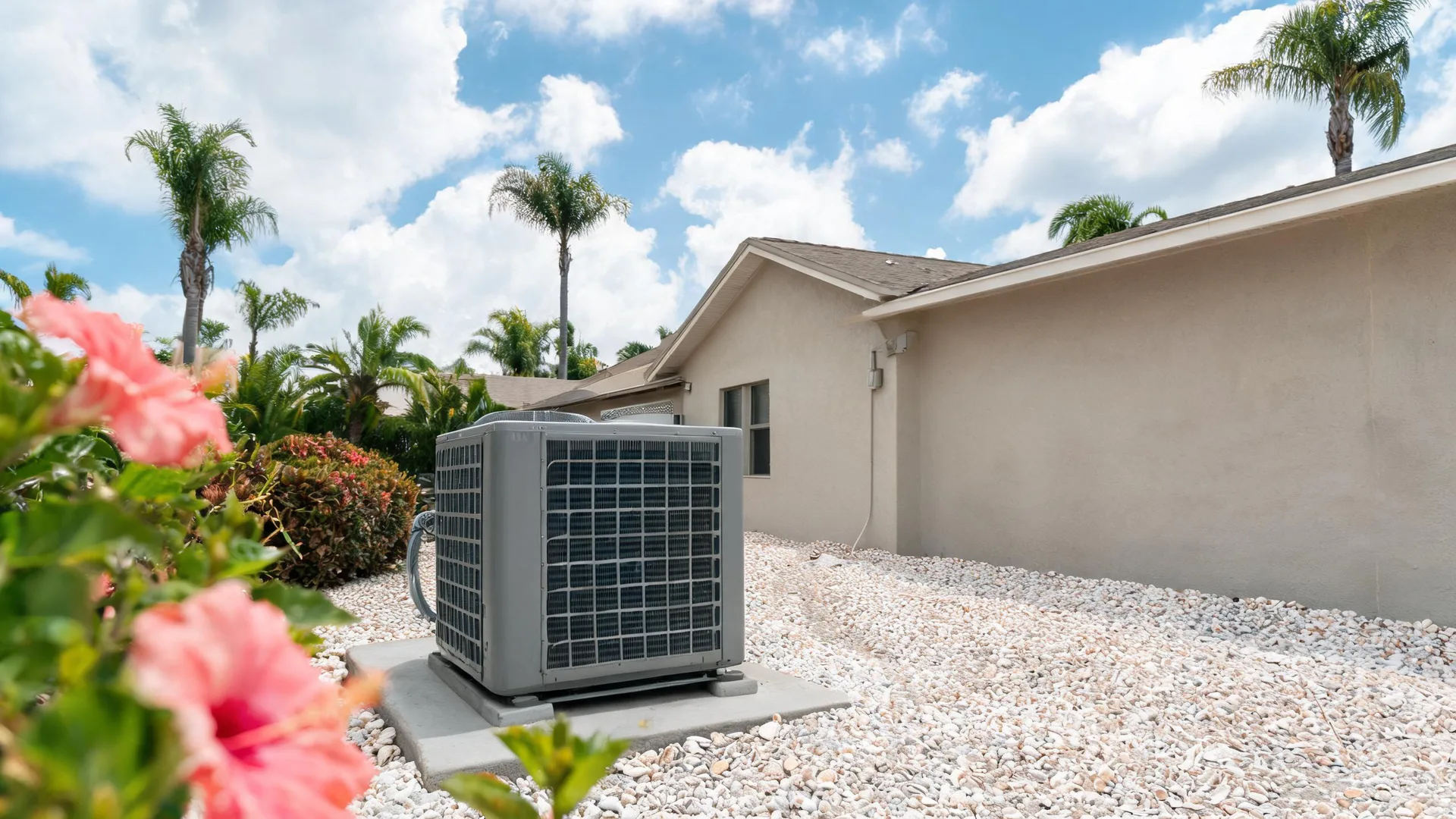
A gray heat pump outdoor unit mounted on a concrete pad next to a residential house with lap siding and stone accents.

Left alone, a small problem becomes the compressor's problem

A heat pump that's struggling doesn't fail all at once. It fails a little more every hour it's asked to keep running. A low refrigerant charge makes the compressor work harder to move the same amount of heat, and that extra strain shows up as wear on the compressor itself. A dirty coil makes the system run longer to satisfy the thermostat, and that longer runtime is exactly what a struggling compressor doesn't need. A failing capacitor is supposed to give the compressor and fan motor a jolt to get started, and without that jolt both motors strain every time they try to start. None of this fixes itself by waiting. The part that's already weak keeps absorbing the extra load, and the system has no way to protect it on its own.

What you can check yourself

Look at the thermostat first. Make sure it's set to the mode you want and the batteries aren't dead. Check the breaker box for a tripped switch. Outside, look at the unit itself. Ice or snow built up around the coil blocks airflow, and so does anything piled against it, like leaves or a drift. Inside, pull the filter and hold it up to light. If you can't see through it, that's airflow the system isn't getting.
What those checks rule out

A reset thermostat or a flipped breaker fixes the problem right there, no tech needed. A dirty filter is worth swapping even if it isn't the main issue, since it's making anything else going on harder on the system. But if the outdoor unit isn't turning on, or it's running but the air at the vents isn't changing temperature, that's past what a homeowner can safely chase down. Opening the unit further means handling refrigerant lines and electrical components, and that's where it becomes a call for a tech.

Some signs show up before the system quits altogether. Short cycling is one, where the unit kicks on, runs a couple minutes, and shuts off again instead of completing a normal cycle. Ice on the outdoor coil that doesn't clear during the defrost cycle is another, since a heat pump is supposed to melt that off on its own several times a day. Air coming out of the vents that's lukewarm instead of properly hot or cold means it's running but not doing the job. A hissing or bubbling sound near the refrigerant lines points to a leak. Any grinding or squealing from the outdoor unit usually means a motor bearing is going. None of these fix themselves, and running the system while they're happening just adds strain to whatever's already failing.

A tech can tell you what's broken, but whether to fix it or replace it comes down to what else the unit has been asking of you. A single failed part on a system that's otherwise kept up with the house is worth repairing, even if the part isn't cheap. The compressor is the one exception. It's the most expensive part in the unit and the hardest to replace on its own, so a failing compressor usually means pricing out a new system instead. Age matters less than pattern. A unit that's needed a tech out for something different each of the last few years is wearing out across the board, not unlucky. One that's run clean for years and just hit its first real failure is probably still worth keeping. If a contractor tells you a repair estimate is getting close to replacement cost, that's usually them telling you the unit has more than one problem.