




A single-story dark wood house with low-pitched, moss-covered roofs and a brick chimney, surrounded by shrubs, a green lawn, and tall conifers, with fern fronds blurred in the foreground.

Heat Pump Repair in Shelton, WA

Tell us about the job

Takes about a minute. No obligation.

RepairHeat PumpMason County, WA
Step 1 of 2

What ZIP code is the job in?

Winter nights in Mason County average 33°F. A heat pump here isn't fighting single digit cold like one in Spokane or back east. It runs fewer hours and cycles less hard to keep a house warm, which means less wear on the compressor and the coils over the years. So when a heat pump here starts acting up, age or a one-off part failure is the more likely story than a system that's simply worn out from years of strain. That's worth knowing before you decide whether a repair makes sense.

10 months
September through June, your system heats
33°F
the average winter night it heats against
72°F
the average summer afternoon it cools against
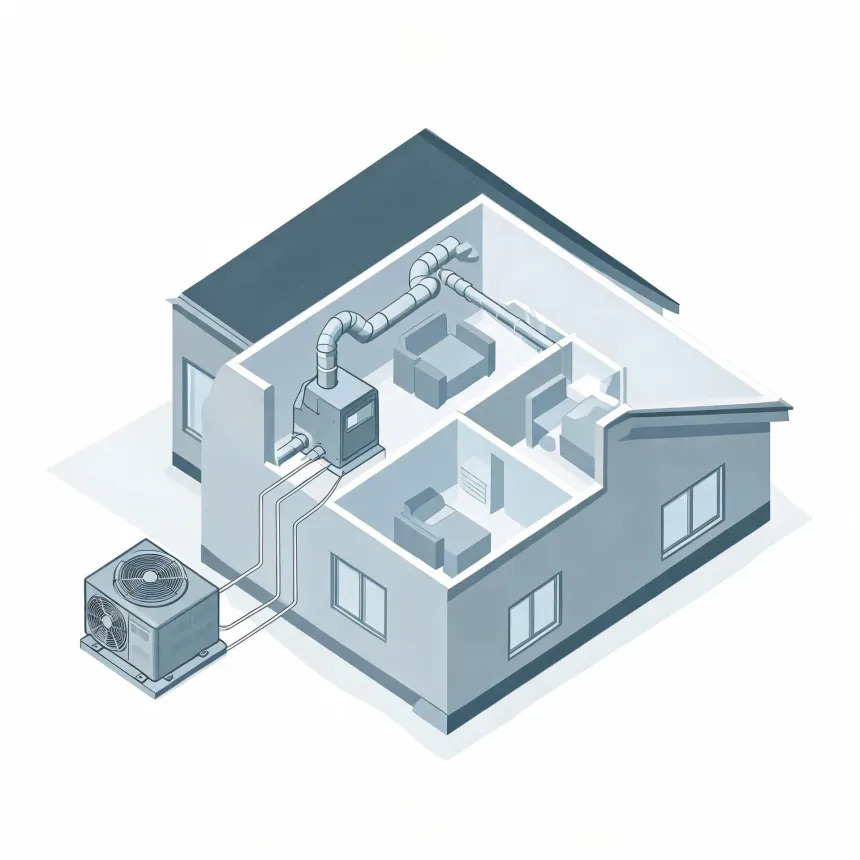
Isometric cutaway illustration of a two-room house showing an indoor air handler with ductwork connected by lines to an outdoor condenser unit on a pad.

Half the homes in Mason County were built in 1989 or later.

A heat pump installed with a newer house still has years left in it, so a repair is usually the right call.

September is when a weak heat pump shows itself

Heat runs September through June
Winter nights average 33°F
Power costs 11.9 cents a kWh statewide

If your heat pump is acting up, get a contractor to look at it before you assume it needs replacing. A system that hasn't been fighting hard cold year after year usually has a straightforward problem at the root, a stuck reversing valve, a low refrigerant charge, a failed capacitor. Those get fixed, not replaced. Hold off only if the unit is old and you've already been told parts for it are hard to find.

A newer system is worth repairing

If your heat pump came with the house, there's a good chance it's not old. Get it looked at before you plan on replacing it.

Find a contractor
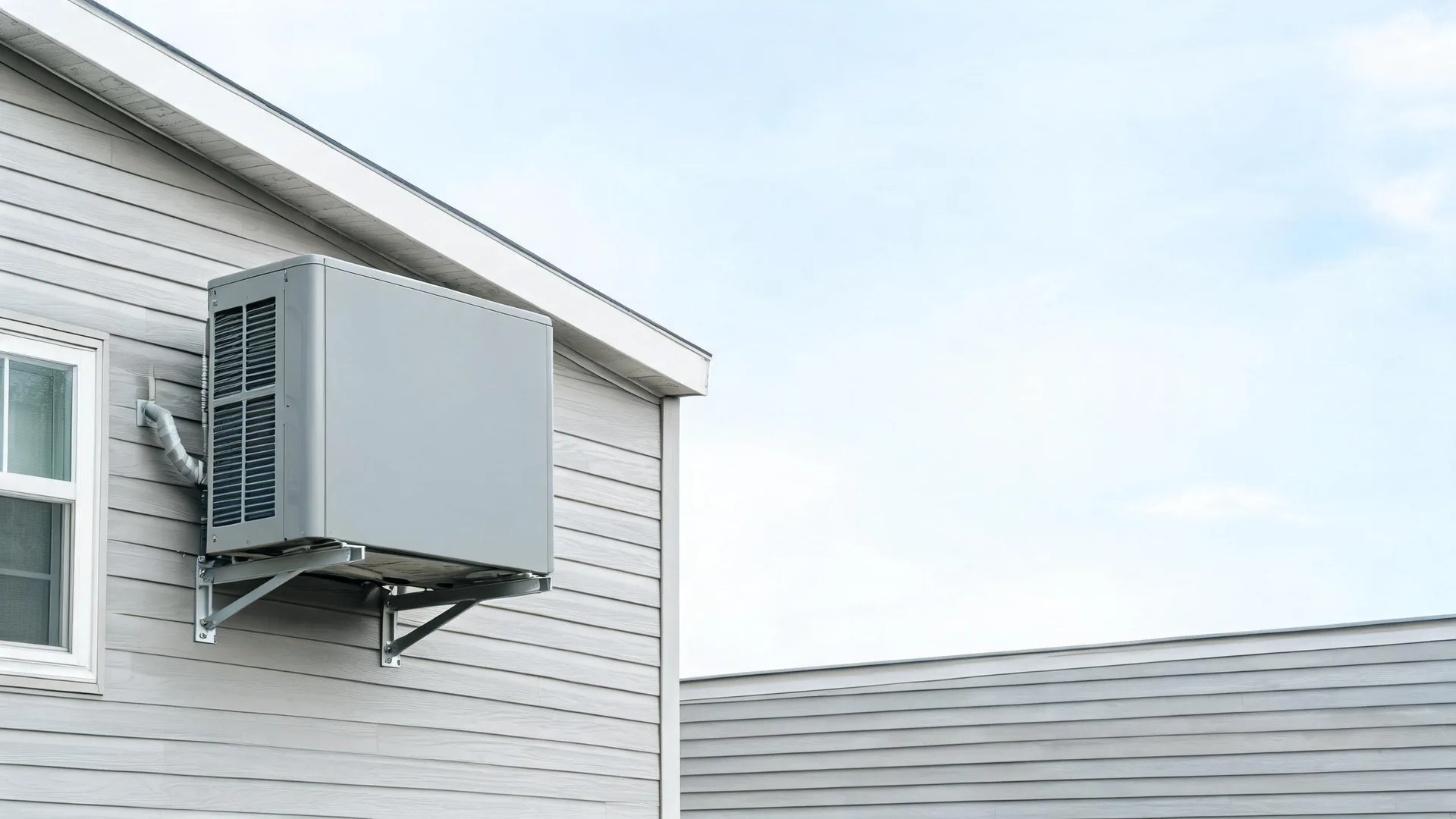
A gray outdoor HVAC unit mounted on a concrete pad beside a house with gray lap siding and a stone foundation.

A heat pump works both seasons, so trouble can show up any month

A heat pump covers heating in the winter and cooling in the summer, the same machine doing both jobs. That means it's worth watching for signs year round, not just during cold snaps. Short cycling, where it kicks on and off every few minutes instead of running a normal stretch, points to a thermostat issue or a refrigerant problem. Ice building up on the outdoor coil when it shouldn't be there means the defrost cycle isn't working right. Warm air blowing when it should be cool, or the reverse, often traces back to a stuck reversing valve. A unit that runs on and on without ever satisfying the thermostat is losing the fight somewhere, a low charge, a failing capacitor, a blocked coil. None of these mean the system is done. They point to one part that's failed, and that part can usually be replaced on its own.

What you can check yourself

Look at the outdoor unit first. Leaves, grass clippings or ice can block airflow around the coil, and that alone can make a heat pump struggle. Check that the thermostat is set to heat and the temperature is actually above room temperature, since a setting bumped by accident looks like a breakdown but isn't one. Inside, pull the air filter and hold it up to light. If you can't see through it, it's restricting airflow to the point where the system has to work harder than it should.
What to leave alone

Don't take the cabinet off the indoor or outdoor unit. Refrigerant lines, capacitors and electrical connections inside can hurt you, and opening things up can turn a simple fix into a bigger one if a panel or wire gets put back wrong. If you've checked the filter and the thermostat and the unit is still blowing the wrong temperature of air, cycling fast, or caked in ice, that's the point to stop and call someone rather than keep investigating.

A diagnostic starts outside, at the unit itself. A contractor will check pressures on the refrigerant lines, since a charge that's too low or too high explains a lot of what a heat pump does wrong. They'll test the capacitor and the contactor, the parts that get the compressor and fan motors running, because a weak capacitor is a common failure and a quick one to confirm. Inside, they'll check the reversing valve, the part that switches the system between heating and cooling, and watch whether it's actually shifting when it's told to. They'll also run the thermostat through its paces to rule out a control problem before they go further into the unit. Most of this gets done with gauges and a multimeter, not by pulling the system apart, and it usually points to one part rather than several.

A repair decision usually comes down to one part failing, not the whole system wearing out. A reversing valve, a capacitor, a defrost control board, these fail on their own, often in a unit that's otherwise sound. Replacement makes more sense when the compressor itself is the problem. The compressor is sealed inside the unit and isn't something a contractor swaps out on its own, so a failed one usually means pricing a new system instead. Age matters here too, since older units can run on a refrigerant that's being phased out, and a contractor may not be able to source it. Ask what part failed before you decide anything. That answer tells you more than how old the unit is.