A paved road bordered by gravel and a weathered split-rail log fence curves past dark-sided cabins with metal roofs among tall conifer trees.

Heat Pump Repair in Yakima, WA

Tell us about the job

Takes about a minute. No obligation.

RepairHeat PumpYakima County, WA
Step 1 of 2

What ZIP code is the job in?

August is when a weak heat pump gets found out

Your heat pump runs here from September through June, close to ten months of the year. July is the one month it rests. When heat gets turned back on in September, whatever was already marginal in the system, a weak capacitor, a low charge, a failing contactor, tends to give out under the first real load.


A problem now is worth running down before September

If your heat pump is acting up in August, that is the system telling you something before it has to carry the full load. Catching it before the first cold week means a tech can diagnose it without the pressure of you having no heat at all.

10 months
September through June, your system heats
1 months
July through July, it cools
24°F
the average winter night it heats against
78°F
the average summer afternoon it cools against
Isometric illustration of a cutaway single-story house showing interior ductwork and vents connected to an outdoor condenser unit beside the building, on a white background.
Your system heats September through June and cools July through July.

NOAA nClimDiv, 1991–2020 normals

Yakima winters average 24°F at night, not deep cold.

A heat pump here isn't fighting extreme temperatures for long, so most repairs are worth making.

Winter storms here are common, but they're not what's breaking your heat pump

84 severe weather events from 2015 to 2024
23% of homes statewide lost power a day or more in 2024
21 damaging wind events from 2015 to 2024
Yakima homes aren't to blameHalf the homes in Yakima County were built in 1977 or earlier, half later. Either way, the usual parts wear out the same way.

Most heat pump problems come down to one part, not the whole machine. A bad capacitor, a stuck contactor, a reversing valve that won't switch, each of those is a repair, not a reason to replace the unit. What matters more is the compressor. That part is expensive to replace on its own and often costs close to what the rest of the system is worth, so a failing compressor changes the math in a way a bad capacitor never does. Age matters too, but not the way people think. It's not that an old unit is doomed, it's that one part failing on an older system often means the others are close behind it. If a tech finds one worn part on a unit that's otherwise been reliable, fixing it is usually the right call. If they're finding the second or third failure in a short stretch of time, that pattern is worth paying attention to.

A mild climate on your side, worth fixing

Mild winters mean a heat pump here is rarely worn past what it should be. That makes a repair worth doing instead of writing the system off.

Find a contractor
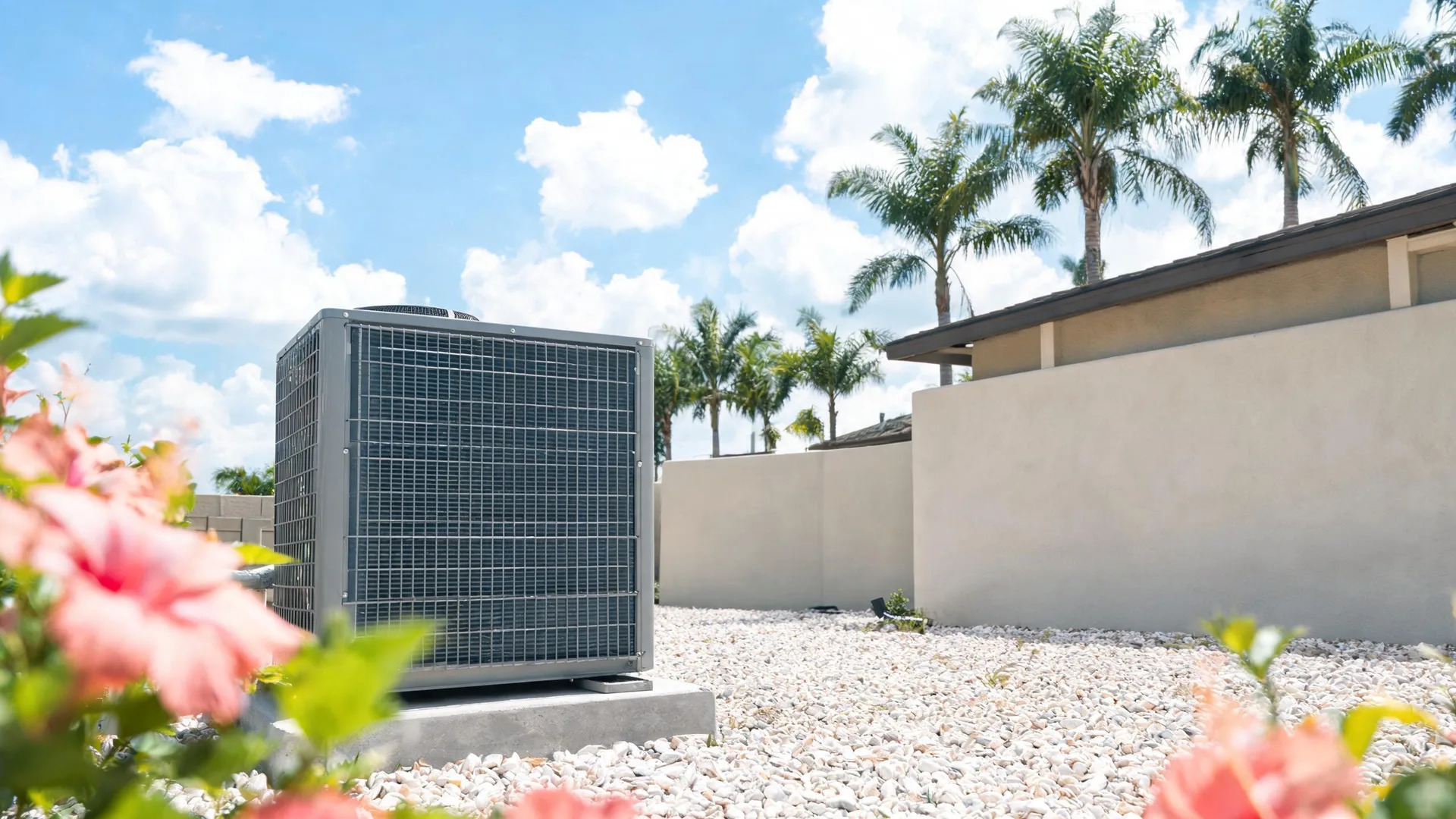
A white mini-split heat pump outdoor unit mounted on a concrete pad beside a gray-sided house, surrounded by gravel and green shrubs.

What you can check before anyone shows up

Before anyone comes out, you can rule a few things out yourself. Check the thermostat is set to heat or cool as needed and the batteries aren't dead. Go outside and look at the outdoor unit. If the coil is caked in dirt or leaves are packed into the fins, clear them away so air can move through. In winter, a thin coat of frost is normal, but if the whole unit is iced over and it isn't running a defrost cycle, that's worth noting for the tech. Check your filter. A filter clogged with dust chokes airflow and makes the whole system work harder, and it's the one thing in this machine you're meant to service yourself. Look at the breaker panel and make sure the breaker for the unit hasn't tripped. If the system is running but blowing air that isn't warm or cool, that points to something inside, like the reversing valve or a refrigerant issue, and that's not something to chase yourself. Write down what you're seeing, whether it's short cycling, warm air on heat mode, or a unit that won't start at all, so whoever comes out knows what the system was doing before they arrived.

A weak start draws more current

When a compressor struggles to start, on a bad capacitor or a sticking contactor, it pulls harder to get going each time. That extra draw heats the windings more than a clean start would. Keep running it that way and the windings break down faster than they would have otherwise.

A slow leak doesn't stay slow

A refrigerant leak gets worse under its own pressure, not because the system is working hard. Keep running the unit low on charge and the compressor pumps refrigerant that's also carrying oil for lubrication. Less refrigerant circulating means less oil reaching the compressor, and that's what wears it out.

A heat pump rarely fails without warning. Short cycling is one of the first signs, the unit kicking on and off every few minutes instead of running a full cycle. Ice building up on the outdoor coil when the system isn't in a defrost cycle is another, since that means heat isn't transferring the way it should. Air coming out of the vents that isn't warm, or isn't as warm as it used to be, usually points to the reversing valve or a refrigerant problem rather than anything you can fix by adjusting the thermostat. A unit that runs constantly without ever satisfying the thermostat is working against something, whether that's a failing part or a loss of charge. Any grinding, buzzing or clicking that wasn't there before is the system telling you a part is wearing out before it quits altogether.

A diagnostic visit starts outside, at the unit itself. A tech checks refrigerant pressure, looks at the compressor's electrical readings, and tests the capacitor and contactor under load rather than just eyeballing them, since a part can look fine and still be failing. Inside, they'll check the air handler, the filter, and the reversing valve, since that's the part that decides whether you get heat or cooling and it's a common point of failure. They'll run the system through a cycle and watch how it starts, how hard it pulls, and whether it actually satisfies the thermostat. Most of this is done with gauges and a meter, not guesswork, because the symptoms you see, warm air, short cycling, a unit that won't start, can each point to more than one part. The visit ends with the tech telling you which part failed and what it takes to fix it, not just that something's wrong.