




A dark wood-sided house with a moss-covered shingled roof and stone chimney, surrounded by tall conifers, shrubs and ferns, with a mowed lawn in the foreground.

Heat Pump Maintenance in Aberdeen, WA

Tell us about the job

Takes about a minute. No obligation.

Tune-up, service, or cleaningHeat PumpGrays Harbor County, WA
Step 1 of 2

What ZIP code is the job in?

Winter nights in Grays Harbor County average 34 degrees. That's mild as far as heat pumps are concerned, nothing like the single digits a unit might face inland. Yours isn't working against hard freezes most winters, so it isn't grinding through the kind of strain that wears out a compressor early. But mild duty still means moving parts, a refrigerant charge that can drop slowly over time, coils that collect dirt whether the air is cold or not. A yearly check catches that kind of wear before it turns into a breakdown, and on a system with an easier life than most, there's a good chance that repair is worth making.

Heat pumps here start running for heat in September.

Get yours checked in August, before it has to work.

A once-a-year check is enough for a system with duty this easy

Half the homes here were built by 1974
Winter nights average 34°F
Power costs 11.9 cents a kWh statewide

A yearly check before the season starts is enough for what this system deals with here. There's no need to add a mid-winter inspection or a second visit in spring. One appointment, timed before the heat pump has to carry the house through the cold months, covers what mild duty here actually wears down. The refrigerant charge gets checked. The coils get cleaned. The electrical connections that loosen with age get caught before they fail. Skip it for a few years and none of that shows itself until the day it quits.

Keep up the yearly check

Easy duty still wears parts. A yearly check keeps it going a long time.

Find a contractor
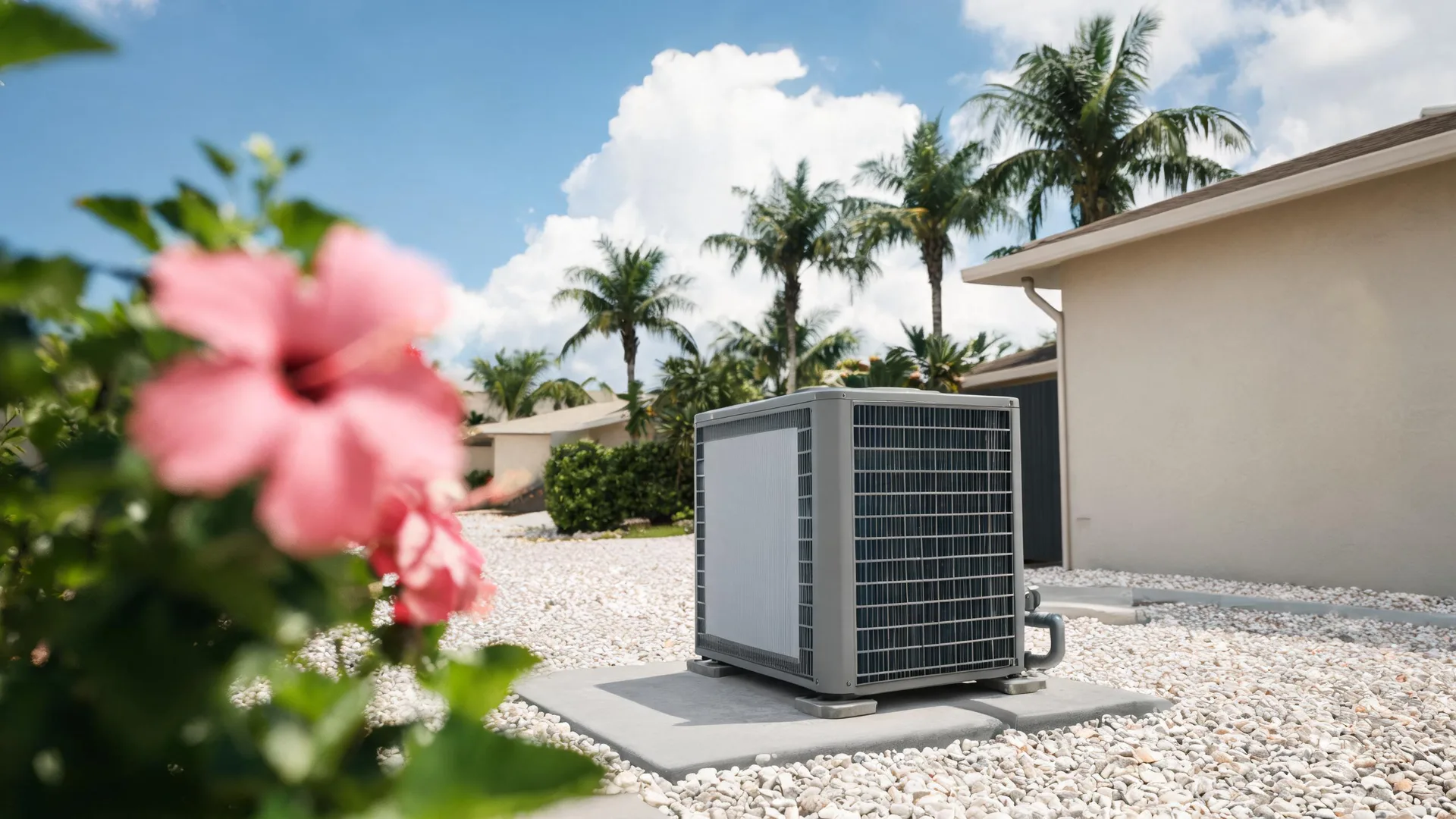
A gray heat pump outdoor unit mounted on a concrete pad next to the stone-accented exterior wall of a house.

The system usually tells you before it quits

Most of what goes wrong gives some kind of warning first. The system runs longer than it used to, cycling on for stretches that feel off even if the house still ends up at the right temperature. Air coming out the vents feels cooler than it should on heat mode, or warmer than it should on cooling, because the compressor is struggling to move heat the way it used to. Ice showing up on the outdoor unit outside of a defrost cycle means something is wrong with airflow or charge, not the weather. A hissing or bubbling sound near the refrigerant lines points to a leak. Short cycling, where the unit kicks on and off in quick bursts instead of running a full cycle, usually means a sensor or a control board is telling it to stop too soon. Any of these is worth a call on its own. Together, they're exactly what a yearly check is meant to catch before they turn into a system that won't start at all.

The filter decides how hard the coil has to work

A dirty filter chokes airflow before the air ever reaches the indoor coil. With less air moving across it, the coil can't pick up or release heat the way it's supposed to, so the system runs longer to hit the same setting on the thermostat. Left too long, a clogged filter can let that coil ice over even when the air outside isn't cold at all. Checking it and swapping it when it turns gray heads off real strain on the compressor.
The outdoor coil and the drain line hide their own problems

Dust and yard debris build up on the outdoor coil and block the same kind of heat exchange the indoor coil needs, just from the other side, and nobody can judge how bad that buildup is without pulling the panel off. The condensate drain needs its own look too. A heat pump pulls moisture out of the air every time it cools, and that water has to drain somewhere. A line that's slow or clogged backs water into the pan and can trip a safety switch meant to shut the system down before it floods.

A quick visit usually means someone glances at the thermostat, listens to the unit run for a minute, and leaves. A thorough one means the panels actually come off. The tech checks refrigerant pressure against what the system is supposed to carry, not just whether it's running. They'll pull the blower wheel and check it for dust buildup, not just swap the filter. Electrical connections get tightened, not just eyed from a distance, since a loose connection can arc and burn before it ever trips a breaker. The condensate line gets flushed, not just checked for a drip at the end. If the visit takes less time than it would to wash a car, something on that list probably got skipped.

A tune-up worth paying for checks the reversing valve, not just the thermostat setting. That valve is what switches the system between heating and cooling, and a tech can test it by forcing the system to switch modes and watching whether it responds cleanly. Contactors and capacitors get tested under load, since a capacitor can read fine sitting still and still fail the moment the compressor tries to start. The outdoor fan motor gets checked for play in the bearings, because a motor that wobbles on its shaft is already partway to seizing. Refrigerant lines get looked over for oily residue, which is usually the first sign of a slow leak long before the charge drops enough to show up as weak heating. None of this takes long to explain, but skipping any one of it means the visit only looked like maintenance.