




A lit craftsman house with glowing windows on a rainy night, surrounded by tall evergreen trees and a wet reflective street.

Heat Pump Maintenance in Friday Harbor, WA

Tell us about the job

Takes about a minute. No obligation.

Tune-up, service, or cleaningHeat PumpSan Juan County, WA
Step 1 of 2

What ZIP code is the job in?

A heat pump works harder when something is blocking it from doing its job cleanly. The filter is the first line of defense. When it's clogged with dust and pet hair, airflow drops, and the system has to run longer to move the same amount of heat. That strain shows up on both the indoor coil and the outdoor coil. A dirty indoor coil can't absorb heat the way it should, and a dirty outdoor coil, caked with leaves, pollen or grime, can't release it. The drain matters too. Condensate has to go somewhere, and if the drain line clogs with algae or debris, water backs up and can shut the system down or damage what's around it. None of these parts fail on their own. They fail because the one before it was ignored.

Half the homes in San Juan County were built in 1988 or later.

A heat pump that age still has plenty of working life left, and a yearly check keeps it that way.

Heat runs here by September. Have it checked in August.

Heat runs September through June
49 damaging wind events from 2015 to 2024
5 winter storms from 2015 to 2024

A yearly check is what keeps a system that age running the way it did on day one. The tech pulls the panel, checks the refrigerant charge, tests the capacitor and contactor, and looks at the connections before any of it gets the chance to wear loose. A weak capacitor found early is a five-minute fix. Left alone, it can take the compressor with it. If your heat pump came with the house or went in sometime after, this is the visit that catches that kind of thing while it's still small.

Keep up the yearly check

Easy duty still wears parts. A yearly check keeps it going a long time.

Find a contractor
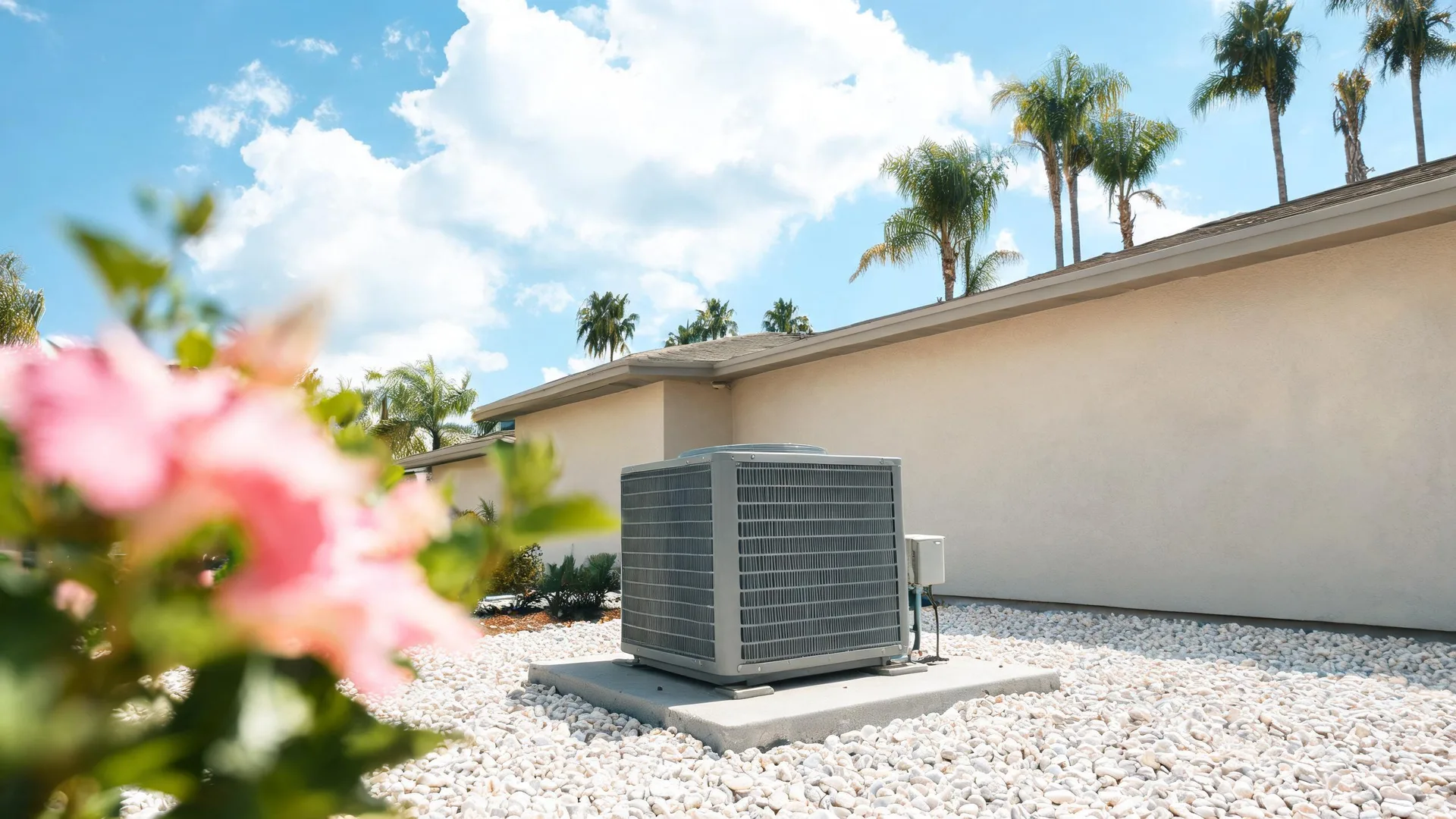
A gray air-source heat pump mounted on a concrete pad next to a house with gray vinyl siding, surrounded by gravel and flanked by green shrubs and white hydrangea flowers.

A real tune-up takes time to do right

A quick visit gets you a filter swap and a glance at the thermostat. That is worth something, but it is not a tune-up. A thorough one has the tech pull the panels on both the indoor and outdoor units, not just look at them from the outside. The refrigerant charge gets checked against what the system calls for, not eyeballed. The capacitor and contactor get tested under load, since a part can look fine sitting still and still be on its way out. Electrical connections get checked for the kind of looseness that causes arcing before it causes a failure. The condensate drain gets cleared, not just inspected. The outdoor coil gets washed, not brushed off. If the tech is in and out in a few minutes with no gauges out and no panels removed, that is the quick version. The thorough one takes longer because it is built to catch the part that is about to fail, not the part that already has.

Short cycling means something's already wrong

A heat pump that turns on, runs a few minutes, and shuts off again isn't resting. It's hitting a limit, high pressure, a safety switch, an overheating part, and stopping itself before it fails outright. Left alone, that cycle wears the compressor faster than steady running ever would.
Strange sounds don't fix themselves

A clicking, buzzing, or grinding noise that wasn't there before means a part has worked loose, worn down, or started dragging where it shouldn't. Waiting to see if it goes away just gives whatever's making the sound more time to get worse.

Between visits, the filter is the one thing worth checking yourself. Pull it out, hold it up to the light, and if you can't see through it, swap it or clean it. A heat pump moves air constantly, so a filter clogs faster than people expect, especially with pets in the house. Outside, keep the area around the outdoor unit clear. Leaves, mulch, tall grass or anything piled against the cabinet blocks the airflow the coil needs to do its job. After a storm, take a look and clear off any debris that landed on top or against the sides. Inside, make sure vents and registers are open and nothing is stacked in front of them. Beyond that, leave the panels alone. What is behind them needs gauges and testing equipment to check properly, not a guess.

A full tune-up also covers things a filter swap never touches. The tech checks the system's airflow across the whole duct run, not just at the filter, since a blocked return or a closing damper can starve the coil the same way a dirty filter does. Refrigerant charge gets checked against the manufacturer's spec, because a system even a little low loses capacity and runs longer to make up for it. The defrost cycle gets tested too. A heat pump is supposed to sense ice on the outdoor coil and briefly reverse to melt it off, and if that sensor or control board is off, the coil can ice over and stay that way. Thermostat calibration gets checked last, since a thermostat reading a few degrees wrong makes the whole system work on bad information.