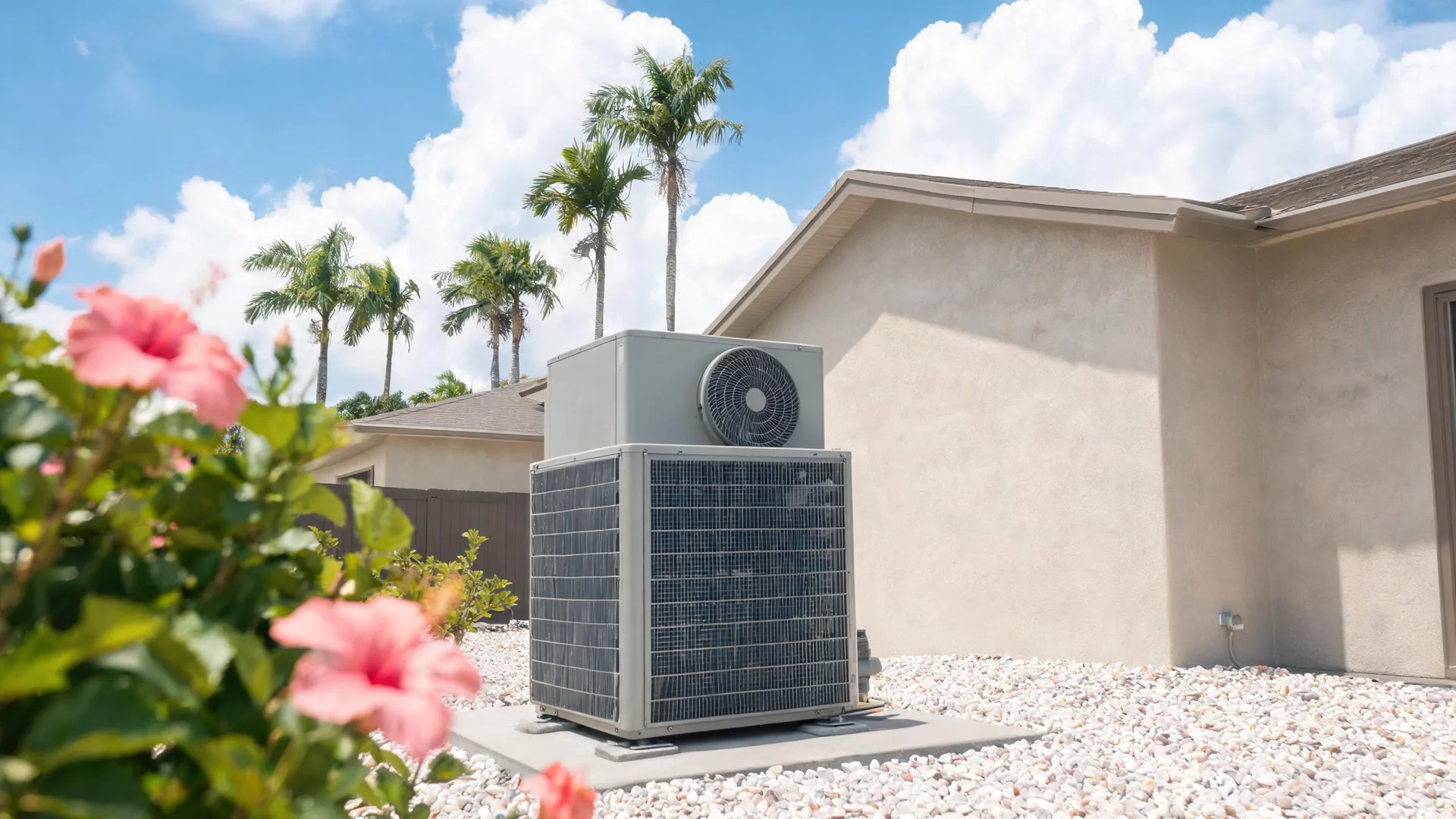
An outdoor heat pump unit mounted on a concrete pad in front of a two-story suburban house.

Heat Pump Maintenance in Goldendale, WA

Tell us about the job

Takes about a minute. No obligation.

Tune-up, service, or cleaningHeat PumpKlickitat County, WA
Step 1 of 2

What ZIP code is the job in?

Cold works the pump, not heat

Goldendale winters sit around 27°F overnight through December, January and February. A heat pump pulling warmth out of air that cold runs longer and harder than it would cooling a house in summer. That's where the wear happens.


A yearly check catches it early

A heat pump working through cold winter nights wears down slowly, part by part, long before anything fails outright. A yearly check finds a weak part while it still runs, not after it quits on the coldest night of the year.

Half the homes in Klickitat County were built in 1986 or later.

A heat pump in a newer home still has a lot of working life ahead, worth protecting with a yearly check.

Winter storms hit this county 56 times between 2015 and 2024

100 severe weather events from 2015 to 2024
23% of homes statewide lost power a day or more in 2024
38 damaging wind events from 2015 to 2024

Heat here runs September through June, close to ten months a year. August is the month to get the heat pump looked at, right before it has to carry the house through winter. Cooling only runs July and August, so this machine spends most of its working life in heating mode, not cooling. A check in August catches a weak part while the pump is still idle or running light, not weeks into a cold snap when a contractor's schedule is full and the house needs heat now.

Get the check in before the cold sets in

Winter is what wears this pump down, not summer. A check before the cold nights set in catches a weak part while it is still running, not after it quits on the coldest night of the year.

Find a contractor
A dark gray heat pump unit mounted on a concrete pad next to a house with gray siding and a stone veneer wall.

A newer pump still has years to protect

If your heat pump came with a newer build, it's got years of runs left in it, through winters like this one. A yearly check on a younger system catches a weak part while the rest of the unit is still sound, and keeps it that way longer than skipping checks would.

The signs show up as sound and smell

A heat pump struggling to keep up will short cycle, shutting off and starting again before it finishes a full run. Ice building up on the outdoor coil and not clearing itself is another sign, since the defrost cycle should handle that on its own. A burning smell from the vents or a grinding sound from the outdoor unit means a part is already failing, not just wearing.

Weak signs matter more than loud ones

Rooms that used to heat evenly but now run cold in corners point to airflow or refrigerant charge losing ground slowly, not all at once. The system still runs, so nothing seems urgent. That's exactly the kind of wear a yearly check is built to catch, before the part behind it quits instead of just weakening.

A heat pump that never gets looked at doesn't fail all at once. The filter loads up with dust and starves the airflow, so the system pulls harder to move the same amount of air. Refrigerant charge drifts low from a slow leak that was never caught, and the compressor works past what it was built for just to keep up. Sensors that control defrost timing can drift out of calibration, so the outdoor coil iced over, then thaws, then builds up again, cycle after cycle. None of this trips a breaker or throws an error code. It just means the pump is spending more of its life under strain than it should, and the parts carrying that strain are the ones that end up failing first.

A tune-up starts outside, at the coil. A tech washes it clean, since dirt and matted debris make the pump pull harder to move the same heat. Inside, the filter gets checked and changed if it's choked with dust, because starved airflow is what drags a system down slowly. The refrigerant charge gets measured against what the system calls for, since a slow leak will quietly rob capacity for months before anyone notices. Electrical connections get tightened, because a loose one builds resistance and heat right at the connection point. The reversing valve gets tested too, the part that switches the pump between heating and cooling, since a valve that sticks will leave the house heating when it should be cooling or the other way around. Last comes the defrost control, checked to make sure it's cycling the outdoor coil clear on schedule instead of letting ice build past what the system can shed on its own.