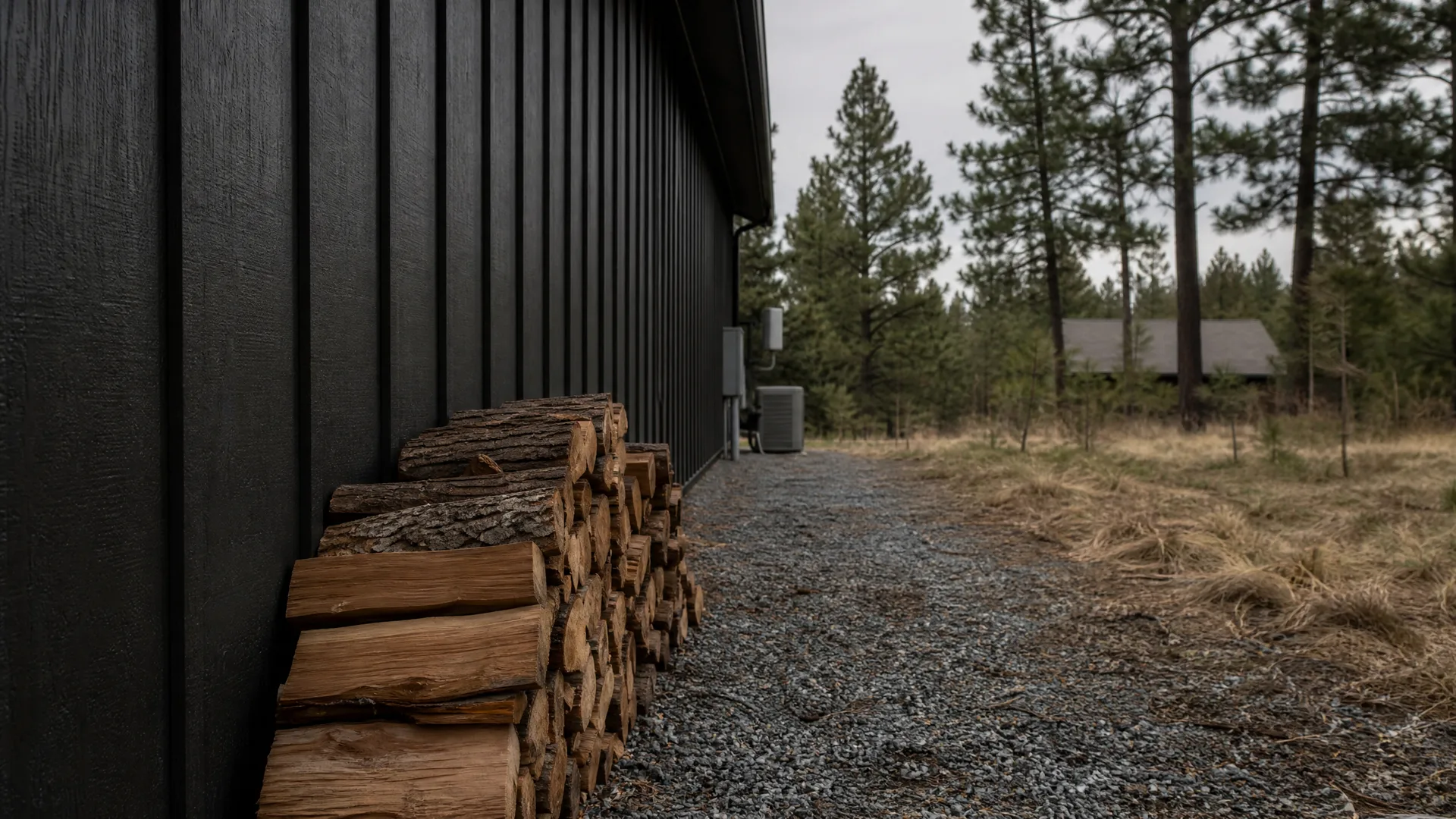
A stack of split firewood along the base of a black vertical-board building wall, with a gravel path, dry grass, and pine trees under an overcast sky.

Heat Pump Maintenance in Moses Lake, WA

Tell us about the job

Takes about a minute. No obligation.

Tune-up, service, or cleaningHeat PumpGrant County, WA
Step 1 of 2

What ZIP code is the job in?

A dirty filter works the whole system harder

When the filter clogs, the indoor coil gets less airflow than it needs. The heat pump has to run longer to move the same amount of heat, and in the coldest stretches it can ice up the outdoor coil faster than the defrost cycle can clear it. A filter that's just dusty instead of clean enough to see through changes how hard every other part has to work.


The condensate drain decides where water goes

A heat pump pulls moisture out of the air every time it runs in cooling mode, and that water has to leave through the condensate drain. If the drain line clogs with algae or debris, the water backs up into the drain pan and from there into the house instead of outside where it belongs. Checking that the line runs clear is part of keeping the coil and the drain both doing their job.

Heat pumps here start working through October's cold as soon as the season turns.

Get it looked at in September, before it has to carry the house through winter.

Grant County doesn't work this system hard, but 93 winter storms still take a toll

30 damaging wind events from 2015 to 2024
93 winter storms from 2015 to 2024
Winter nights average 25°F

A quick visit checks that the system turns on and blows air. A thorough one opens it up. That means pulling the panel to check the contactor and capacitor for wear, since those are the parts most likely to fail and strand you without heat or cooling. It means checking refrigerant charge against what the system actually calls for, not just glancing at a gauge. It means cleaning the outdoor coil of dirt and grass clippings that build up over a season, not just hosing off what's visible from the top. A thorough tech also tests the reversing valve, the part that lets the system switch between heating and cooling, since a sticking valve won't show up as a problem until the day you need it to switch.

Grant County weather doesn't go easy on an outdoor unit

Grant County logged 125 severe weather events between 2015 and 2024, most of them winter storms. Statewide, close to a quarter of households lost power for a day or more last year. An outdoor unit left unchecked after a season like that can be carrying damage or debris you can't see from the kitchen window. Have it inspected before winter asks more of it.

Find a contractor
A gray heat pump condenser unit mounted on a concrete pad against the gray lap-siding exterior wall of a house.

Between visits, the filter is yours. The rest isn't.

Keep the area around the outdoor unit clear. Leaves, grass clippings and snow pile up against the coil and block airflow the system needs to heat and cool at all. A couple feet of open space on every side is enough. Indoors, check the filter and replace or rinse it on a regular schedule, since that's the one part of the system a homeowner can actually see and touch. Beyond that, leave it alone. Don't pour anything down the condensate line yourself, don't remove panels, and don't try to clear ice off the outdoor coil by hand. A heat pump in defrost mode can look like it's struggling when it's actually doing exactly what it should.

The reversing valve sticks when it sits too long

A heat pump that never gets serviced still runs, right up until the day it's asked to switch between heating and cooling. The reversing valve can sit in one position for months without issue, then stick the first time it's told to change over. By then it's not a tune-up, it's a repair.

A weak capacitor fails on the worst day

Capacitors wear down slowly, losing a little strength every season they run. Nobody notices until the outdoor fan or compressor can't start at all. That day is usually the coldest morning or the hottest afternoon, because that's when the system works hardest and a weak part finally gives out.

Most of what a tune-up catches isn't visible with the panels on. Static pressure is one of them. A tech measures the air pressure inside the ductwork to see if the system is fighting to push air through, which points to a duct problem a clean filter won't fix. Superheat and subcooling readings are another. Those numbers tell you whether the refrigerant charge is right, and they can only be checked with gauges hooked to the lines, not by looking at the unit. A failing run capacitor can measure weak on a meter weeks before it actually strands the compressor. None of these show up as a sound, a smell, or a system that won't turn on. The heat pump keeps running the same as always, until the one part that was already failing finally does.

A tune-up also means checking things that have nothing to do with parts wearing out. The thermostat gets tested to make sure it's actually calling for heat or cooling when it should, and that the heat pump answers correctly instead of kicking on the backup heat strips by mistake. Electrical connections get tightened, since a loose connection at the contactor or disconnect box generates heat on its own and can burn a wire over time. The outdoor unit gets checked for level footing too. If it's settled or tilted since it was installed, that strain works its way into the refrigerant lines and the compressor mounts. None of this shows up by watching the system run. It shows up months later as a bigger repair, or it doesn't show up at all because someone checked it first.