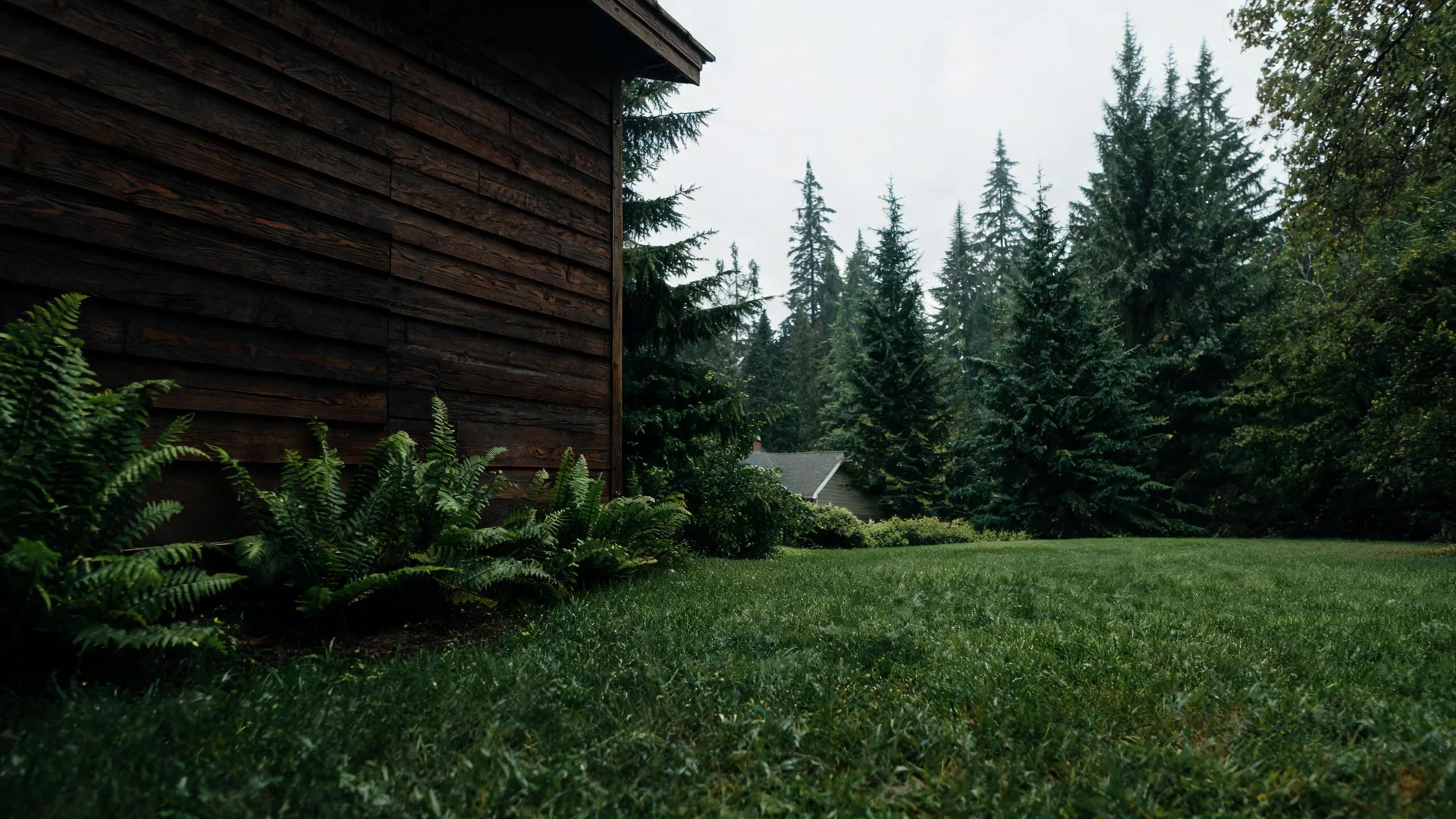
Dark stained horizontal wood siding on the corner of a building at left, with ferns and shrubs at its base, a mown lawn in the foreground, and tall evergreen trees under an overcast sky.

Heat Pump Maintenance in Port Angeles, WA

Tell us about the job

Takes about a minute. No obligation.

Tune-up, service, or cleaningHeat PumpClallam County, WA
Step 1 of 2

What ZIP code is the job in?

Mild winters, less strain

Overnight lows in Clallam County average 33°F through December, January and February. A heat pump here doesn't work nearly as hard as one in a place with real cold, since it rarely has to pull heat out of freezing air for long stretches.


Light duty still needs a yearly look

Easier conditions mean less wear, but the coil still gets dirty, the refrigerant charge still matters, and the defrost cycle still needs to work right. A yearly check catches those small things before they turn into a system that won't run.

Half the homes in Clallam County were built in 1982 or later.

A heat pump installed with a newer home still has years ahead of it worth protecting.

A quarter of homes in this state lost power for a day or more last year, and storms are why

23% of homes statewide lost power a day or more in 2024
Winter nights average 33°F
Power costs 11.9 cents a kWh statewide
A yearly check protects a system with years left to runHalf the homes in Clallam County were built in 1982 or later.

A once a year visit is enough for a system that isn't working hard. A technician checks the refrigerant charge, tests the defrost cycle, and clears the coil so it can still shed heat the way it's supposed to. None of that takes long when the system has been running easy all year. Skip a few years of checks and small things stack up quietly, since nothing here is forcing the problem into the open. A weak capacitor or a coil going green is easy to miss until the system quits on a cold morning.

Get the outdoor unit checked before the next storm finds its weak point

The outdoor unit sits outside through every storm that comes off the strait. Have it checked for bent fins, debris in the coil, and loose panels before the next one hits.

Find a contractor
A man in a dark cap, navy T-shirt and tan work pants, seen from behind, carries a canvas tool bag up porch steps toward a dark blue front door, with a potted shrub in a blue planter to the right.
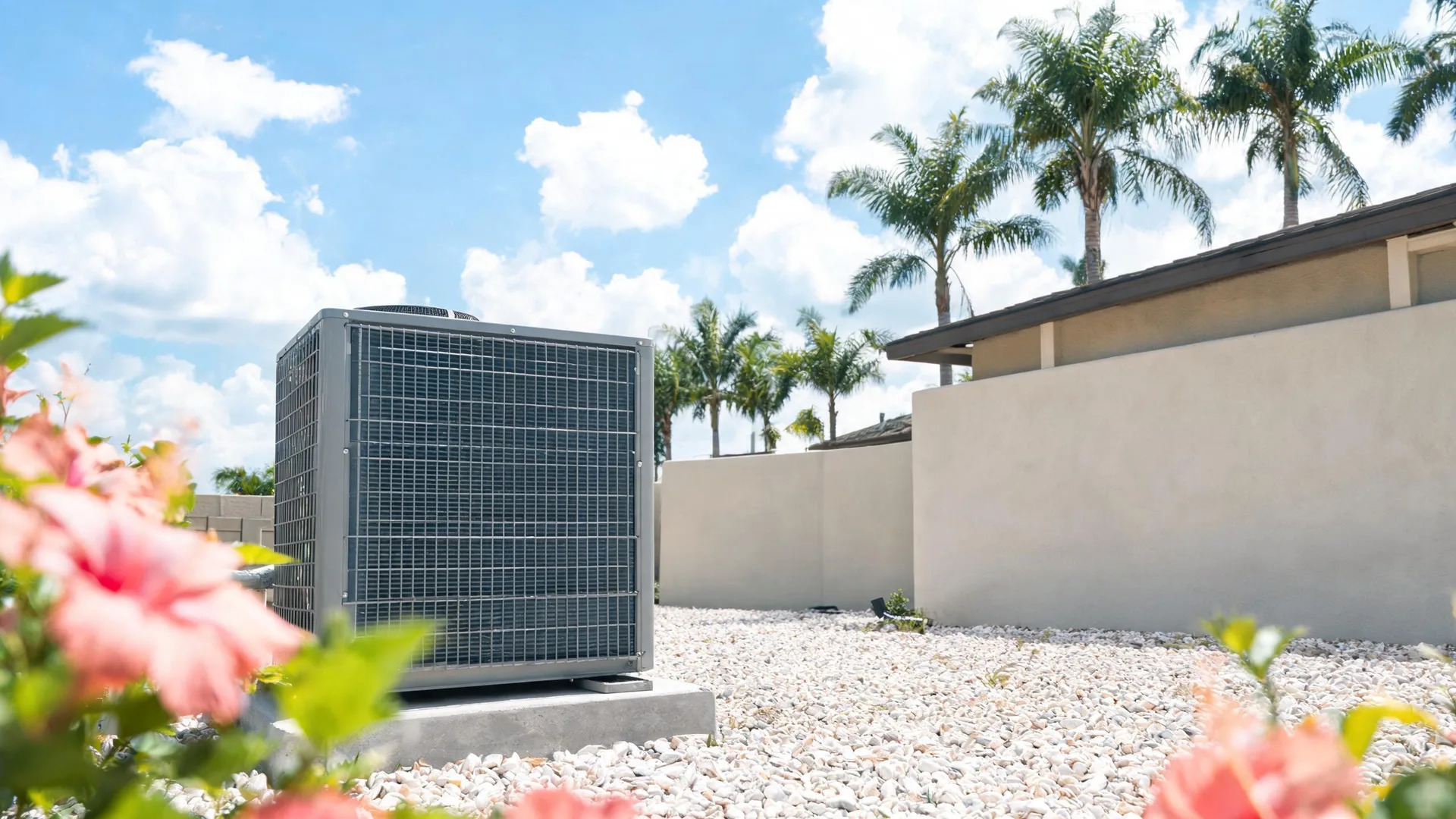
A white mini-split heat pump outdoor unit mounted on a concrete pad beside a gray-sided house, surrounded by gravel and green shrubs.

What you can check without a technician

Between visits, keep the area around the outdoor unit clear. Leaves, grass clippings, and anything stacked against it block airflow across the coil, and the system has to work harder to move the same amount of heat. Walk past the indoor filter every month or so and change it when it looks gray or clogged. A dirty filter starves the system of airflow the same way a blocked outdoor coil does, just from the other end. Look at the outdoor unit after it rains hard or the wind picks up, and clear off any branches or debris that landed on top of it. Don't pack mulch or plantings right against the cabinet. If you ever see ice building up on the outdoor coil outside of a normal defrost cycle, that's worth a call rather than a wait.

The filter and the coil fail the same way

A dirty filter chokes the air before it ever reaches the coil, and a dirty outdoor coil can't shed heat once it gets there. Either one starves the system of airflow, and the system responds by running longer to move the same amount of heat. Left alone, that extra strain is what wears down the compressor underneath it all.

A clogged drain backs up into the cabinet

The condensate drain carries off the water the indoor coil pulls out of the air. Algae and dust narrow that line over time until it stops draining the way it should. Once it backs up, water sits where it shouldn't, and a cabinet that stays wet corrodes parts that were never built to handle standing water.

A few signs mean the system wants a look sooner than its yearly visit. Air coming out lukewarm instead of properly hot or cold is usually the first thing anyone notices. Short cycling, where the system kicks on and off every few minutes instead of running a steady stretch, points to a problem with the compressor or the airflow across one of the coils. Any hissing or bubbling sound near the lines usually means refrigerant is escaping somewhere it shouldn't. A system that runs constantly without ever seeming to catch up is working against something, whether that's a dirty coil, a weak charge, or a part starting to fail. None of these mean the system is done. They mean it's telling you before it quits.

A proper tune-up starts with numbers, not guesses. A technician checks the refrigerant charge against what the system is supposed to hold, since even a little low means the compressor works harder for less heat. They test the defrost cycle to make sure the system actually switches into it and back out when it should, not stuck running one or the other too long. The contacts and connections in the electrical panel get checked, since a loose one causes the kind of intermittent fault that's hard to track down later. The condensate drain gets cleared too, so the system isn't sitting in water it should be draining away. Each piece is small on its own. Skipped together for a few years, they're how a working system turns into a failed one.