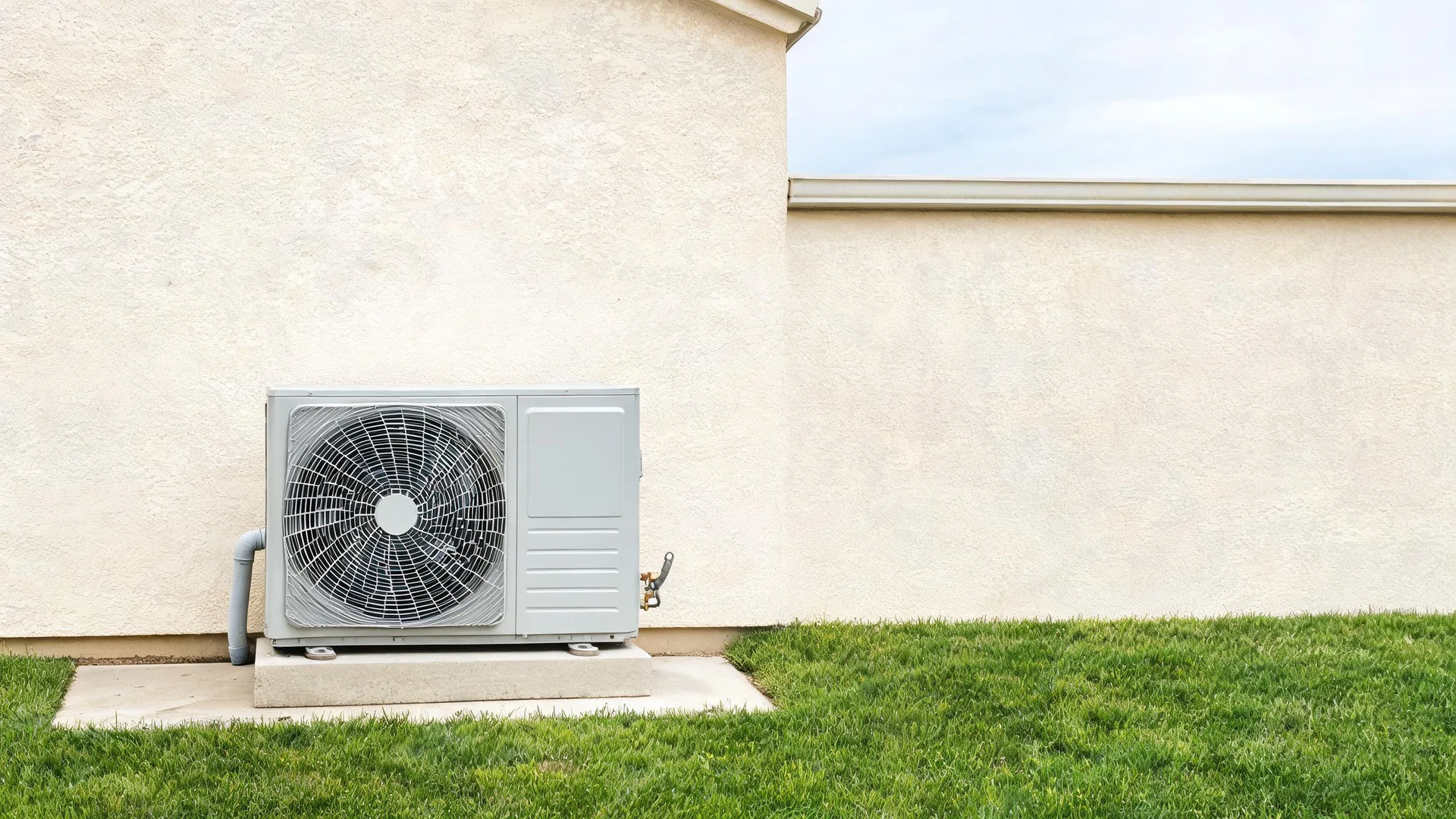
Winters here stay mild
Overnight lows in Jefferson County average 31°F through December, January and February. A heat pump here never has to fight the deep cold that wears out compressors in harder climates.
Takes about a minute. No obligation.
Overnight lows in Jefferson County average 31°F through December, January and February. A heat pump here never has to fight the deep cold that wears out compressors in harder climates.
Less strain doesn't mean no strain. A heat pump that runs for years without a check still collects a dirty coil or a low charge, and those problems come on slow enough that nobody notices until the system struggles.
Half the homes in Jefferson County were built in 1988 or later.
A heat pump installed with a newer home still needs a yearly check to make it through its full working life.



Jefferson County gets hit with serious storms more often than most places, and statewide, almost a quarter of Washington households lost power for a full day or more last year. Your outdoor unit sits right out in that weather. Wind drives branches and grit into the cabinet, hail dents the fins, and heavy rain can get into spots it shouldn't. None of that announces itself. A yearly check gets eyes on the coil and the cabinet before a bent fin or a clogged intake turns into a system that won't hold its charge. Worth doing before the fall storms start, not after.
Your heat pump isn't fighting deep cold here, and the home it's attached to is likely newer than most. That's a system worth keeping in good shape with a yearly check, not replacing once something finally gives out.
Find a contractorIf your system went in with the house, start the yearly check now rather than waiting for a reason. The coil, the charge and the electrical connections get looked over once a year, and that's the whole job. Skip it and a loose connection or a slow refrigerant leak gets a full year to do damage before anyone catches it.
A thorough check means the cover comes off the outdoor unit, the coil gets looked at and washed if it's dirty, and refrigerant pressure gets checked with gauges against what the system is supposed to run. A quick one is a visual look and a listen, done in a few minutes with the cabinet still closed.
Refrigerant charge and electrical connections don't show themselves from across the room. A loose wire at the contactor or a charge that's crept low still lets the system run, just worse and worse each month. Those are exactly the things a fast visit skips and a real one catches.
Between visits, the outdoor unit is the part worth keeping an eye on. Keep leaves and grass clippings off the top and sides, and keep anything from growing in close around it, since airflow in and out of that cabinet is what lets it do its job. Rinse the fins off with a hose now and then if they look dusty or matted, spraying from the inside out, and skip the pressure washer, which bends fins faster than dirt ever will. Indoors, check the air filter and swap or clean it when it looks gray, since a clogged filter makes the whole system work harder for less heat or cool air. Keep an eye on the vents and registers too, and move furniture or rugs that end up blocking one. If you notice ice building up on the outdoor unit when it isn't in a normal defrost cycle, or the system runs constantly without the house reaching temperature, that is worth a call rather than something to wait out.
A lot of what a tune-up finds is wear nobody could have spotted by looking. The contactor on the outside unit opens and closes every time the system cycles, and the contact points slowly pit and burn until one day they don't make a clean connection anymore. The capacitor that helps the compressor and fan motors start up loses its charge a little at a time, not all at once, so the system keeps starting even as it gets harder on itself each time. Refrigerant doesn't get used up, but a slow leak at a fitting can let charge drop low enough to take a real bite out of heating and cooling capacity before the system ever fails outright. None of this shows up as a strange noise or a smell. It shows up as a system that runs longer, keeps the house less comfortable, and eventually fails on the day it's needed most.