A lit craftsman-style house at night on a wet residential street lined with evergreen trees.

Heat Pump Maintenance in Shelton, WA

Tell us about the job

Takes about a minute. No obligation.

Tune-up, service, or cleaningHeat PumpMason County, WA
Step 1 of 2

What ZIP code is the job in?

The coil loses its grip

A heat pump moves heat through a coil, and that coil needs airflow to do its job. Dust and pet hair settle on the fins and block that airflow bit by bit. The system keeps running, but it has to work harder to move the same amount of heat, and parts that aren't built for that strain start to wear faster than they should.


Small problems hide until they don't

A tech doing a maintenance visit checks the refrigerant charge, the electrical connections, and the condensate drain while everything still works. Skip that, and a loose wire or a slow drain leak goes unnoticed until it trips the system or causes water damage. Catching it early is a different job than catching it after it fails.

Winter nights in Mason County average 33°F, so a heat pump here rarely has to fight hard for heat.

Less strain means a yearly check is what it takes to keep it running, not a rescue job.

Heat runs here from September to June. Have it checked in August.

Heat runs September through June
Winter nights average 33°F
Power costs 11.9 cents a kWh statewide
A newer system's best shot at a long lifeHalf the homes in Mason County were built in 1989 or later.

A yearly visit is the same work whether the system has an easy year or a hard one. The tech checks the refrigerant charge, cleans the outdoor coil, and tests the electrical connections. What changes here is what that check tends to turn up. A heat pump that isn't fighting through months of hard freezes puts less strain on its parts, so a loose connection or a weak capacitor shows up as a small thing instead of a breakdown. That is what the yearly check is for, catching it while it is still small. Skip it and those small things do not go away, they just wait until the coldest night of the year to matter.

Keep up the yearly check

Easy duty still wears parts. A yearly check keeps it going a long time.

Find a contractor
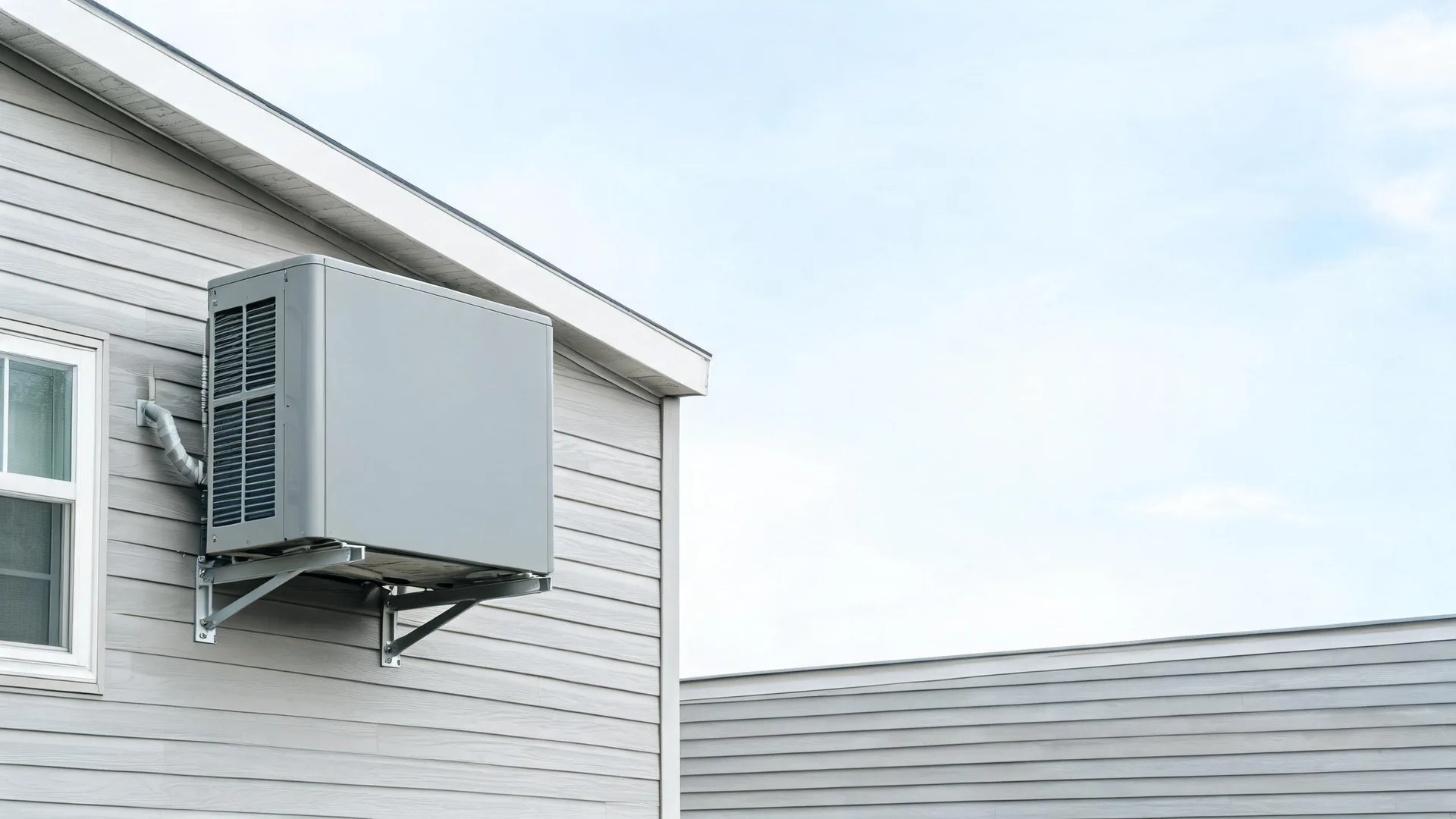
A gray outdoor HVAC unit mounted on a concrete pad beside a house with gray lap siding and a stone foundation.

The difference shows up in what gets opened

A quick visit checks that the system turns on and blows air. A thorough one checks whether it should still be trusted to run unattended for another year. That means pulling the panel to look at the capacitor and contactor, not just listening for the compressor to kick on. It means checking refrigerant charge against the manufacturer's numbers instead of eyeballing the line set. A tech who flushes the condensate drain and checks the reversing valve is looking for the failure that hasn't happened yet. One who just swaps the filter and checks the thermostat is hoping nothing was wrong.

The filter protects everything downstream

A dirty filter chokes airflow before it ever reaches the coil. The blower pulls harder to move the same air, the indoor coil runs colder than it should, and in heating mode the system can't shed heat into the house the way it's supposed to. Left long enough, that coil can ice over even when it's doing heating duty, not cooling. A filter is the cheapest part in the whole system and the one most likely to cause trouble when it's ignored.

The drain fails quietly

Condensate forms on the indoor coil and has to go somewhere, and the drain line is how it leaves. Algae and dust settle in that line over time and slow it down long before it clogs outright. A slow drain backs up into the pan, and from there it finds the nearest path, usually down through the ceiling or wall below the unit. Nothing about a clogged drain makes noise or trips a sensor until the water's already found somewhere to go.

Between visits, the filter is the one thing worth checking yourself. Hold it up to the light. If you can't see through it, it's choking the airflow and it's time to swap it. Outside, keep the area around the outdoor unit clear. Leaves, grass clippings, and anything stacked against it blocks the airflow the coil depends on. A gentle rinse with a garden hose on the outdoor fins knocks off loose dirt without bending anything, but skip the pressure washer, it can flatten the fins and cause the same airflow problem you're trying to fix. Don't go past that. Opening the cabinet, touching the refrigerant lines, or poking at the electrical connections is a tech's job, not because you'd get hurt, but because a part that looks fine can still be failing in a way only test equipment catches.

A full tune-up also means checking how the system behaves in both directions, not just one. A heat pump has a reversing valve that switches it between heating and cooling, and that valve can stick or leak without killing the system outright. It just makes it worse at one job while still doing the other fine. A tech runs the system in both modes during a maintenance visit for this reason, not just the mode it happens to be in that day. They'll also check refrigerant charge, because a unit low on refrigerant still blows air, just not air that's doing much work. None of this shows up from across the room. It shows up on gauges and in temperature splits a homeowner has no way to check without the right tools.