





A single-story wood-shingled house with a moss-covered roof and a brick chimney, with an outdoor air conditioning unit beside it, surrounded by ferns, shrubs and a green lawn, backed by tall conifer trees.

Heat Pump Maintenance in Stevenson, WA

Tell us about the job

Takes about a minute. No obligation.

Tune-up, service, or cleaningHeat PumpSkamania County, WA
Step 1 of 2

What ZIP code is the job in?

Half the homes in Skamania County were built in 1984 or later. If your heat pump came with the house, there's a good chance it still has plenty of working life left in it. A yearly check matters more when there's something worth protecting. The contractor can clean the coils, check the refrigerant charge, and catch a worn part before it takes the compressor down with it. Skipping that check on a newer system just means paying for a repair later that a service call would have caught early.

Nighttime lows here average 29°F in winter, nothing like the deep freeze a heat pump faces in colder states.

Less strain means a yearly check is about catching a worn part, not fighting off hard use.

One check a year covers it here

Power costs 11.9 cents a kWh statewide
6 winter storms from 2015 to 2024
Winter nights average 29°F
September starts the season hereHeat pumps in Skamania County run September through June. Book the check in August.

A heat pump that never gets looked at still runs, right up until the day it doesn't. The outdoor coil collects dirt and leaves over time, and a dirty coil makes the system work harder to move the same amount of heat. That extra strain falls on the compressor, the one part that drives the whole system. A low refrigerant charge does similar damage if nobody catches it, since the compressor ends up running hotter than it should for months without anyone knowing. Filters left unchanged choke airflow across the indoor coil, and that can cause it to ice up in heating mode. None of this happens overnight. It happens slowly enough that the system still seems fine, until the day the compressor quits and the whole unit needs replacing instead of a part.

Keep it in good shape

If your system is fairly new, a yearly check keeps it in good shape for longer.

Find a contractor
A gray air-source heat pump mounted on a concrete pad next to a house with gray vinyl siding, surrounded by gravel and flanked by green shrubs and white hydrangea flowers.

It doesn't get an off season

A heat pump does not get a season off. It runs in heating mode, then switches over and runs in cooling mode, and the reversing valve and compressor carry both jobs with no break between them. A furnace that only fires in winter gets months to sit. A heat pump just keeps going. That means whatever is starting to wear, a weak capacitor, a valve that sticks partway, a dirty coil, gets used against every month instead of a few. The clearest sign something is due for a look isn't a noise or a smell. It's not remembering the last time anyone checked it.

Keep the outdoor unit clear

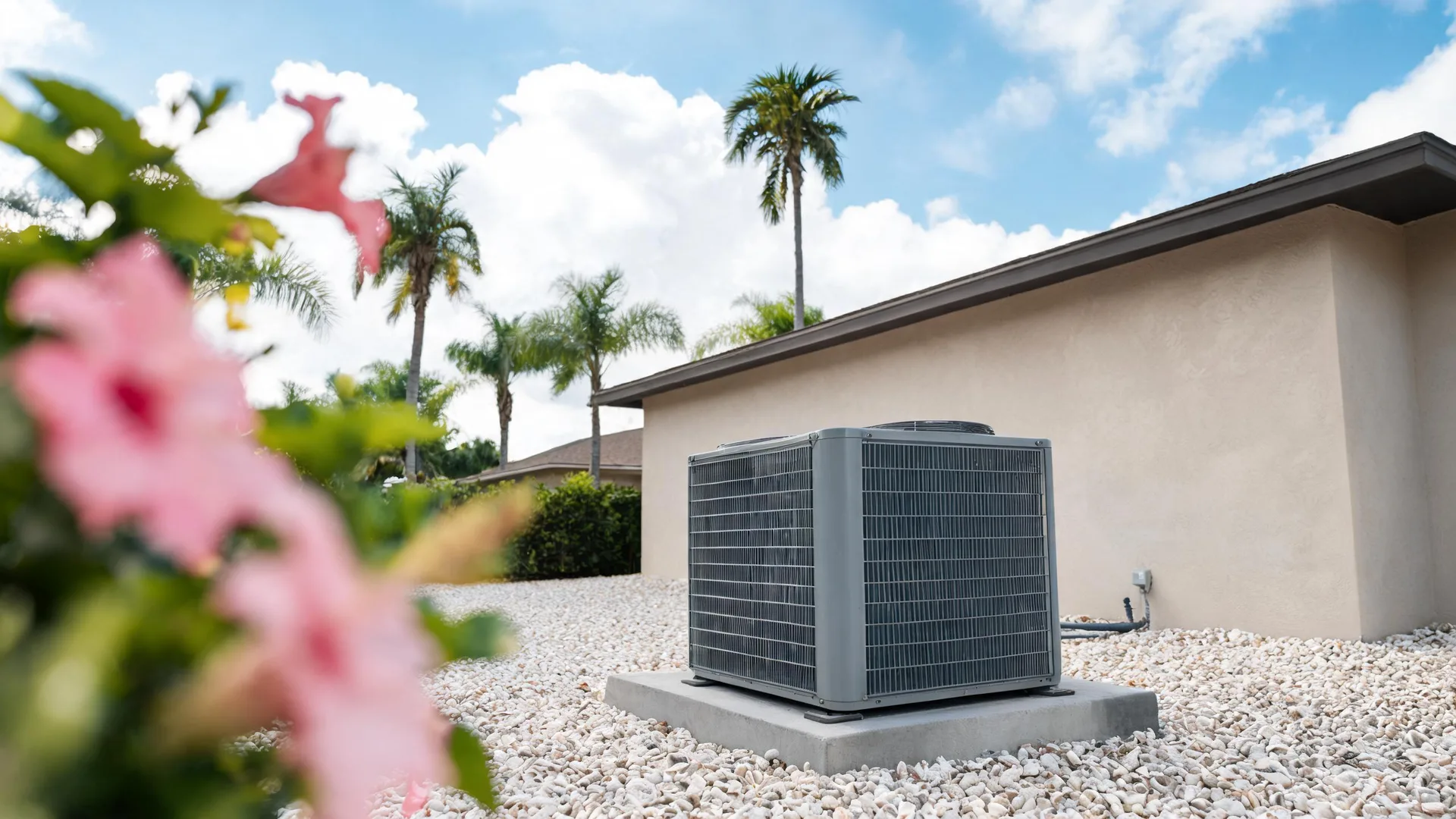
The outdoor coil needs open space on all sides to pull in air. Keep leaves, grass clippings and anything stacked against it away, and clear snow or ice off the top and sides if it piles up. Never cover the unit, even in the off months, since a cover traps moisture against the coil.
Change the filter yourself

The filter is the one part a homeowner should handle without waiting for a visit. A clogged filter starves the indoor coil of airflow and can cause it to ice up, and a dirty filter also makes the whole system work harder for less heat or cooling. Check it monthly and swap it when it looks gray or matted, not on a fixed schedule.

A thorough tune-up means the cabinet comes off the outdoor unit, not just a glance at the coil through the grille. The coil gets washed, not wiped, since dirt packed between the fins doesn't come off with a rag. Refrigerant charge gets checked against what the system actually needs, measured with gauges, not guessed from how cold the air feels at the vent. A quick visit skips the gauges and skips pulling the cabinet, and it still looks like a tune-up from the driveway. The difference shows up in what gets caught. A sticking reversing valve or a weak contactor doesn't announce itself at the thermostat, it just wears a little more each month until something fails. Ask what the contractor actually checks, not just whether they showed up.

A tune-up also covers the parts that only matter once a year but matter a lot when they fail. The capacitor that helps start the compressor and the fan motor gets tested under load, not just eyeballed, since a weak capacitor can still start the system on a mild day and fail outright on a hard one. Electrical connections at the disconnect box and inside the unit get tightened, because a loose connection generates heat right at the lug and that heat damages the wire over time. Drain lines on the indoor unit get checked for algae or buildup, since a blocked drain backs up into the pan and can shut the system down or cause water damage nearby. The blower wheel gets inspected for dust buildup too, since a dirty wheel moves less air even when the motor itself is fine. None of these are things a homeowner can see without taking the unit apart, which is the whole reason a yearly check is worth doing.