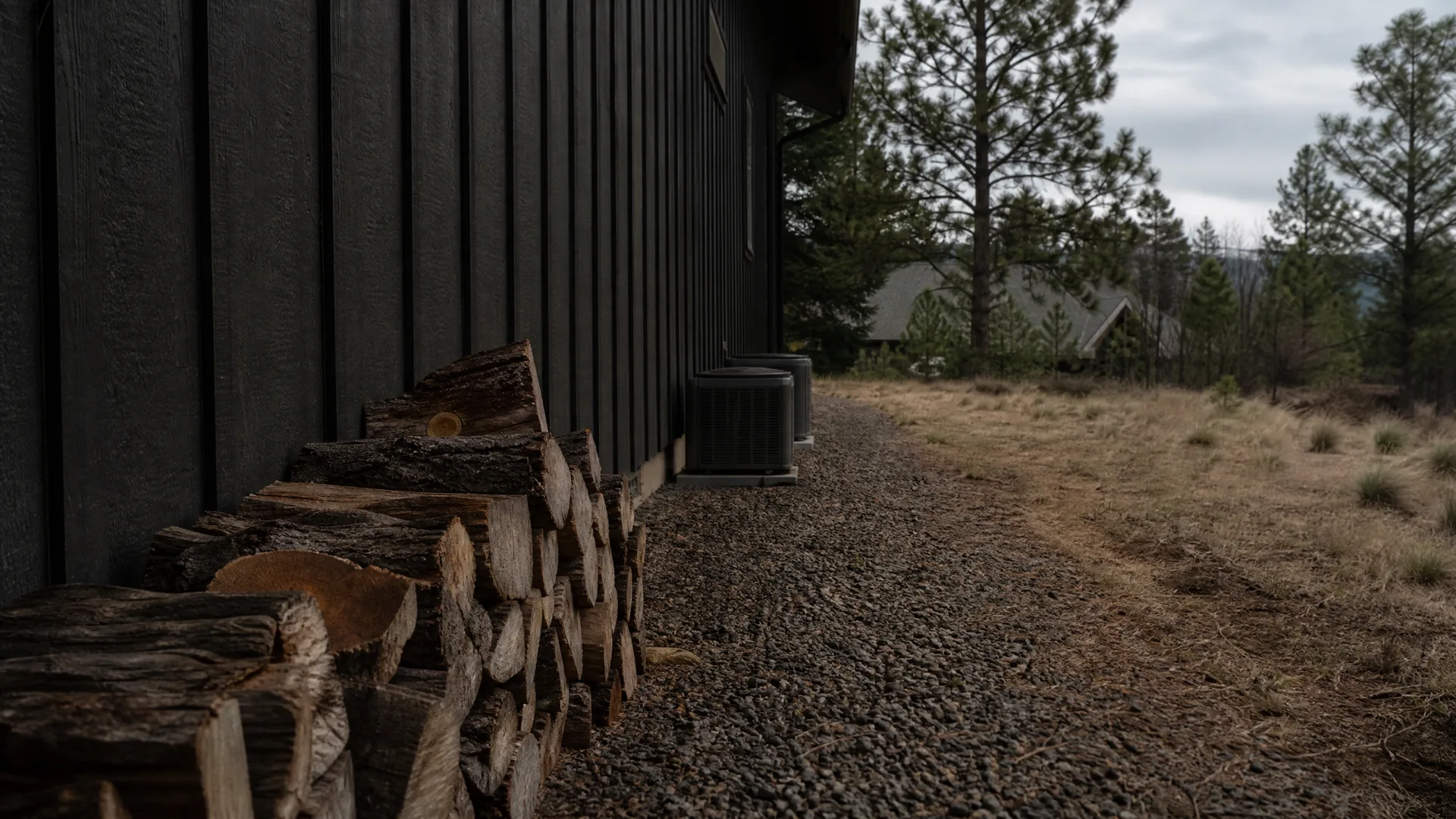




Stacked firewood along the dark vertical-board exterior wall of a house, with two outdoor condenser units, a gravel path, dry grass and pine trees under an overcast sky.

Heat Pump Maintenance in Wenatchee, WA

Tell us about the job

Takes about a minute. No obligation.

Tune-up, service, or cleaningHeat PumpChelan County, WA
Step 1 of 2

What ZIP code is the job in?

Half the homes in Chelan County were built in 1983 or later, so there's a good chance your heat pump isn't that old either. A heat pump that age has years of work left in it, and a yearly check is what keeps it getting to those years without a breakdown along the way. The technician cleans the coils, checks the refrigerant charge, and tests that the reversing valve switches cleanly between heating and cooling. A weak capacitor or a coil losing its efficiency is easy to catch at that visit. Skip it and small problems get the time they need to turn into big ones.

A quick visit checks that the heat pump turns on and blows air, then calls it done.

A thorough one runs it in both directions and measures the charge, because a valve or a weak reading won't show up any other way.

One season change, one visit a year

Power costs 11.9 cents a kWh statewide
Climate zone 5B
Heat runs September through June

Get the years ahead of it on your side

A heat pump with years left in it is worth scheduling for, not just waiting on. Get it on a yearly visit before the next season change and it has a better shot at running trouble-free through it.

Find a contractor
A gray heat pump condenser unit mounted on a concrete pad against the gray lap-siding exterior wall of a house.

What's wrong doesn't always show

Most of what a tune-up finds, you'd never catch from inside the house. Refrigerant charge is the clearest example. A system low on charge still blows air, still runs, still seems fine, and the only way to know it's off is to measure temperature and pressure against what the manufacturer specifies for that unit. The technician also pulls the panel off the outdoor unit to look at the contactor and capacitor, parts that sit behind a cover you'd have no reason to open. A contactor with pitted contacts can still close the circuit most of the time, until the day it doesn't. They'll check the condensate drain too, since a line that's starting to clog doesn't back up right away. Algae builds slowly, and the pan only overflows once it's had time to work. None of this shows up as a symptom you'd notice. It shows up as a system running fine right up until it isn't.

Keep the filter clean

Check the filter every month and swap or wash it whenever it looks gray or matted. A heat pump moves air through that filter constantly, heating and cooling both, and a clogged one is the single biggest thing an owner can control between visits.
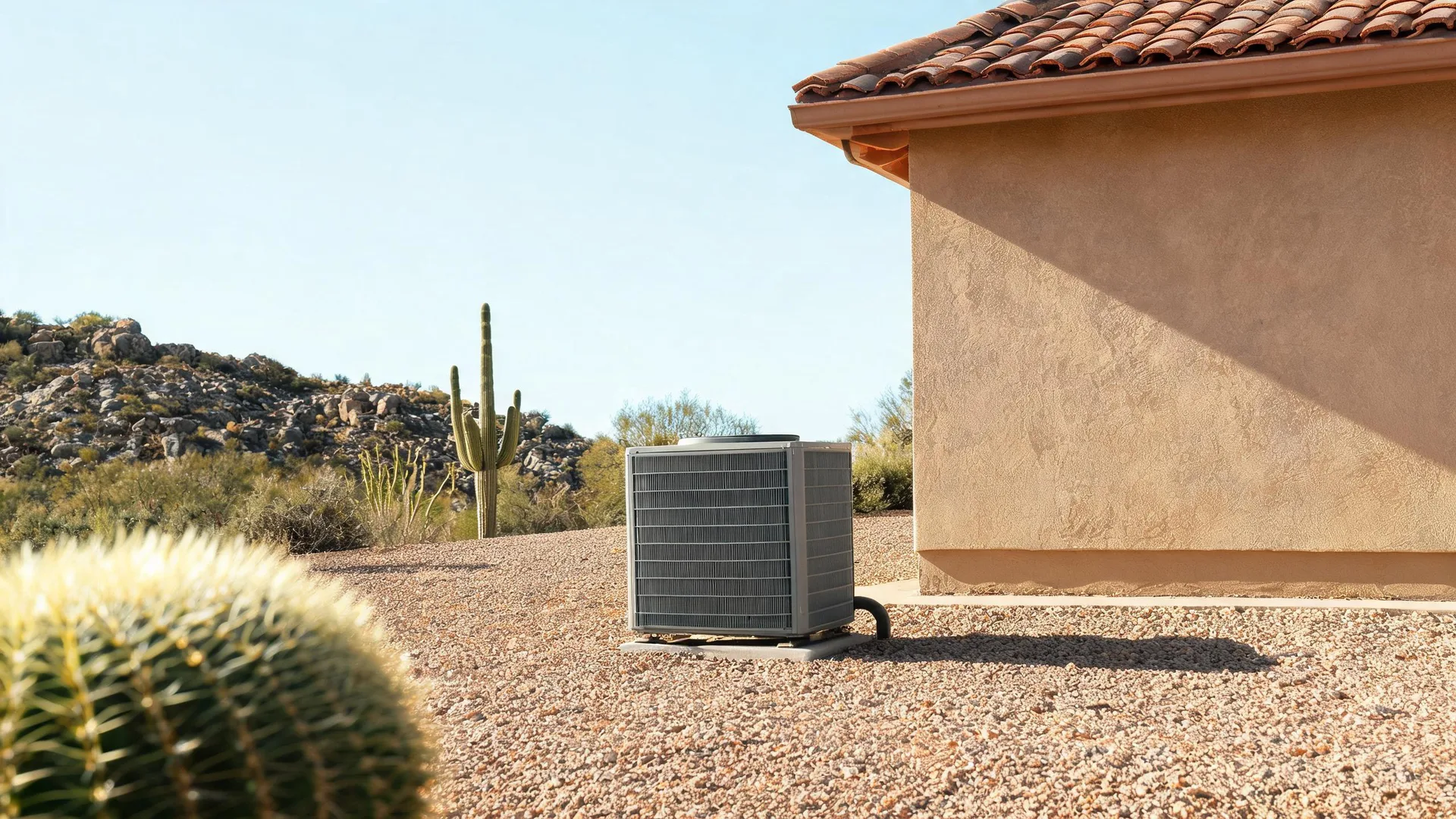
Give the outdoor unit room to breathe

Walk past the outdoor unit now and then and clear away leaves, grass clippings and anything piled against the cabinet. That coil needs open air on all sides to move heat, and a few inches of clearance is enough to keep it working the way it should.

A heat pump that never gets checked doesn't fail all at once, it gets worse at its job a little at a time. Refrigerant charge can drift low and the system still runs, it just takes longer to get the air where you want it. The reversing valve is often the first part to give trouble when years go by without a check, since it's doing something a plain air conditioner never has to. Once it starts sticking, the system can come on in the wrong mode, blowing cold when you asked for heat. A capacitor on its way out will make the outdoor fan hesitate before it starts, and when it finally stops starting, the compressor can overheat with no air moving across it. None of this looks like trouble at first. It looks like a system that runs a little longer each cycle, right up until the day it doesn't run at all.

A tune-up on a heat pump covers both sides of the system, not just the one running that day. The technician checks static pressure across the filter and ductwork, since airflow that's too low or too high puts strain on the blower motor either way. They'll measure refrigerant charge against what the manufacturer specifies for that unit, using temperature and pressure readings rather than just topping it off. Electrical connections get checked for looseness and corrosion, since a connection that's heating up under load is one that fails without warning. The technician also runs the system in both directions, heating and cooling, to confirm the reversing valve actually switches when it's told to. Cycling it just once isn't enough to catch a valve that's starting to stick.