Illuminated stone-and-timber mountain homes line a quiet street at dusk, with evergreen trees and a mountain range in the background.

Heat Pump Maintenance in Yakima, WA

Tell us about the job

Takes about a minute. No obligation.

Tune-up, service, or cleaningHeat PumpYakima County, WA
Step 1 of 2

What ZIP code is the job in?

July is the only cooling month here

A heat pump in Yakima County only works as an air conditioner in July. That is the one month it has to carry the full cooling load on its own, so a loose connection or a low charge that was fine in spring shows up right away.


Book the check in June

June is the month before cooling starts here, and it is the slot where a tune-up actually changes the outcome. By the time July's heat shows up, you already know the system can handle it instead of finding out the hard way.

Yakima winters hold near 24°F on average overnight, not deep cold.

A heat pump here isn't fighting extreme temperatures, so most failures trace back to a part that was never checked, not a system that was overworked.

Half these homes are older than your heat pump's checkup schedule needs to be

Half the homes here were built by 1977
21 damaging wind events from 2015 to 2024
62 winter storms from 2015 to 2024
One checkup a year covers itNothing about Yakima pushes a heat pump hard enough to need more.

A heat pump that's struggling won't always trip a breaker or quit outright. It gives you smaller signs first. It runs longer than it used to without the house feeling any warmer or cooler. The outdoor unit ices over in a pattern that doesn't match the weather, or it never defrosts fully between cycles. You hear it short cycling, kicking on and off in quick bursts instead of settling into a steady run. The air coming out of the vents feels wrong for the setting, lukewarm on heat, not quite cold on cooling. Any one of these by itself might not mean much. Together, or left alone for a season, they're usually a sign the refrigerant charge, the reversing valve, or the defrost control is already off and getting worse.

Easy duty still wears parts. Get the yearly check done

A heat pump here isn't working against hard winters or long cooling seasons, so wear comes from age and parts that went unchecked, not strain. A yearly check catches a weak part before it fails.

Find a contractor
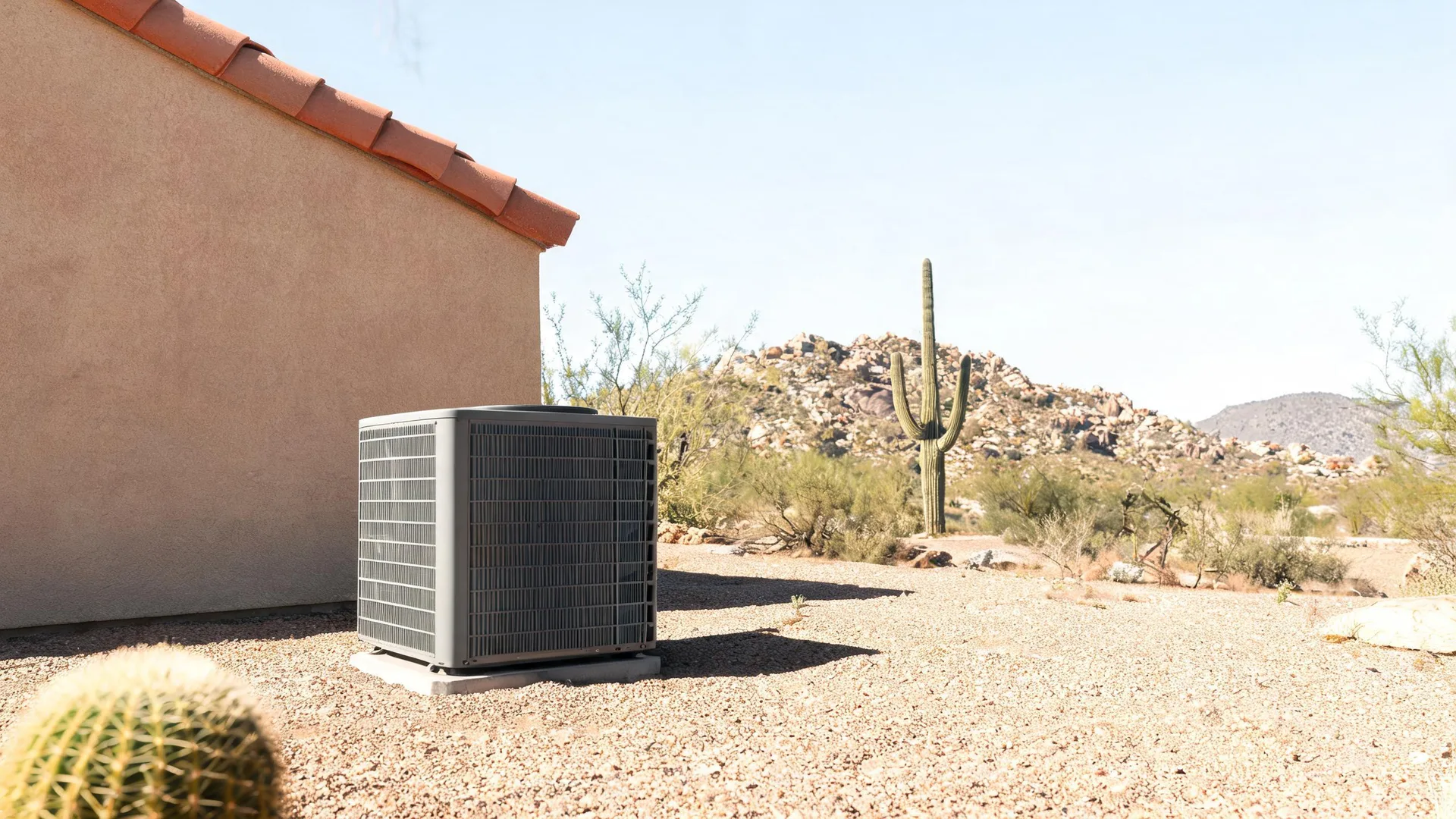
A gray heat pump outdoor unit mounted on a concrete pad next to the stone-accented exterior wall of a house.

Between checkups, the airflow is yours to protect

The outdoor unit is the part exposed to the weather, so it's the part worth a look between visits. Keep leaves, grass clippings and anything else out of the fins, and keep plants cut back so air can move through it freely. Check the filter and change or rinse it when it looks dirty, since a clogged filter makes the whole system work harder for less air. After a storm, glance at the outdoor unit and clear off anything that landed on top of it. Inside, keep vents and registers open and unblocked by furniture or rugs. None of this replaces a real inspection. The refrigerant charge, the reversing valve and the defrost control all need a gauge and a trained eye, not a homeowner's hands. But keeping the unit clean and the airflow clear is the one piece of upkeep that's yours to do, and it's the part that actually prevents wear between checks.

A quick visit checks that it runs

A fast tune-up confirms the heat pump turns on, blows air, and responds to the thermostat. That tells you it works today. It does not tell you the refrigerant charge is correct, or that the contactor is pitted and close to sticking, or that the condensate drain is starting to clog. Those things can all be true on a system that still passes a quick look.

A thorough one checks why it keeps running

A real inspection puts gauges on the refrigerant lines, tests the reversing valve under both modes, checks capacitor readings against what they should be, and clears the condensate drain before it backs up. None of that shows up by watching the unit cycle on and off. It is the difference between knowing the system runs and knowing why it will still be running next season.

The filter is the easiest part to ignore and the one causing the most strain when it's dirty. Airflow across the indoor coil depends on it, and a clogged filter starves that coil until it runs colder than it should, sometimes cold enough to ice over even on a cooling cycle. The outdoor coil fails from the other direction, caked with dirt or hemmed in by overgrown plants until the unit can't dump heat properly. The condensate drain is the part people forget entirely. It carries off the moisture pulled from the air during cooling, and when it clogs, that water backs up into the pan and the unit shuts itself down rather than let it overflow. None of these parts are complicated, but a heat pump needs all of them clear to move heat the way it's supposed to.

A tune-up is also when the electrical side gets checked, not just the refrigerant side. The contactor that switches the compressor on wears down with every cycle, and a pitted one can stick or fail to make contact at all. Capacitors lose their charge over time, and a weak one makes the compressor or fan motor strain to start, which shortens its life even if it still kicks on every time. Wiring connections get checked for anything loose or corroded, since a bad connection generates heat where it shouldn't and trips the system off. These parts rarely announce themselves before they quit. A tune-up is what catches a capacitor on its way out instead of waiting for the morning it won't start at all.